Where Is the Liver Located? Anatomy, Pain & Functions
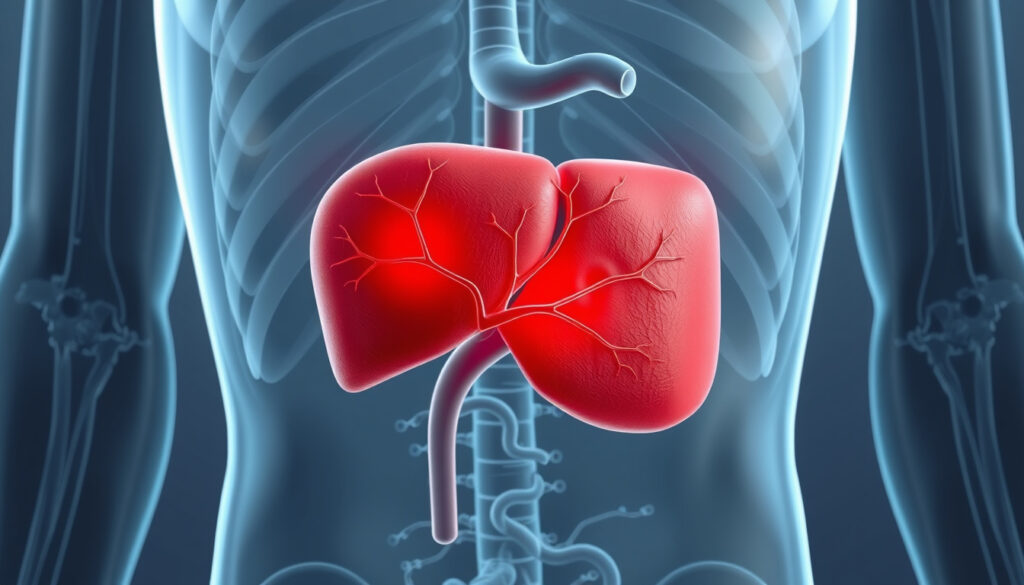
If you’ve ever wondered “where is the liver?”, you’re not alone — this fist-sized organ hides just beneath your lower right ribs, and most people never think about its location until something feels wrong. Your liver weighs about 3 pounds and sits on the upper right side of your abdomen, tucked under the diaphragm, yet it handles over 500 vital functions every day without complaint.
Location: Right upper abdomen ·
Position relative to diaphragm: Beneath diaphragm ·
Shielded by: Lower right rib cage ·
Overlies: Stomach, right kidney, intestines ·
Shape: Roughly triangular
Quick snapshot
- Liver sits in the right upper quadrant of the abdomen beneath the rib cage (TeachMeAnatomy)
- It is the largest visceral organ in the abdominal cavity (TeachMeAnatomy)
- Liver pain commonly radiates to the right shoulder or back (WebMD)
- Exact pain referral patterns vary by individual and underlying condition (Gastroenterology Associates)
- Severity of pain does not always correlate with degree of liver damage (Rupa Health)
- Fatty liver disease affects a large and growing number of Americans — many undiagnosed (Arizona Premier Surgery)
- Conditions like hepatitis and cirrhosis progress silently before pain appears (Vinmec)
- Early detection through blood tests can prevent irreversible damage (Johns Hopkins Medicine)
- Lifestyle changes — diet, exercise, reduced alcohol — can reverse early-stage liver disease (WebMD)
The key facts below summarize the liver’s essential anatomical parameters from multiple medical sources.
| Attribute | Details |
|---|---|
| Primary Location | Right upper quadrant of abdomen |
| Protective Cover | Lower right rib cage |
| Underlying Organs | Stomach, right kidney, intestines |
| Shape | Triangular |
Where Would You Feel Liver Pain?
Liver pain is not what most people expect. Because the liver itself lacks pain receptors, discomfort arises only when inflammation or pressure affects the surrounding Glisson’s capsule — the fibrous outer layer innervated by lower intercostal nerves. That is why liver pain feels different from typical stomach aches.
Liver Pain Location
You will typically feel liver pain in the upper right abdomen, just beneath the rib cage, slightly toward the center of your body. According to ER of Dallas (emergency medicine provider), this dull or fullness-like sensation is caused by distension of Glisson’s capsule — not by damage to the liver tissue itself. The pain may feel dull and persistent, sharp during certain movements, or like a constant ache under the ribs.
Pain Referral Patterns
What surprises many patients is that liver pain rarely stays in one place. When the liver swells or irritates nearby structures, discomfort can travel along nerve pathways to distant areas. WebMD (health information publisher) notes that pain may spread to the back, shoulders, or neck via phrenic nerve connections. Vinmec (medical care network) adds that liver abscesses produce severe upper right abdominal pain that worsens with pressure, coughing, or sneezing.
The implication: if you feel persistent right-side abdominal pain that radiates to your shoulder or back, it is worth getting checked — especially if it coincides with other symptoms like fatigue or nausea.
Because the liver sits in the same right upper quadrant as the gallbladder and part of the pancreas, misidentifying the source of pain is common. Gallbladder pain tends to be sharper and more spasmodic, while liver pain is often duller and more constant, according to WebMD.
What Are the Four Warning Signs of a Damaged Liver?
The liver has a remarkable ability to keep functioning even when it is already sustaining significant damage. By the time obvious symptoms appear, the condition may be fairly advanced. Recognizing these four warning signs early can make a critical difference.
Early Symptoms
Jaundice — a yellowing of the skin and eyes — is often the most recognizable sign that the liver is struggling. It occurs when the liver fails to process bilirubin effectively. Abdominal pain in the upper right region, combined with unexplained fatigue that does not improve with rest, frequently accompanies early liver distress, per Rupa Health (clinical laboratory network).
Advanced Indicators
Swelling — particularly in the abdomen (ascites) and legs — signals portal hypertension or reduced albumin production, both hallmarks of advanced liver disease. Johns Hopkins Medicine (academic medical center) emphasizes that swelling paired with dark urine or clay-colored stools is a red flag requiring immediate medical evaluation.
The pattern: jaundice, abdominal pain, fatigue, and swelling together represent a cluster that warrants urgent assessment — particularly if alcohol use, medication history, or viral exposure is part of your background.
How Do You Know If Your Liver Is in Trouble?
Beyond the obvious warning signs, subtle changes in your body can telegraph that your liver is not operating at peak efficiency. Many of these symptoms are easy to dismiss as stress or normal aging, which makes early detection particularly challenging.
First Signs of Liver Problems
Dark urine is one of the earliest clues. When the liver cannot properly process bilirubin, excess amounts exit through the kidneys, turning urine a deep amber or brown shade. Nausea, loss of appetite, and unexplained weight loss often follow, according to Cary Gastro (gastroenterology practice). Unexplained bruising or bleeding easily also suggests reduced clotting factor production by a compromised liver.
Diagnostic Checks
Blood tests remain the frontline tool for assessing liver health. Liver enzyme panels — measuring ALT, AST, ALP, and bilirubin — provide a snapshot of liver function. Johns Hopkins Medicine recommends that anyone with risk factors (heavy alcohol use, obesity, certain medications, family history of liver disease) undergo routine liver function testing. Imaging such as ultrasound or CT scan can reveal fatty infiltration, cysts, or tumors.
What this means: a routine blood draw can catch liver damage years before symptoms become noticeable — making preventive screening one of the simplest, highest-value interventions available.
Fatty liver disease — now among the most common liver disorders in Western countries — typically produces no symptoms until irreversible scarring (cirrhosis) occurs, per Arizona Premier Surgery (surgical practice). Regular screening is the only reliable way to catch it early.
How Does the Liver Work?
Understanding what the liver does helps explain why its location and the signals it sends matter so much. This organ is a biochemical workhorse operating continuously without demanding much attention — until something goes wrong.
Key Functions
The liver filters virtually all blood leaving the stomach and intestines, processing nutrients, toxins, and medications before distributing them throughout the body. It produces bile — roughly one liter per day — essential for digesting fats and absorbing fat-soluble vitamins A, D, E, and K, as documented by Johns Hopkins Medicine. The liver also stores glycogen (the body’s quick-access energy reserve), synthesizes proteins including clotting factors, and metabolizes cholesterol and triglycerides.
Anatomy Overview
The liver consists of two main lobes — right and left — each further divided into two sections. It measures approximately 15-20 cm in width and about 8 cm in height. Vinmec notes that the liver extends slightly into the left side under the epigastric region, which is why pain is sometimes felt near the center of the abdomen rather than strictly on the right.
The catch: the liver’s location beneath the diaphragm and rib cage provides excellent protection from physical trauma, but this same shielding means that swelling from inflammation has nowhere to expand except upward — compressing the diaphragm and causing referred shoulder pain.
Where Is the Liver Located?
This is the central question this guide answers. Pinpointing the liver’s exact position helps you understand not just anatomy but why certain symptoms occur and how doctors localize abdominal pain during examination.
Position in Men and Women
The liver sits primarily in the right hypochondriac region of the abdomen, extending into the epigastric region and partially crossing into the left hypochondriac area. TeachMeAnatomy (anatomy education platform) confirms that the liver occupies three of the nine standard abdominal regions: the right hypochondriac (Region 1), epigastric (Region 2), and right lumbar (Region 4). There are no major anatomical differences in liver position between men and women — the organ’s location and shape remain consistent across sexes, though size can vary with body size.
View from the Back
When viewed from behind, the liver’s upper border reaches approximately the level of the fifth to sixth ribs. Plano ER (emergency care provider) notes that back pain originating from liver inflammation is often mistaken for muscular strain or spinal issues — which is why associating the pain with other symptoms is crucial for accurate self-assessment.
Relative to Kidneys
The right kidney lies directly beneath the liver, sharing the right upper quadrant with portions of the intestine and gallbladder. Manhattan Gastroenterology (gastroenterology practice) explains that this proximity means right flank or back pain can originate from the liver, kidney, or gallbladder — requiring careful differential diagnosis.
The implication: when a doctor presses on your right upper abdomen and you feel tenderness, that specific exam finding narrows the list of possible culprits considerably — which is exactly why knowing your liver’s location helps you understand the diagnostic process.
Upsides
- Precise location well-established across medical literature
- Protective rib cage reduces vulnerability to physical trauma
- Early damage signals (jaundice, dark urine) are recognizable when monitored
- Blood tests can detect problems years before symptoms appear
- Lifestyle interventions can reverse early-stage fatty liver disease
Downsides
- Organ lacks intrinsic pain receptors, delaying symptom recognition
- Symptoms easily confused with gallbladder, kidney, or stomach pain
- Millions proceed undiagnosed due to silent progression
- Advanced damage (cirrhosis) is largely irreversible
- Shared right upper quadrant with multiple organs complicates self-diagnosis
Related reading: Where is North Macedonia · Deepest part of the ocean
The liver resides in the upper right abdomen under the ribs, where liver location and pain guide details common pain sensations and key functions.
Frequently Asked Questions
What side is the liver on?
The liver sits on the right side of your body, in the upper right abdomen beneath the lower ribs. It extends partially into the central epigastric area and slightly to the left.
Where is the liver on a woman?
The liver’s anatomical position in women is virtually identical to that in men. There are no significant gender-based differences in location, size, or structure that would affect where you feel pain or discomfort.
Can liver damage be reversed?
Early-stage liver damage — such as fatty liver disease (NAFLD) or alcohol-related fatty liver — can often be reversed through lifestyle changes including weight loss, dietary modification, reduced alcohol consumption, and regular exercise, according to WebMD. Once cirrhosis (scarring) develops, however, the damage is typically permanent.
What is the fastest way to repair your liver?
Eliminating the cause is the most effective first step — removing alcohol, losing excess weight, or discontinuing a damaging medication. A diet rich in leafy vegetables, lean proteins, and whole grains while avoiding processed foods and added sugars supports regeneration. Johns Hopkins Medicine notes that the liver can regenerate itself to a remarkable degree once the source of injury is removed.
Where is the liver and kidney located?
The liver occupies the right upper quadrant, positioned on top of and partially shielding the right kidney. The left kidney sits lower and more toward the back, on the left side of the body. Both organs lie retroperitoneally (behind the abdominal cavity lining).
What are 10 functions of the liver?
The liver performs over 500 functions, including: filtering blood, producing bile for fat digestion, storing glycogen for energy, synthesizing blood proteins including clotting factors, metabolizing cholesterol and triglycerides, storing vitamins A, D, E, K and B12, detoxifying drugs and alcohol, breaking down red blood cells, regulating blood sugar, and producing growth factors.
How big is the liver?
The liver measures approximately 15-20 cm wide and about 8 cm tall. It weighs roughly 3 pounds (about 1.4 kg) on average, making it the largest visceral organ in the abdominal cavity, per Vinmec.
Where is liver pain located?
Liver pain is typically felt in the right upper abdomen beneath the rib cage, slightly toward the center. It may radiate to the right shoulder, back, or neck. The pain is often dull, fullness-like, or constant rather than sharp and spasmodic, according to WebMD.
What Experts Say
“The liver is located in the upper right-hand portion of the abdominal cavity, beneath the diaphragm, and on top of the stomach, right kidney, and intestines.”
— Johns Hopkins Medicine (Academic Medical Center)
“You may feel pain in the area of your liver, which is in the upper right abdomen. It may also be in the back, shoulders, or neck.”
— WebMD (Health Information Publisher)
“The liver is a peritoneal organ positioned in the right upper quadrant of the abdomen. It is the largest visceral structure in the abdominal cavity.”
— TeachMeAnatomy (Anatomy Education Platform)
For anyone experiencing persistent right upper abdominal discomfort — particularly if it radiates to the shoulder or back, or is accompanied by fatigue, nausea, or dark urine — the message from medical literature is unambiguous: get your liver function checked. The window for reversing early damage closes once cirrhosis sets in, making timely action one of the most consequential health decisions you can make for your future.
More related posts
 Convert GBP to USD: Live Rates, Calculator & Guide
 Winter uPVC Window Energy Cost – UK Prices and Savings Guide
 International Distribution Services Share Price After Delisting
 The Open Leaderboard 2025: Winner, Re ult , and Tee Time
 Flea Bites: Identification, Treatment, and How to Get Rid of Them
 Cast of Robin Hood (2025) – Full List of Actors and Roles
 Benicio Del Toro: Daughter, Relationships, and Net Worth
