Stockton Rush: What Happened to the OceanGate CEO
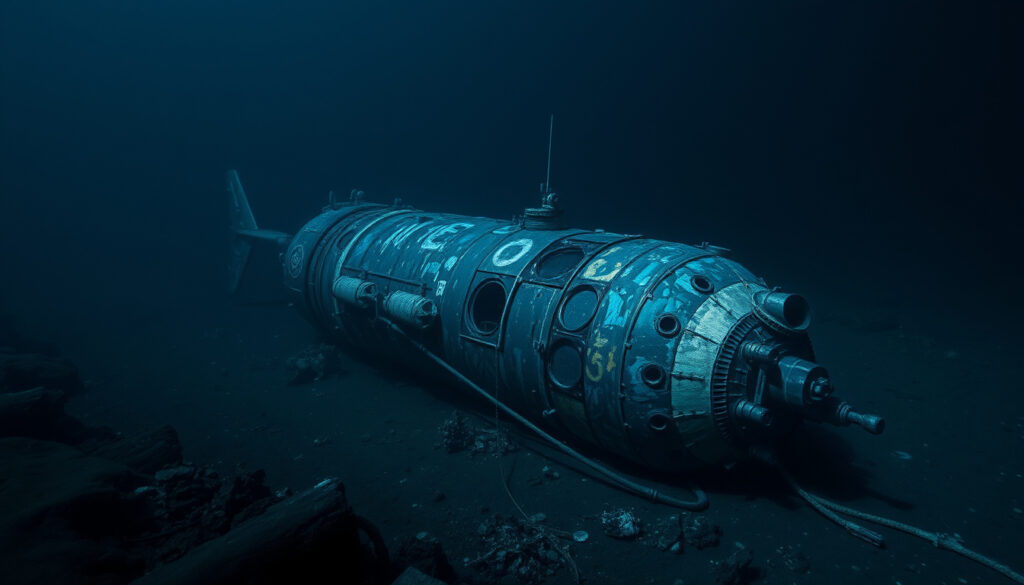
Stockton Rush spent years telling anyone who would listen that deep-sea experts were too cautious. On June 18, 2023, that confidence met the ocean: Titan, the submersible his company operated, imploded mid-descent with Rush at the controls, killing him and four passengers in an instant (Encyclopaedia Britannica, reference publisher).
Born: March 31, 1962 ·
Died: June 18, 2023 ·
Occupation: Co-founder and CEO of OceanGate ·
Spouse: Wendy Rush
Quick snapshot
- Titan imploded on June 18, 2023, during a descent to the Titanic wreck (Boat International, marine industry title)
- Rush was OceanGate’s co-founder and chief executive officer (Encyclopaedia Britannica, reference publisher)
- All five people aboard died, including Rush (Encyclopaedia Britannica, reference publisher)
- The precise sequence of the hull’s collapse remains under official investigation (Boat International, marine industry title)
- Rush’s final words are not known (The Daily Beast, news outlet)
- A complete public record of the warnings OceanGate received did not emerge from the investigation (The Daily Beast, news outlet)
- June 18, 2023 — contact lost and implosion during the descent (CBC, Canadian public broadcaster)
- June 22, 2023 — debris located near the Titanic wreck (The Independent, UK news outlet)
- July 2022 — Titan’s first dives to the Titanic wreck (CNN en Español, international newsroom)
- The Coast Guard attributed the implosion to the loss of Titan’s hull structural integrity (Boat International, marine industry title)
- Rush’s negligence was cited as a contributing factor in the deaths of the other four occupants (The Independent, UK news outlet)
Six biographical facts, one pattern: a comfortable start, a fast rise, and a finish at the bottom of the Atlantic — all documented in the life profile Princeton University (alumni publication) published after his death.
| Full name | Richard Stockton Rush III |
|---|---|
| Born | March 31, 1962 |
| Died | June 18, 2023 |
| Occupation | Co-founder and CEO of OceanGate |
| Spouse | Wendy Rush |
| Children | Two |
What happened to Stockton Rush?
The short answer is that Rush died instantly when Titan’s hull gave way under extreme deep-sea pressure. The longer answer, assembled over the following months by investigators, is a chain of risks taken and warnings set aside.
The Titan implosion
- The U.S. Coast Guard Marine Board of Investigation attributed the loss to the implosion and to the failure of Titan’s hull to maintain structural integrity (Boat International, marine industry title)
- Investigators described the deaths as instantaneous — a collapse under extreme deep-sea pressure, not a prolonged emergency (Boat International, marine industry title)
That speed is what makes the disaster hard to process. The deaths were instantaneous, which means the five aboard had no time to react to an unfolding emergency — only a hull that gave way.
This was not a single freak event. The official investigation reported deficiencies in design, certification, maintenance, and inspection that left Titan fragile before it ever reached the water that day (The Independent, UK news outlet).
Rush had heard the warnins and answered them with mpaitence. In an email to a safety engineer, he wrote: “I have no desire to die.” Coverage of the investigation quoted that line repeatedly, alongside accounts of a workplace culture that did not welcome dissent (The Daily Beast, news outlet; CNN en Español, international newsroom).
Who else died?
- Paul-Henri Nargeolet — veteran French deep-sea explorer (Encyclopaedia Britannica, reference publisher)
- Hamish Harding — British businessman and adventurer (Encyclopaedia Britannica, reference publisher)
- Shahzada Dawood — Pakistani-British businessman (Encyclopaedia Britannica, reference publisher)
- Suleman Dawood — Shahzada Dawood’s son (Encyclopaedia Britannica, reference publisher)
The people on Titan were not a traditional crew. They were paying expedition participants and specialists who trusted Rush’s pitch that the submersible was safe enough to sell them a seat.
The implication: Rush’s death was instantaneous, but the failure that killed him was months — possibly years — in the making.
Was Stockton Rush a billionaire?
No. Rush was well-off, but his fortune was nowhere near billionaire territory — and the gap matters, because OceanGate never ran on Rush’s money alone.
Net worth estimate
No — and the distinction explains why OceanGate leaned on paying passengers rather than on Rush’s own balance sheet.
Media reports at the time placed Rush’s personal net worth at roughly $12 million to $20 million and described OceanGate as a venture funded by investors and expedition fees rather than by Rush’s fortune (Evening Standard, London newspaper). That is comfortably wealthy — the kind of money that gets spent, not the kind that sits quietly in a trust.
Source of wealth
- OceanGate charged clients for seats on its Titanic expeditions and raised outside capital
- Rush came from a comfortable family with aviation connections, and an inheritance gave him seed capital
- None of it put him anywhere near the billionaire class
The funding model became a safety issue in its own right. A company that depends on paying passengers cannot easily cancel dives — and Titan kept diving even as questions mounted.
Family inheritance
- Published profiles describe an inheritance that helped fund Rush’s early ambitions, but the exact amount was never made public
- The larger point: the inheritance was seed capital, not a fortress — OceanGate still had to sell seats
The pattern: money was never the constraint on OceanGate’s ambitions; certification was. The company spent on missions, not on the safety systems the industry expected.
The catch: the drive that made the company ambitious is the same drive that kept Titan in the water after questions were raised.
Did Stockton Rush ever see the Titanic?
Yes. He reached the wreck in 2022 and had planned to keep returning. Those successful trips were his proof that Titan worked.
His obsession with Titanic
For Rush, the Titanic wreck was the ultimate underwater experience — the destination that justified his defiance of conventional engineering.
He described the Titanic as the ultimate underwater experience, and reaching it shaped everything OceanGate sold. The wreck was not just a destination; it was the emotional center of the whole venture.
Previous dives to Titanic site
- Titan first reached the Titanic wreck in July 2022 (CNN en Español, international newsroom)
- According to reported findings, anomalies observed after the 2022 dives were not adequately investigated before the next season (CNN en Español, international newsroom)
Those 2022 dives converted skepticism into bookings. They also produced the warning signs that, in hindsight, made the 2023 disaster almost predictable.
The fatal dive
- On June 18, 2023, Titan was making another descent to the wreck when contact was lost (The Independent, UK news outlet)
- Rush was piloting the submersible, according to coverage of the investigation (The Independent, UK news outlet)
The dive that killed him looked, from the outside, like the dives that had worked before. The difference was that this time the hull did not hold.
The pattern: the ocean let Rush prove himself in 2022, then collected the debt in 2023. The successful dives were real; the lesssons drawn from them were not.
What did Stockton Rush’s wife say?
Wendy Rush was not a distant observer of the disaster. She was on the support vessel Polar Prince when Titn vanished, and her words from that day became evidence in the investiation.
Wendy Rush’s statement
- The phrase “He died doing what he loved” came from a statement Wendy Rush made after the disaster (Evening Standard, London newspaper)
That single sentence did a lot of work: it acknowledged the loss, honored Rush’s choices, and closed the door on public questions about whether he should have known better.
Her reaction to hushand’s death
- Wendy Rush was aboard the Polar Prince when the sub went missing (CBC, Canadian public broadcater)
- She heard a loud bang and asked, “What was that bang?” (LBC, UK radio news)
- Her question came before anyone on the surface knew the sound was likely connected to Titan’s destruction (LBC, UK radio news)
- Investigators later treated the bang as the likely moment of the implosion (CBC, Canadian public broadcaster)
Rush’s own initial reading, according to released footage and reporting, was calmer: he reportedly thought the sound was Titan shifting in its metal frame (LBC, UK radio news).
Her role at OceanGate
- Wendy Rush is the great-granddaughter of Isidor and Ida Straus, who died on the Titanic (Evening Standard, London newspaper)
- Her presence on the support vessel placed her at the heart of the disaster’s first hours (Evening Standard, London newspaper)
The Straus connection gave the story an almost unbearable symmetry: more than a century after her family members died on the ship’s maiden voyage, her husband was lost trying to reach the same wreck.
The imlication: the tragedy reached the family in real time, before the world understood what the bang meant.
Where did Stockton Rush get his money from?
Rush’s money came from a mix of family, investors, and passengers who paid for seats to the Titanic. None of it, by itself, explains how OceanGate got built.
Family background
- His father was a Pan Am executive, and family trust money helped fund his early ambitions — details documented in the life profile Princetn University (alumni publication) published after his death
The family money made risk-taking possible. It did not make Rush a financier; it made him a founder with a runway.
Education and career
Undergrad: Princeton, class of 1984 · Graduate school: Stanford · OceanGate: co-founded 2009
Rush studied at Princeton and later at Stanford, then spent years building aviation-adjacent ventures before co-founding OceanGate in 2009. The same profile that documents his family traces this route (Princeton University, alumni publication).
OceanGate funding
- OceanGate charged clients for seats on its Titanic expeditions (The Independent, UK news outlet)
- It also raised outside capital, according to reporting on the company’s history (The Independent, UK news outlet)
The trade-off: a business that charges passengers must answer to engineering, not bookings — and the investigation’s core finding is that engineering lost.