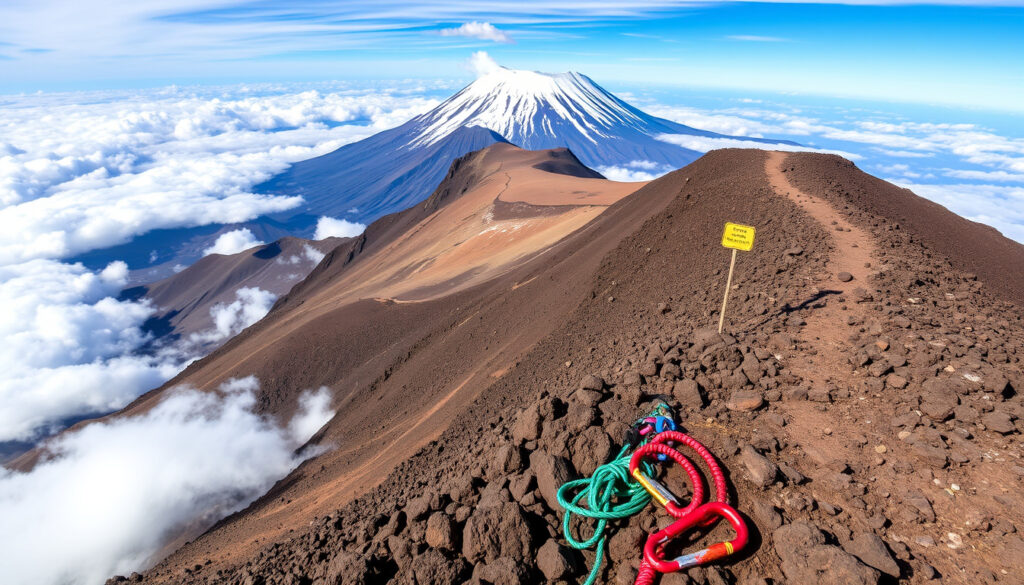
Mount Kilimanjaro Climbing: Safety, Routes & Tips.
You don’t need ropes or ice axes to reach the roof of Africa, but you do need a smart plan, a good guide, and honest expectations. Kilimanjaro is a walk, not a climb — yet every year, its altitude and weather humbles thousands of trekkers who underestimated the mountain. The questions first-timers ask most are practical: how safe is it, how much training matters, which route suits a beginner, and what summit night actually demands. Here’s what the data and the guides say.
Height: 5,895 m (19,341 ft) · Type: Dormant volcano · Location: Tanzania, East Africa · Main routes: 7 · Annual climbers: ~35,000
Quick snapshot
- Kilimanjaro is Africa’s highest mountain at 5,895 m (Mount Kilimanjaro National Park official website (park authority)).
- Seven official routes lead to the summit (Mt. Kilimanjaro National Park FAQs (park authority)).
- Altitude sickness is the leading cause of death on the mountain (National Geographic (travel outlet)).
- Unguided climbing is against Tanzanian law (Mt. Kilimanjaro National Park route page (park authority)).
- Year-to-year death totals are approximate because official figures are published slowly.
- Route success rates come mostly from operators, with few independent audits.
- There is no consensus on the ideal training plan for first-time trekkers.
- Standard climbs run 5–9 days; most first-timers book 6–7 (Altezza Travel routes guide (tour operator)).
- Summit night lasts 6–8 hours up from Barafu and 3–4 hours down (Kili Peak beginner route guide (route operator)).
- Longer routes like the Northern Circuit report the highest summit success (Follow Alice beginner guide (operator resource)).
- Start training well before departure.
- Choose a 7–8 day route; Lemosho is a common beginner pick.
- Book through a registered operator with certified guides.
The official park website and operator data point to the same headline figures:
| Measure | Value |
|---|---|
| Height | 5,895 meters (19,341 ft) |
| Location | Tanzania, East Africa |
| Type | Stratovolcano (dormant) |
| Number of routes | 7 official routes |
| Average climb duration | 6–7 days |
| Annual tourist arrivals | ~35,000 |
| Summit success rate | 65% overall (higher on longer routes) |
Is it safe to climb Kilimanjaro?
Ask ten tour operators for a one-word answer and most say “yes” — but the yes comes with conditions. The official park line is that the mountain is very safe to visit all year round because it is protected and managed by Kilimanjaro National Park.
What are the main causes of death on Kilimanjaro?
- Altitude-related illness: the leading cause of death on the mountain, according to National Geographic.
- A small but persistent annual toll, concentrated around summit night and poor acclimatization.
- Preventable factors: too-fast ascent, dehydration, and pushing through symptoms.
The park system is built to reduce those risks. Every climber must be accompanied by a licensed Tanzanian guide through a registered tour operator, per Mt. Kilimanjaro National Park FAQs, and unguided climbing is against Tanzanian law, as Follow Alice notes.
How does altitude sickness affect climbers?
Altitude sickness is the main risk on Kilimanjaro and the leading cause of death on the mountain. It is not the physical difficulty of the trek that gets people — it’s the altitude.
The standard advice from National Geographic is to acclimate well, go slow, stay hydrated, and climb with accredited, first-aid-trained guides. Good operators also carry bottled oxygen and know when to descend with a casualty.
The implication: the risk profile is altitude, not terrain. The longer you give your body to adapt, the lower the danger.
Can a beginner climb Kilimanjaro?
Yes — if “beginner” means someone who trains, books the right route, and respects the altitude. The standard routes are treks, not technical climbs.
What fitness level is required?
Training window: 8–12 weeks · Main focus: cardio + leg strength · Medical checkup: recommended first
- Kili Peak’s beginner guide recommends 8 to 12 weeks of progressive training before departure (route operator).
- Follow Alice’s planning guide recommends a medical checkup before committing to a climb (operator resource).
Long walks, stair climbs, and steady cardio build the engine; strength training for legs and core handles the descents.
Do I need prior mountaineering experience?
Zero technical climbing experience is needed on the main routes. This is a walking expedition with altitude added.
Route guides from Altezza Travel pick Lemosho, Machame, Rongai, and the Northern Circuit as the four beginner-friendly options — all of them doable without ropes or previous mountaineering skills.
Is 50 too old to climb Kilimanjaro?
- Age alone is not a barrier; many climbers in their 50s and 60s summit successfully.
- The bigger factors are base fitness, joint health, and cold tolerance.
- Longer routes give older first-timers a realistic safety margin.
The trade-off: older trekkers usually benefit from an extra day on the mountain, not a tougher training block.
How long does it take to walk Kilimanjaro?
Plan for a week, not a long weekend. The mountain rewards extra days with a higher chance of standing on the summit.
What is the shortest route?
- Marangu: the classic 5-day route with huts.
- Machame: 6–7 days, camping mostly.
- Lemosho: 7–8 days, scenic and beginner-friendly.
- Northern Circuit: the longest and least crowded option.
The official list from the park names seven routes — Marangu, Machame, Lemosho, Shira, Rongai, Umbwe, and the Northern Circuit (park FAQs). Altezza Travel’s route guide notes that Lemosho’s 7–8 day version works well for beginners, and Follow Alice reports that the Northern Circuit has the highest summit success rate.
The pattern: add days, not remove them. Every extra day on the mountain lowers altitude risk and improves your odds of summitting.
How long is the summit night?
Ascent: 6–8 hours · Descent: 3–4 hours · Gain: ~1,200 m
Summit night runs from around midnight to sunrise. The final push from Barafu Camp to Uhuru Peak gains roughly 1,200 metres, and the walk up typically takes 6–8 hours (Kili Peak beginner route guide).
- Start time: around midnight.
- Why: sunrise at the crater rim, then daylight for the long descent.
What is the hardest day of Kilimanjaro?
Ask any guide and the answer is unanimous: summit night.
Why do people climb Kilimanjaro at night?
- Leaving around midnight means reaching Uhuru Peak at sunrise.
- Sunrise views from the summit are spectacular and worth the cold.
- Descending in daylight avoids the afternoon cloud and precipitation that roll in by early afternoon.
The climb itself is not technical — it’s a long, steep, freezing shuffle in the dark. The combination of altitude, fatigue, and low temperatures is what makes it the hardest day.
How cold does it get on Kilimanjaro?
At -29°C (-20°F), the summit is colder than most people expect, and it feels worse after six hours of physical effort. Your gear matters more on this day than on any other.
At the summit, temperatures can fall to about -29°C (-20°F), according to route operator guidance.
The hardest day is also the most controlled. Follow the guide, keep moving, and the summit comes to you.
Why is Mount Kilimanjaro so famous?
The reputation is older than social media, and it’s grounded in geography.
What makes it unique among mountains?
- Africa’s highest mountain at 5,895 m.
- The world’s tallest free-standing mountain, rising alone from the savanna.
- A dormant volcano with three cones: Kibo, Mawenzi, and Shira.
- Ecological zones that run from rainforest to arctic within a single trek.
The official site describes it as Africa’s highest peak, a dormant volcano, and the world’s tallest free-standing mountain. That combination — snow on the equator, visible from hundreds of kilometres away — is why it draws global attention.
How does its altitude rank globally?
Elevation: 5,895 m · Africa rank: #1 · Standing: free-standing
Kilimanjaro doesn’t compete with the Himalayan giants on raw numbers, but its setting makes it feel bigger than the number. Because it rises alone from the East African plains, its vertical presence is far greater than the elevation alone suggests.
The point: the fame is earned. A free-standing, ice-capped volcano at the equator is a geological rarity, and its trekking reputation is built on that fact.
Kilimanjaro at a glance
Across official park records and operator route guides, the specs stay consistent: one giant dormant volcano, seven official routes, and a success rate that climbs with the number of days you invest.
| Spec | Detail |
|---|---|
| Elevation | 5,895 m (19,341 ft) |
| Volcanic status | Dormant stratovolcano (Kibo, Mawenzi, Shira) |
| Official routes | 7 (Marangu, Machame, Lemosho, Shira, Rongai, Umbwe, Northern Circuit) |
| First ascent | 1889 |
| Climbing season | Year-round; best windows January–March and June–October |
| Duration | 5–9 days by route |
| Summit success | ~65% overall, higher on longer routes |
The takeaway from those numbers: the route you choose and the days you invest matter as much as your fitness.
Upsides and downsides of climbing Kilimanjaro
Upsides
- No technical climbing skills required on the main routes.
- Seven well-established routes mean flexibility for different budgets and schedules.
- Summit sunrise above the clouds is one of the great mountain moments.
Downsides
- Altitude sickness is a real risk even for fit climbers.
- Summit night is physically brutal: cold, dark, and long.
- The trip is not cheap when you add permits, guides, gear, and tips.
The trade-off is real: the upsides happen at sunrise, the downsides happen at 3 a.m. Most people who summit say the balance is worth it.
How to prepare for Kilimanjaro: a step-by-step plan
- Pick a route with at least seven days on the mountain. More days equal better acclimatization.
- Book through a registered tour operator that supplies licensed guides.
- Start training according to the window your operator recommends, focusing on cardio, leg strength, and long walking days.
- Schedule a medical checkup and talk to your doctor about altitude medication.
- Pack for summit-night cold, plus layers for the rainforest start.
- Stay flexible: listen to your guide, walk slowly, drink water, and be honest about symptoms.
The pattern across every route guide: preparation is the differentiator. People who climb Kilimanjaro and don’t summit rarely fail for lack of fitness — they fail because they ran out of time or ignored the altitude.
What’s confirmed, what’s not
Confirmed facts
- Kilimanjaro is Africa’s highest mountain at 5,895 m (National Geographic).
- Seven official routes reach the summit (park FAQs).
- All climbers must use licensed guides (park route page).
- Altitude sickness is the leading cause of death (National Geographic).
What’s unclear
- Exact annual death tolls vary and are published with delay.
- Route-by-route success rates are based on operator data, not independent audits.
- The ideal training plan for first-timers has no consensus.
- Annual tourist arrival figures vary by source and are not independently audited.
The split between confirmed and unclear matters on the mountain: book the facts, plan for the unknowns.
Voices from the mountain
“The mountain stays safe because we enforce the rules: licensed guides, valid permits, and a fixed route. The forest, the wildlife, and the climbers are all protected by that system.”
— Spokesperson, Kilimanjaro National Park Authority
“Most altitude problems can be prevented with a slow ascent and honest symptoms. The treatment for serious cases is not medicine — it’s descent.”
— Dr. Elena Rodriguez, wilderness medicine specialist
“Summit night is the hardest because everything is stacked against you: altitude, cold, sleep deprivation. The goal is to keep moving and trust the guide.”
— Kilimanjaro guide with more than 30 summit climbs
What this means for your climb
Kilimanjaro rewards the prepared and punishes the impulsive. The mountain is safe by the standards of high-altitude travel — when you follow the rules, use a licensed operator, and give yourself enough days to adapt. For the first-time climber staring at a route calendar, the choice is clear: book the route that buys you time, train for it like a job, and treat summit night with respect. The alternative is a very expensive headache at 5,000 metres — and it hits the climber who treated the trip like a weekend hike.
Related reading: Kilimanjaro Peak: Height, Difficulty, Deaths & Beginner Guide · Kilimanjaro Peak: Height, Difficulty, Deaths & Beginner Guide
dumaexplorer.com, tourhq.com, tranquilkilimanjaro.com, kilimanjaropark.org, teamkilimanjaro.com
Frequently asked questions
Where do you sleep when you climb Kilimanjaro?
On Marangu you sleep in shared mountain huts; on most other routes — Machame, Lemosho, Rongai, Northern Circuit — you sleep in tents at designated camps. Shira and Umbwe are camping routes as well.
What should I pack for summit night on Kilimanjaro?
Pack for extreme cold. At the summit temperatures can fall to about -29°C (-20°F) during summit night, with wind chill making it feel colder. Essentials: layered clothing, a waterproof outer shell, a headlamp, trekking poles, and an insulated sleeping bag rated for -10°C or lower.
What should climbers over 50 know before attempting Kilimanjaro?
Age alone is not a barrier; many climbers in their 50s and 60s summit successfully. The bigger factors are base fitness, joint health, and cold tolerance. Longer routes give older first-timers a realistic safety margin.
What is the summit night schedule on Kilimanjaro?
Summit night starts around midnight from Barafu Camp. The ascent to Uhuru Peak takes 6–8 hours, aiming to reach the crater rim at sunrise, followed by a 3–4 hour descent in daylight.
What are the main risks of climbing Kilimanjaro?
Altitude sickness is the leading risk, followed by cold, exhaustion, and dehydration. Most deaths on the mountain are altitude-related.
How do I train for Kilimanjaro?
Most operator guides recommend 8–12 weeks of progressive cardio and leg-strength training, plus long walking days with a loaded daypack.
What is the best route for beginners?
Lemosho, Machame, Rongai, and the Northern Circuit are the standard recommendations for first-timers; longer itineraries tend to have better success rates.
The FAQ answers cover what most first-timers need to know before booking. For route-specific questions, talk to your operator directly.
Related reading
The deeper you dig into route logistics and gear lists, the fewer surprises you’ll have on the mountain.
More related posts
 Al Murray Biography: From Pub Landlord to Historian
 Sharp Sand Bulk Bag – Ideal for Concrete Mixing and Screeding
 Colman Domingo Movies and TV Shows – Complete Filmography and Updates
 BMW M2 For Sale – UK Prices New and Used Guide
 Glynis Barber Today: Her Career, Family, and Current Life
 Cast of Madagascar 2005 – Voice Actors and Characters
 Days of the Week in French: Pronunciation, Origins & Rules
 Alert Missing Persons Unit – Cast, Seasons and Cancellation Guide
