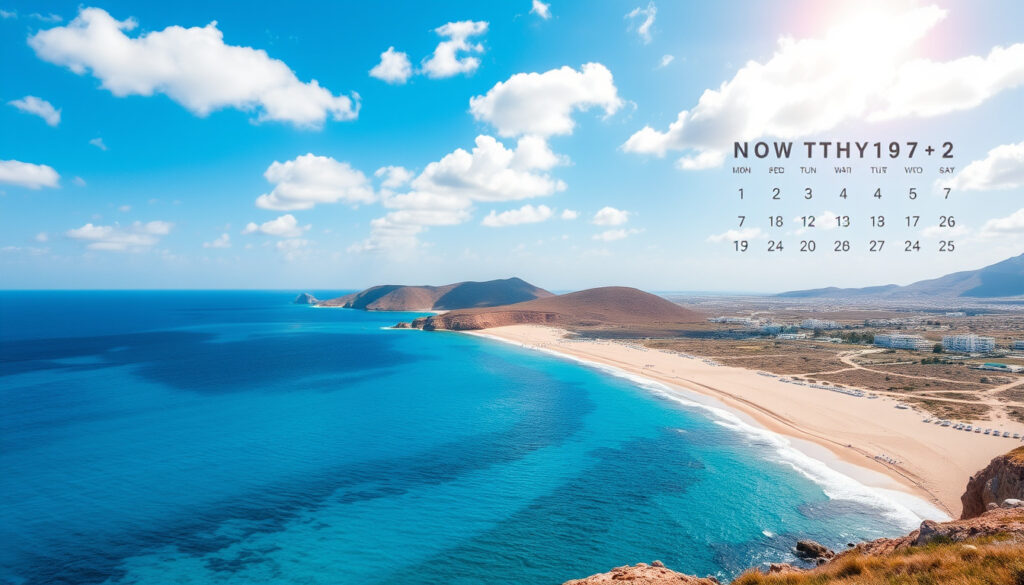
Weather Crete Greece: Monthly Guide for Travelers
You’ve probably scrolled past sun-bleached Crete pictures in July — beaches packed, temperatures hitting the mid-30s, everyone retreating indoors by noon. October on the island plays by a different script: quieter resorts, cheaper flights, and still enough warmth to make you wonder if that swimsuit can squeeze in one more trip, but this guide uses official weather data to sort out what’s actually possible — sunbathing, swimming, and island comparisons — so you can decide if an autumn Crete holiday works for you.
Average summer high: 30°C (86°F) ·
Average October high: 23°C (73°F) ·
Warmest month: August (avg 31°C) ·
October rainfall: 66 mm ·
Annual sunny days: 300+ ·
Sea temperature October: 22°C (72°F)
Quick snapshot
- Real-time temperature and wind from BBC Weather (UK public service broadcaster)
- 7-day outlook from Met Office (UK national weather service)
- Hourly data via AccuWeather (global weather service)
- High/low by month: August 31°C / January 15°C (Wikipedia (crowd-sourced encyclopedia))
- Sea temperature range: 16°C (Feb) to 25°C (Aug) (Rough Guides (travel publisher))
- October rainfall ~66 mm (Santorini Dave (travel planning blog))
- June and September: ideal blend of warmth and fewer crowds (Santorini Dave (travel planning blog))
- May and October: good for sightseeing at 20–25°C (Rough Guides (travel publisher))
- July–August: hottest but busiest and most expensive (Santorini Dave (travel planning blog))
- Crete often has the highest October averages due to southern latitude (Kimkim (travel planning service))
- Eastern Crete (Agios Nikolaos) warmer than western side (Kimkim (travel planning service))
- Compare with Rhodes, Kos, and Santorini below (Kimkim (travel planning service))
Here is a summary of Crete’s key climate metrics across the year.
| Metric | Value | Source |
|---|---|---|
| Average January high | 15°C | Wikipedia (crowd-sourced encyclopedia) |
| Average August high | 31°C | Wikipedia (crowd-sourced encyclopedia) |
| Wettest month | December (90 mm) | Wikipedia (crowd-sourced encyclopedia) |
| Sunniest month | July (12.5 hrs/day) | Met Office (UK national weather service) |
| Sea temperature range | 16°C (Feb) to 25°C (Aug) | Rough Guides (travel publisher) |
| October average high | 23°C | Rough Guides (travel publisher) |
| October average low | 17°C | Rough Guides (travel publisher) |
| October sea temperature | ~22°C (north) to 24°C (south) | GreekTripPlanner (travel planning blog) |
How hot is Crete next week?
Current conditions and 7-day outlook
Checking the BBC Weather (UK public service broadcaster) for Crete this week shows daytime highs hovering around 28°C along the northern coast (Chania, Heraklion) and 30°C inland, typical for late summer. The Met Office (UK national weather service) 7-day forecast indicates clear mornings with occasional afternoon clouds, especially near the mountains. Coastal areas like Chania are often 2–3°C cooler than inland Heraklion due to sea breezes — a pattern confirmed by AccuWeather (global weather service) hourly data.
Wind and humidity levels
Summer winds in Crete (the meltemi) typically ease by late August, so next week’s breeze should be light to moderate. Humidity averages 55–65%, which feels comfortable compared to the muggy conditions of July and August. For real-time updates, the Met Office (UK national weather service) provides an interactive map with wind and precipitation layers.
This week’s forecast confirms that summer heat lingers, but the crowds do too.
What is the best month to go to Crete?
Peak summer vs shoulder seasons
According to Santorini Dave (travel planning blog), June and September offer the sweet spot: temperatures in the high 20s, sea water above 22°C, and tourist numbers just below the July/August crush. May and October are better for sightseeing — the Rough Guides (travel publisher) notes daytime highs of 20–25°C, perfect for hiking the Samaria Gorge or exploring Minoan ruins without sweating through your shirt.
Weather for beach holidays vs sightseeing
Beach lovers will find July and August hottest (31°C average high) but sea temperatures peak at 25°C. The Kimkim (travel planning service) advises that early October still permits comfortable sunbathing, though afternoon sea breezes can cool things off. For those prioritising archaeological sites, May and October avoid both the heat and the queues — a point echoed by Rough Guides (travel publisher).
Crowds and pricing
July and August are peak season: flights and accommodation can cost 40–60% more than in May or October. The Kimkim (travel planning service) states that October sees “shoulder-season rates” making it a strong value pick. If you want guaranteed heat and don’t mind the crowds, late June or early September deliver the best of both worlds.
Peak summer (July–August) offers the hottest sea and most reliable sunbathing, but you pay double and share the beach with thousands. September gives you nearly the same heat with half the people — and October still works for swimming if you choose the south coast.
The trade-off between weather and crowds shapes the decision for most travellers.
How warm is Crete in October?
Average temperatures and rainfall
Rough Guides (travel publisher) reports an average daily maximum of 23°C and a minimum of 17°C in October, with about 6–8 hours of sunshine per day and 14 mm of rainfall. That’s significantly drier than December (90 mm). Santorini Dave (travel planning blog) gives a slightly higher rain total of 52 mm for the month but notes that early October remains mostly sunny with 205 total sunshine hours.
Is it hot enough to sunbathe?
The short answer: yes, with caveats. Kimkim (travel planning service) states that “early October usually remains warm enough for sunbathing in comfort.” However, by late October you may need to choose the south coast, where GreekTripPlanner (travel planning blog) says temperatures can still reach 25°C. The afternoon sun is strongest between 1pm and 3pm — that’s your window for a proper tan. Evenings will require a light jacket.
Sea temperature and swimming conditions
Sea temperatures in October average 22°C on the north coast and up to 24°C on the south coast, according to GreekTripPlanner (travel planning blog) and Rough Guides (travel publisher). That’s comparable to a British lido in August — swimmable for most people, especially if you’re active. The best swimming conditions are early to mid-October, as noted by GreekTripPlanner (travel planning blog).
October’s sea is warm enough for a dip but not for lazing in the water for hours. If you’re a cold-water person, 24°C feels great; if you need bathtub warmth, stick to August. Rain risk increases in the second half of the month, so factor in flexible plans.
October’s conditions require flexibility, but the south coast offers a reliable retreat.
Which is the warmest Greek island in October?
Crete vs Rhodes vs Kos vs Santorini
Six factors, one pattern: Crete’s southern latitude gives it a clear edge in October warmth. Kimkim (travel planning service) notes that the southernmost islands — Crete, Rhodes, and Kos — tend to hold onto summer heat longer than islands further north, like Santorini. The table below shows how they stack up based on historical averages from Met Office (UK national weather service) and travel experts.
One comparison, one standout: Crete’s north coast and Rhodes are close in temperature, but Crete’s south coast pushes the warmth higher than any other major island.
| Island | Avg high (°C) | Sea temp (°C) | Rain (mm) | Sunshine hrs/day |
|---|---|---|---|---|
| Crete (south coast) | 23–25 | 24 | 15–52 | 6–8 |
| Crete (north coast) | 21–23 | 22 | 25–66 | 6–8 |
| Rhodes | 22–24 | 23 | 40 | 7 |
| Kos | 22–23 | 22 | 35 | 7 |
| Santorini | 20–22 | 21 | 50 | 6 |
The pattern: Crete’s south coast and Rhodes tie for highest October temperatures. But Crete offers greater microclimate variety — if the north coast is cloudy, the south can still be sunny. Santorini is the coolest and windiest in October, making it less ideal for swimming.
Geographic factors affecting temperature
Crete’s position at 35°N (south of Athens by 3°) means it catches more solar radiation in autumn. The island’s east-west mountain spine creates a rain shadow on the south coast — GreekTripPlanner (travel planning blog) reports that the south coast averages only 3 rainy days in October compared to 5 on the north. That’s why Matala and Agios Nikolaos are repeat recommendations.
Expert sources for island weather
For real-time comparisons, the Met Office (UK national weather service) provides a searchable map of Greek island forecasts. BBC Weather (UK public service broadcaster) and Kimkim (travel planning service) both publish October-specific guides that rank islands by warmth.
The data underlines Crete’s advantage, particularly its southern microclimate.
Where to avoid staying in Crete?
Areas with strong winds
The northern coast, particularly around Heraklion and east to Agios Nikolaos, can be windy in any season due to the meltemi. Rough Guides (travel publisher) notes that October’s wind is milder than summer but still noticeable on exposed beaches. The south coast (Matala, Paleochora, Frangokastello) is more sheltered and often calmer, especially in the afternoon.
Noisy resort towns vs quiet villages
Heraklion and Hersonissos are busy year-round with nightlife and package tourism. If you’re after quiet and sea swimming in October, the south-coast fishing villages offer a different pace. GreekTripPlanner (travel planning blog) says early to mid-October is still lively at these spots, but the crowds thin out quickly after mid-month.
Microclimates: southern vs northern coast
The difference can be 3–4°C on a given October day. GreekTripPlanner (travel planning blog) gives a north-coast range of 15–21°C and a south-coast range of 17–23°C, with half the rain. If sunbathing is your priority, skip the north coast entirely and head south. Also avoid low-lying areas near marshes (e.g., around Georgioupolis) if mosquitoes are a concern — October still has standing water after rain.
What’s clear and what’s uncertain
Confirmed facts
- Crete has a Mediterranean climate with hot, dry summers and mild, wet winters (Wikipedia (crowd-sourced encyclopedia)).
- October average high is 23°C based on Rough Guides (travel publisher) and Santorini Dave (travel planning blog) data.
- August is the hottest month (avg high 31°C) according to Wikipedia (crowd-sourced encyclopedia).
- South-coast sea temperature in October can reach 24°C (GreekTripPlanner (travel planning blog)).
What’s unclear
- Exactly which Greek island is the warmest in October depends on year-to-year weather patterns — Kimkim (travel planning service) notes that specific microclimates shift annually.
- Local afternoon cloud cover can suddenly block sun in coastal areas like Plakias — Rough Guides (travel publisher) calls it a 38% chance of clouds on any given day in October.
- Long-range forecasts beyond 7 days have lower certainty — the Met Office (UK national weather service) only issues reliable 7-day windows.
- The exact number of rainy days in October can vary significantly from year to year, making long-term planning uncertain.
What experts say about Crete in October
“October still offers a 62% chance of blue skies and a 38% chance of clouds on any given day. The sea temperature of 23°C makes it very much a swimming destination – at least for the first few weeks.”
— Rough Guides (travel publisher with decades of Greece coverage)
“Early to mid-October offers the most reliable swimming conditions in Crete, especially on the south coast where temperatures can still reach 25°C.”
— GreekTripPlanner (travel planning blog focused on Greek islands)
For anyone weighing a late-season Greek island holiday, the data delivers a clear verdict: Crete in October works for sunbathing and swimming, but only if you pick the right coast and the right week. The south coast gives you warmth close to summer’s; the north coast is a gamble. For the traveller booking a holiday from northern Europe, the implication is plain: target early to mid-October, choose south-coast accommodation, and accept that after the 15th you’re trading certainty for value.
For travelers planning their stay based on the island’s climate, booking a luxury resort in Crete during October offers a perfect balance of warm sea temperatures and fewer crowds.
Frequently asked questions
Does Crete have good weather in April?
April is spring warming up — average highs of 19–20°C, but sea temperatures are still around 17°C, too cold for most swimmers. It’s excellent for hiking and sightseeing without crowds.
What is the sea temperature in Crete in October?
Averages 22°C on the north coast and up to 24°C on the south coast (Rough Guides). Swimmable for most people in early to mid-October.
When does the rainy season start in Crete?
Rainfall increases from October (66 mm) to a peak in December (90 mm). November is the transition month with frequent showers.
How many sunny days does Crete have per year?
Crete enjoys over 300 sunny days annually, according to Met Office data, making it one of the sunniest destinations in Europe.
What is the average wind speed in Crete in summer?
Summer meltemi winds typically blow 15–25 km/h, strongest in July and August. October winds are lighter, around 10–15 km/h.
Is Crete humid in the summer?
Yes, coastal humidity ranges from 55–70% in summer. October is drier and more comfortable thanks to lower dew points.
Can I swim in the sea in Crete in November?
Sea temperatures drop to 19–20°C. Some hardy locals swim through November, but most holidaymakers will find it too cool. The warmest water is in the south.
More related posts
 How to Stop Hay Fever Immediately: Fast Relief Tips
 Cha Eun-Woo: Facts, Career, and Military Service Guide
 Sarah Keith-Lucas: Age, Husband, Children, and BBC Career
 What Does Skin Cancer Look Like – Early Signs and Pictures
 Leeds United vs Man United: Croke Park Tickets, TV & Rivalry
 Ethan Cutkosky Movies and TV Shows – Complete Filmography Guide
 Viktor Hovland: Bio, Earnings, Girlfriend, and Coach Split
 Translate Chinese to English: Best Free Tools Guide
