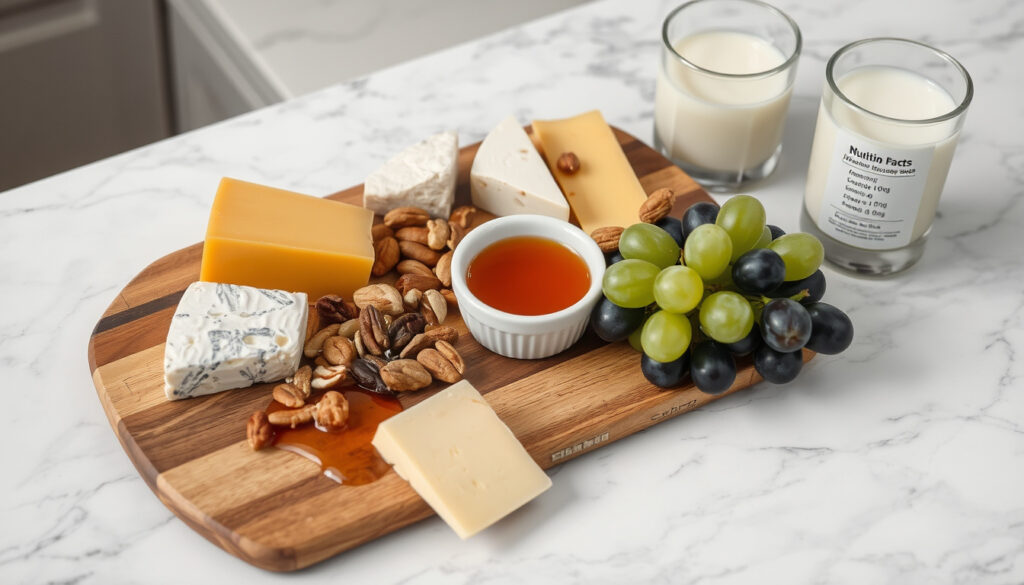
Is Cheese Good for You? Health Benefits, Risks, and What to Eat
Few kitchen staples spark as much debate as cheese. Is it a calcium-rich ally or a sodium-laden indulgence? The truth depends on which cheese you choose, how much you eat, and what health goals you’re aiming for. A 2023 review in Advances in Nutrition found that about 1.5 ounces of cheese daily was linked to a lower risk of heart disease and stroke (Harvard Health Publishing).
Calcium source: Good source for Americans (British Heart Foundation) · Daily cheese intake: Linked to lower CVD risk (Harvard Health Publishing) · Saturated fat in cheddar: ~5 g per ounce (Harvard Health Publishing) · Sodium caution: High in processed cheese (British Heart Foundation)
Quick snapshot
- Choose soft, fresh cheeses lower in saturated fat (British Heart Foundation)
- Moderate intake associated with lower CVD risk (Harvard Health Publishing)
- Low-carb, does not spike blood sugar (American Diabetes Association Standards of Care 2024)
- Pair with fiber for stable glucose levels (WebMD)
- Cottage cheese (British Heart Foundation)
- Swiss cheese (lower in sodium) (British Heart Foundation)
- Part-skim mozzarella (Harvard Health Publishing)
- Processed cheese spreads (British Heart Foundation)
- Blue cheese (high saturated fat) (Harvard Health Publishing)
- Full-fat cheddar (Harvard Health Publishing)
| Fact | Value |
|---|---|
| Calcium source | Good source of calcium (British Heart Foundation) |
| Daily cheese intake & heart disease | Linked to lower risk of heart disease, stroke, and cardiovascular death (Harvard Health Publishing) |
| Saturated fat in cheddar | ~5 g per ounce (Harvard Health Publishing) |
| Sodium in processed cheese | High; check labels (British Heart Foundation) |
Is it okay if I eat cheese every day?
Yes, for most people, a daily serving of cheese is fine — as long as you watch portion size and choose wisely. The 2023 Advances in Nutrition review linked ~1.5 oz a day to lower cardiovascular risk.
Is cheese good for your heart?
- A 2023 review in Advances in Nutrition found that average cheese intake of about 1.5 ounces per day was associated with lower risk of heart disease, stroke, and cardiovascular death (Harvard Health Publishing).
- The British Heart Foundation notes cheese is not off-limits, but saturated fat and sodium remain the main nutrients of concern (British Heart Foundation).
A heart patient swapping one daily serving of processed meat for an ounce of cheese could improve their saturated fat profile without raising LDL — provided they choose a lower-sodium, lower-fat variety.
Is cheese healthy for weight loss?
- Cheese is calorie-dense: about 110 cal per ounce for cheddar. But its protein and fat can increase satiety.
- A 2021 systematic review in Nutrients cited by Harvard Health suggests dairy intake, including cheese, does not hinder weight loss when total calories are controlled (Harvard Health Publishing).
Is cheese good for your gut?
- Fermented cheeses (cheddar, Gouda, Swiss) contain live probiotics that may support gut microbiota (Advances in Nutrition review).
- The effect varies by cheese type and processing; yogurt and kefir provide more consistent probiotic benefits.
The implication: daily cheese is safe for most adults, but the type matters. Hard, aged cheeses offer calcium and probiotics; processed spreads deliver mostly sodium and additives.
What cheese can you eat with heart disease?
If you have heart disease, you don’t need to banish cheese — but you do need to pick varieties lower in saturated fat and sodium.
Which cheeses are lowest in saturated fat?
- Soft fresh cheeses: quark, cottage cheese, ricotta (approx 1–2 g sat fat per ounce) (British Heart Foundation).
- Part-skim mozzarella: ~4 g per ounce (Harvard Health Publishing).
- Goat cheese: ~4 g per ounce (Harvard Health Publishing).
What about sodium in cheese?
- Swiss cheese, Emmental, and fresh mozzarella are lower in sodium (British Heart Foundation).
- Processed cheese slices and cheese spreads can contain 300–500 mg sodium per ounce — check the label.
The trade-off: heart patients can enjoy cheese by choosing soft, fresh types and keeping portions to about 1 oz. A sprinkle of parmesan over vegetables adds flavor without overdoing saturated fat.
Is cheese ok for prediabetes?
Yes — cheese is naturally low in carbohydrates and has minimal effect on blood glucose.
Does cheese spike blood sugar?
- Most cheeses contain less than 1 g of carbs per ounce, so they do not raise glucose appreciably (American Diabetes Association Standards of Care 2024).
- The ADA emphasizes overall carbohydrate quality and individualized patterns rather than forbidding specific foods.
What cheeses are best for prediabetes?
- Pair cheese with fiber (whole-grain crackers, apple slices) to slow absorption and promote satiety (WebMD).
- Cottage cheese, mozzarella, and Swiss are good options because of lower fat or sodium.
For someone with prediabetes, the real risk is not cheese itself but the high-calorie, high-sodium combo (e.g., cheesy nachos). Stick to an ounce of cheese with a handful of nuts or berries.
Which is the healthiest cheese to eat?
Four cheeses consistently top nutrition lists for their favorable ratios of protein, calcium, and lower saturated fat.
Is cottage cheese healthy?
- Cottage cheese is low in fat (1 g per ½ cup for low-fat), high in protein (14 g), and provides calcium (British Heart Foundation).
Is feta healthy?
- Feta is lower in calories than many hard cheeses and contains conjugated linoleic acid (CLA), which some research links to better body composition.
- However, feta is high in sodium (around 300 mg per ounce).
Is mozzarella healthy?
- Part-skim mozzarella provides around 7 g protein and 4 g saturated fat per ounce, making it a moderate choice (Harvard Health Publishing).
The implication: if you want a daily go-to cheese, cottage cheese and part-skim mozzarella offer the best balance of nutrients for most people. Swiss is a sodium-wise alternative for sandwiches.
What is the unhealthiest cheese?
Not all cheese is created equal. Some varieties pack so much saturated fat, sodium, and additives that they’re best reserved for occasional indulgence.
What cheese is highest in saturated fat?
- Blue cheese, Brie, and aged cheddar contain 5–6 g saturated fat per ounce (Harvard Health Publishing).
- Parmesan also falls in the high-saturated-fat group.
Is processed cheese unhealthy?
- American cheese and processed cheese spreads are high in sodium (300–500 mg per ounce) and often contain additives like sodium phosphate and carrageenan (British Heart Foundation).
The trade-off: a small amount (e.g., a sprinkle of blue cheese on a salad) is fine, but making these your daily choice can push saturated fat above recommended limits.
| Cheese type | Saturated fat (per oz) | Sodium (per oz) | Best for |
|---|---|---|---|
| Cottage cheese (low-fat) | ~1 g | ~125 mg | Weight loss, heart health |
| Part-skim mozzarella | ~4 g | ~175 mg | Daily general use |
| Swiss cheese | ~5 g | ~50 mg | Low-sodium need |
| Cheddar (full-fat) | ~5 g | ~180 mg | Occasional use |
| Blue cheese | ~5 g | ~300 mg | Flavor accent |
| Processed cheese spread | ~3 g | ~400 mg | Limit intake |
Upsides
- High-quality protein and calcium
- Fermented cheeses provide probiotics
- Low-carb, safe for blood sugar
- Moderate intake linked to lower CVD risk
Downsides
- High saturated fat in many varieties
- Sodium can be excessive
- Calorie-dense (easy to overeat)
- Processed cheeses contain additives
What we know — and what remains unclear
Confirmed facts
- Cheese is a good source of calcium, protein, and vitamins (British Heart Foundation).
- Moderate cheese consumption can be part of a heart-healthy diet (Harvard Health Publishing).
- 1.5 oz daily associated with lower cardiovascular disease risk (Harvard Health Publishing).
What’s unclear
- Whether all cheese types are equally beneficial for heart health — some studies aggregate dairy.
- Optimal daily cheese amount for individuals with prediabetes beyond general low-carb guidance.
- The long-term impact of high intake of aged cheeses on gut microbiome diversity.
Expert perspectives
Soft fresh cheeses like quark, cottage cheese and ricotta tend to be lower in saturated fat.
— British Heart Foundation dietitian (British Heart Foundation)
A daily serving of cheese is linked to a lower risk of heart disease, stroke, and death from cardiovascular disease.
— Harvard Health Publishing (Harvard Health Publishing)
For a person with heart disease or prediabetes, the choice is clear: incorporate modest portions of low-fat, low-sodium cheeses like cottage cheese or part-skim mozzarella, and reserve high-fat options for occasional use. For the general consumer, daily cheese is fine — just keep it to an ounce or two, and favor fermented, unprocessed varieties.
For a more extensive look at the nutritional profile and potential drawbacks, we recommend a detailed breakdown of cheeses health effects.
Frequently asked questions
Is cheese good for your teeth?
Yes — cheese is rich in calcium and casein, which help strengthen enamel and neutralize oral acids (British Heart Foundation).
Is cheese good for kids?
Cheese provides protein, calcium, and vitamin D for growth. Choose low-sodium, full-fat varieties for toddlers; limit processed cheese snacks.
Is cheddar cheese good for you?
In moderation, yes — cheddar offers calcium and protein, but it is high in saturated fat (~5 g per ounce) and sodium. Best used as a flavor accent.
What is the 3 cheese rule?
A popular nutrition guideline suggests limiting cheese to three portions per day (each about 1 oz). It’s a practical cap for managing saturated fat and sodium intake.
Is cheese good for weight loss?
Yes, when part of a calorie-controlled diet. Its protein and fat increase satiety, but portions matter — stick to 1 oz per serving.
Can cheese help with weight loss?
Some studies suggest dairy can support weight loss due to calcium’s role in fat metabolism, but the effect is small and depends on overall diet (Harvard Health Publishing).
More related posts
 Race Across the World Celebrity 2025 – Winner, Cast and Results
 Why Revolut Is Bad: Downsides, Safety & Controversies
 Tesla Model 3 Performance – UK Specs, 0-60, Range, Price
 What is a SIPP? UK Guide to Self-Invested Personal Pensions
 Ice Rink Near Me – Chicago Suburbs Skating Guide
 Philip Pullman: His Dark Materials, Religion & Controversy
 Liverpool vs Atlético Madrid – Van Dijk Seals 3-2 Win
 Marie Antoinette: Biography, Children, Death & Legacy
