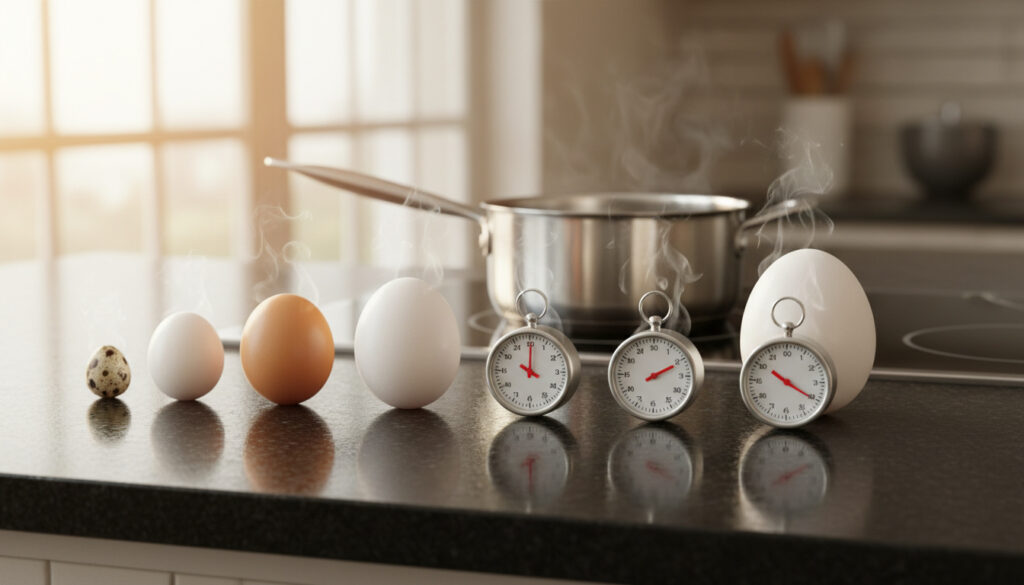
How Long to Soft Boil an Egg – Exact Times by Size
Soft-boiled eggs occupy a precise culinary territory between raw and rigid. Achieving that perfect balance—whites fully set, yolks luxuriously yielding—demands specific timing that shifts based on egg size, starting temperature, and desired consistency. Unlike their hard-boiled counterparts, soft-boiled eggs require active attention, with the window between runny and rubbery spanning mere minutes.
Mastering this technique transforms breakfast routines and elevates simple dishes. Large eggs simmered for six to seven minutes produce the jammy yolk ideal for toast or grain bowls, while refrigerator-cold specimens demand additional time to reach the same internal temperature. Understanding these variables separates inconsistent results from breakfast perfection, much like precision defines How to Make Coffee – Essential Ratios and Brewing Methods.
How Long to Soft Boil an Egg?
Cooking duration depends primarily on egg size and target yolk texture. Small eggs weighing approximately 45 grams cook significantly faster than large 58-59 gram specimens, requiring one to two minutes less time to achieve equivalent doneness, according to timing tests.
| Egg Size | Runny Yolk (Soft) | Jammy Yolk | Firm Yolk |
|---|---|---|---|
| Small (45g) | 4 minutes | 5 minutes | 6 minutes |
| Medium | 4.5 minutes | 5.5 minutes | 6.5 minutes |
| Large (58-59g) | 5-6 minutes | 6-7 minutes | 7-8 minutes |
| Extra Large | 6 minutes | 7 minutes | 8-9 minutes |
Key insights from culinary testing reveal critical timing factors:
- Room temperature eggs cook approximately one minute faster than refrigerator-cold eggs
- Jammy yolks at six to seven minutes represent the optimal texture for toast and ramen applications
- Firm yolks at seven to eight minutes approach hard-boiled consistency while remaining tender
- High altitude cooking requires one to two additional minutes due to reduced boiling points
- Visual inspection remains necessary; timers provide guidance but cannot account for individual stove variations
- Starting temperature significantly impacts final texture more than many cooks anticipate
| Method | Start Temperature | Time Range | Notes |
|---|---|---|---|
| Stovetop Cold Start | Fridge Cold (4°C) | 6-7 minutes | Bring to boil first, then reduce to simmer |
| Stovetop Cold Start | Room Temperature | 5-6 minutes | Reduce standard timing by one minute |
| Stovetop Boiling Start | Any | 6-7 minutes | Lower into simmering water gently with slotted spoon |
| Cold Start Off-Heat | Fridge Cold | 11-13 minutes | Lid on, removed from heat for firm yolks only |
| High Altitude (3000ft+) | Fridge Cold | +1-2 minutes | Add time based on specific elevation |
| High Altitude (5000ft+) | Fridge Cold | +2 minutes | Water boils approximately 10°F lower at this elevation |
How to Soft Boil an Egg Step by Step
Two primary stovetop methods dominate culinary practice, each offering distinct advantages for consistency and speed. The cold start method provides more forgiving results for beginners, while the boiling water approach suits experienced cooks seeking precise control.
The Cold Start Method
Place eggs in a single layer at the bottom of a saucepan. Cover with cold water by one to two centimeters and add a pinch of salt. Egg Info UK recommends bringing the water to a rolling boil over high heat, then immediately reducing to a gentle simmer. Cook three to six minutes for runny yolks, six to seven minutes for jammy centers, or seven to eight minutes for firm textures. Transfer immediately to an ice bath for one to three minutes to arrest cooking.
The Boiling Water Method
Bring water to a rolling boil first, then reduce to a gentle simmer to prevent thermal shock cracking. Love and Lemons testing indicates that lowering eggs carefully with a slotted spoon and simmering for six to seven minutes produces consistent jammy yolks. This method requires room-temperature eggs for best results; cold eggs may crack upon entry.
Microwave Method Considerations
No reliable microwave timing protocols exist in current culinary literature. Steam buildup within the shell creates significant explosion hazards, making stovetop methods the professional standard for safety.
Starting eggs in cold water provides more consistent results because the eggs heat gradually, reducing thermal shock that causes cracked shells. This method accommodates slight variations in egg size more forgivingly than dropping eggs directly into boiling water.
How Do You Know When a Soft-Boiled Egg Is Done?
Determining doneness requires multiple sensory checks, as visual inspection through the shell proves impossible. Experienced cooks rely on tactile tests and sacrificial sampling to verify texture before serving.
Visual and Tactile Cues
Upon cracking, the white should appear fully opaque and set, never translucent or gelatinous. According to Love and Lemons, runny yolks flow freely when cut, while jammy yolks hold their shape but ooze slowly. Firm yolks slice cleanly without collapsing but retain moisture.
The Spin Test
Place the cooked egg on a flat surface and spin it gently. A properly cooked soft-boiled egg spins smoothly and rapidly. Overcooked specimens wobble or refuse to spin evenly due to the solidified yolk displacing the center of gravity.
The Cut Test
Video testing demonstrates that sacrificing one egg to cut open and inspect provides the only definitive verification. Adjust remaining eggs’ ice bath timing based on this sample.
FDA guidelines recommend cooking eggs to 160°F internally to eliminate Salmonella. Soft-boiled eggs typically reach 140-158°F, presenting potential food safety risks for immunocompromised individuals, pregnant women, and young children.
Tips for Perfect Soft Boiled Eggs Every Time
Consistency requires attention to variables beyond the timer. Egg age, peeling technique, and environmental factors significantly impact final presentation.
Mastering the Peel
Culinary testing shows that chilling cooked eggs in ice water for one to three minutes contracts the white from the shell. Tap the bottom (wider end) to crack the air pocket, then slide a spoon between the shell and membrane to loosen. Eggs aged one to two weeks peel more easily than ultra-fresh specimens.
Altitude Adjustments
Water boils at lower temperatures as elevation increases. At 3,000 feet above sea level, add one minute to standard times. At 5,000 feet, add two minutes. No specific high-altitude soft-boil charts exist in current literature, requiring cooks to test and adjust based on local barometric conditions.
Troubleshooting Common Issues
Cracked shells indicate thermal shock or overcrowding in the pot. Undercooked whites require an additional thirty to sixty seconds. Green rings around yolks signal overcooking; immediate ice bathing prevents this discoloration. Rubber yolks result from excessive cooking time—reduce by thirty seconds on subsequent batches.
Ultra-fresh eggs possess thicker albumen that adheres tightly to the shell membrane, making peeling difficult regardless of technique. For soft-boiled eggs intended for presentation, select eggs that have rested in refrigeration for seven to ten days.
What Is the Timeline for Soft Boiling an Egg?
Understanding the sequence of events helps coordinate preparation with serving. The entire process spans approximately fifteen minutes from refrigerator to plate.
- Preparation (0 minutes): Remove eggs from refrigerator or select room-temperature specimens. Fill pot with cold water and prepare ice bath in separate bowl.
- Heating (5-8 minutes): Bring water to rolling boil (cold start method) or maintain gentle simmer (boiling start method). Duration varies by water volume and heating element.
- Cooking (3-7 minutes): Simmer eggs according to size and desired doneness. Testing confirms large eggs require six to seven minutes for optimal jammy yolks.
- Arresting (1-3 minutes): Transfer immediately to ice bath to stop carryover cooking and prevent over-firming.
- Peeling (2-3 minutes): Crack shells, cool slightly if handling hot, and peel carefully for service.
What Factors Are Definite vs. Uncertain in Soft-Boiling?
Current culinary science establishes clear parameters for some variables while leaving others approximate. Cooks should recognize which elements require strict adherence and which demand personal calibration.
| Established Information | Uncertain or Variable Factors |
|---|---|
| Large eggs (58-59g) require 6-7 minutes for jammy yolks at sea level | Exact high-altitude adjustments vary by specific elevation and atmospheric pressure |
| Cold eggs require approximately 1 additional minute versus room temperature | Microwave timing remains untested and potentially hazardous |
| Ice bathing for 1-3 minutes effectively stops carryover cooking | Air fryer methods lack standardized timing data or safety protocols |
| Eggs aged 1-2 weeks peel more easily than fresh eggs | Individual stove heat output affects actual simmering temperature |
| Yolk coagulation begins at approximately 65°C (149°F) | Exact Salmonella risk levels for specific soft-boil times remain unquantified |
Why Do Soft-Boiled Egg Times Vary?
Egg size directly correlates with required cooking duration. Smaller eggs allow heat to penetrate the yolk center faster than large specimens due to reduced thermal mass. Starting temperature matters significantly; refrigerator-cold eggs at 4°C require additional time to reach the 65-70°C threshold necessary for jammy yolk coagulation.
Altitude affects boiling point physics fundamentally. Water boils approximately 2°F lower for every 1,000 feet of elevation gain, extending cooking times at mountain elevations. Gentle simmering prevents shell cracks caused by rapid thermal expansion, while aggressive boiling risks both cracked shells and uneven cooking. This precision in managing variables parallels the attention required when considering medication protocols like those in What Is Sertraline Used For – Dosage, Side Effects and More, where specific parameters determine outcomes.
Where Do These Timing Guidelines Come From?
Contemporary soft-boiling recommendations derive from extensive kitchen testing by culinary professionals and food scientists rather than singular authoritative sources. USDA guidelines address general egg safety but do not specify soft-boil times.
“For a soft-boiled egg with a runny yolk, large eggs should be simmered for 3-6 minutes depending on how runny you prefer the yolk.”
— Egg Info UK
“The perfect soft-boiled egg has a firm white and a jammy yolk that is slightly runny in the center.”
— Love and Lemons Culinary Testing
How Long Should You Soft Boil an Egg?
For consistently perfect results, simmer large eggs for six to seven minutes to achieve a jammy yolk ideal for toast and grain bowls. Adjust timing down by one minute for room-temperature eggs, and up by one to two minutes for high-altitude cooking. Always transfer immediately to an ice bath to preserve your desired texture. Understanding these fundamentals transforms soft-boiled eggs from unpredictable to reliable, much like mastering How to Make Coffee – Essential Ratios and Brewing Methods requires attention to specific measurements and timing.
Common Questions About Soft-Boiled Eggs
What is the difference between soft boil and hard boil?
Soft-boiled eggs feature fully set whites with yolks ranging from runny to jammy (3-8 minutes cooking time). Hard-boiled eggs cook 10-12 minutes until both whites and yolks are completely solid throughout with no moisture remaining.
Can you soft boil an egg in the microwave?
No reliable microwave method exists. Steam buildup inside the shell creates explosion risks. Stovetop simmering remains the only recommended technique for safe, consistent results.
Soft boiled egg time at high altitude?
Add 1-2 minutes to standard times depending on elevation. At 3,000 feet, add 1 minute; at 5,000 feet, add 2 minutes. Test one egg first to verify doneness before cooking the full batch.
Why do fresh eggs stick to the shell?
Ultra-fresh eggs contain thicker albumen that adheres to the inner membrane. Eggs aged 7-10 days allow the membrane to separate more easily from the cooked white during peeling.
Is it safe to eat soft-boiled eggs?
Soft-boiled eggs may not reach the 160°F temperature recommended by the FDA to kill Salmonella. Vulnerable populations should consume fully cooked eggs or use pasteurized eggs to minimize risk.
How do you peel a soft-boiled egg without breaking it?
Chill in ice water for 1-3 minutes, tap the bottom to crack the air pocket, and slide a spoon between the shell and egg to loosen gently without tearing the delicate white.
Why do soft boiled egg times vary between sources?
Variations reflect differences in egg size, starting temperature, altitude, and individual stove performance. Standardized times assume large eggs at sea level; actual cooking requires observation and adjustment.
What causes the green ring around the yolk?
Greenish-gray rings result from overcooking or high heat, causing iron in the yolk to react with sulfur in the white. Immediate ice bathing prevents this discoloration.
More related posts
 Mamma Mia 2 Cast: Full List, Young Stars & Changes
 Lightning McQueen: Real Car, Catchphrase, and Character Facts
 How Many Galaxies Are There in the Universe? Estimates and Facts
 The Range Bury St Edmunds: Hours, Phone, Dog Policy & Products
 Chloë Grace Moretz: Age, Relationships, Movies & Net Worth (2025)
 How to Declutter Digital Files: 5-5-5 Rule, 4 C’s & More
 The Open Leaderboard 2025: Winner, Re ult , and Tee Time
 Lily Allen and David Harbour: Breakup Timeline and Drama
