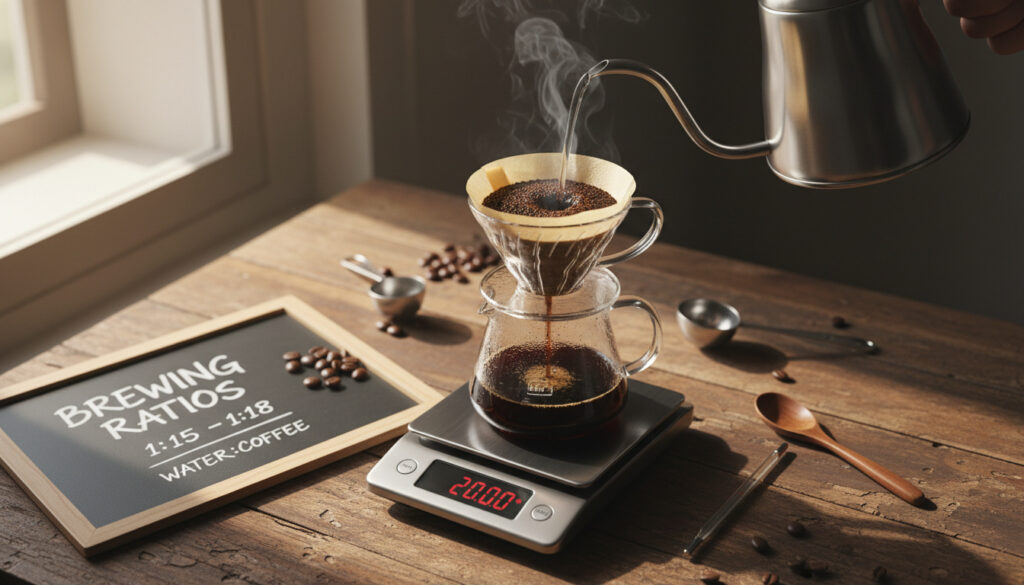
How to Make Coffee – Essential Ratios and Brewing Methods
Brewing coffee at home requires precision. Water temperature, grind size, and timing determine whether the result tastes balanced or bitter. Mastering these variables allows for consistent results without expensive equipment.
The process begins with understanding immersion versus percolation. French press steeps grounds in water, while pour-over methods filter water through the bed. Each technique extracts different compounds from the beans, altering body and clarity.
Modern specialty coffee standards, established by organizations like the Specialty Coffee Association, provide measurable benchmarks. Home brewers can apply these protocols using basic kitchen tools.
How Do You Make Coffee at Home?
Four fundamental approaches dominate home brewing. Each varies in time, required gear, and technical difficulty.
| Method | Time Required | Equipment | Difficulty |
|---|---|---|---|
| Drip (Auto/Manual) | 4–5 minutes | Coffee maker or filter cone | Easy |
| French Press | 4 minutes steep | Press pot | Medium |
| Pour-Over | 3–4 minutes | Dripper (V60/Chemex), filters | Medium |
| Stovetop (Moka Pot) | 10 minutes total | Moka pot, heat source | Easy |
Successful brewing depends on controlling five specific variables. Deviations in any factor compound to create off-flavors.
- Freshness: Use beans roasted within one month; grind immediately before brewing
- Water temperature: Maintain 195–205°F (91–96°C) for optimal extraction
- Coffee-to-water ratio: Standard 1:16.67 prevents bitterness while ensuring strength
- Grind consistency: Match particle size to filter type
- Equipment cleanliness: Residual oils create rancid flavors
- Bloom phase: Wet grounds initially to release carbon dioxide
Specific measurements remove guesswork. The following benchmarks apply across methods, though individual taste may require minor adjustments.
| Parameter | Standard Value | Strong Brew Value |
|---|---|---|
| Ratio (coffee:water) | 1:15 to 1:17 (1:16.67 SCA) | 1:12 to 1:14 |
| Grind size (French Press) | Coarse (sea salt texture) | N/A |
| Grind size (Drip/Pour-over) | Medium (sand texture) | Slightly finer |
| Grind size (Stovetop) | Fine (table salt texture) | Fine |
| Water temperature | 195–205°F | 200°F fixed |
| Steep/brew time | 4 minutes (immersion) | 3–4 minutes (percolation) |
| Total dissolved solids target | 1.15–1.35% | Upper range |
What Is the Ideal Coffee to Water Ratio?
The golden ratio for brewed coffee sits between 1:15 and 1:17, meaning one gram of coffee for every 15 to 17 grams of water. This range, recommended by specialty brewing guides, produces a balanced cup without excessive bitterness.
SCA protocols specify 1:16.67 precisely—55 grams of coffee per liter of water. This standardization targets optimal extraction levels while maintaining drinkable strength. Home brewers using tablespoons should measure approximately one to two tablespoons per six ounces of water, though weight-based measurement proves more accurate.
Adjusting for Strength Preferences
Stronger coffee requires less water, not prolonged extraction. Ratios between 1:12 and 1:14 intensify flavor without introducing the burnt notes associated with over-extraction. For an eight-ounce serving, this translates to 20–25 grams of coffee rather than the standard 15–20 grams.
Digital scales provide accuracy impossible with volumetric scoops. Coffee density varies by roast level and bean origin, causing tablespoon measurements to fluctuate by several grams.
How to Make Coffee Without a Machine?
Manual methods produce superior results without electrical brewing equipment. These techniques rely on basic physics—gravity, pressure, and heat—to extract flavor.
French Press Immersion
The French press operates through total immersion. Coarse grounds steep in hot water for four minutes before separation through a metal mesh filter. This method yields a full-bodied cup retaining natural oils. Brewing method guidelines suggest using one tablespoon (7–10 grams) of coarse-ground coffee per four ounces of water at 195–200°F.
Stovetop Moka Pot Extraction
Moka pots generate pressure through steam, forcing water through fine grounds to create espresso-strength concentrate. The technique requires filling the basket with 18–20 grams of fine grind and applying medium heat until steam rises. Total extraction time runs 25–30 seconds after preheating.
Stovetop brewing demands removal from heat immediately upon hearing bubbling sounds. Prolonged heating burns the coffee and creates metallic bitterness.
Pour-Over Clarity
Pour-over drippers such as the V60 or Chemex use percolation to produce clean, nuanced cups. Medium grind coffee receives an initial “bloom” pour—wetting grounds with half the water volume for 30–45 seconds to release carbon dioxide—followed by circular pouring of the remaining water. Counter Culture Coffee protocols emphasize rinsing paper filters first to eliminate paper taste.
How to Make Strong Coffee?
Strength correlates with total dissolved solids (TDS), ranging from 1.15% to 1.35% for standard cups. Achieving higher concentration requires adjusting grind size and ratio rather than extending brew time.
Grind Size Fundamentals
Finer grinds increase surface area contact, accelerating extraction. However, overly fine particles clog filters and create bitter compounds. Stovetop and espresso methods accommodate fine grinds, while French press requires coarseness to prevent sludge.
Extraction Variables
Water temperature significantly impacts strength perception. Water below 195°F under-extracts, producing weak, sour notes. Above 205°F scorches grounds, creating astringency. Creature Coffee recommends boiling water then resting it 30 seconds to reach the ideal range when thermometers are unavailable.
Bitterness indicates excessive extraction—either from water too hot, grinding too fine, or brewing too long. Weak, watery flavors signal under-extraction from opposite conditions.
Preheating equipment prevents temperature drops during brewing. Rinsing French press vessels or dripper cones with hot water maintains thermal stability critical for proper solubility.
How Long Does the Brewing Process Take?
Total preparation time varies by method, from under one minute of active extraction for Moka pots to four minutes for immersion brewing.
- Measure and grind beans: 30–60 seconds depending on grinder type
- Heat water to 195–205°F: 3–5 minutes on standard electric or gas stovetops
- Bloom grounds: 30–45 seconds for CO₂ release, particularly crucial for pour-over
- Primary extraction: 3–4 minutes for French press; 25–30 seconds for Moka pot pressure brewing; 3–4 minutes for drip methods
- Plunge or drain: 10–20 seconds
Video documentation from SCA-aligned educators demonstrates that pouring technique affects total contact time, altering final strength by several percentage points of TDS.
What Do We Know for Certain?
Scientific consensus exists regarding specific brewing parameters, while other factors remain subjective.
| Established Facts | Variable/Uncertain Factors |
|---|---|
| Water temperature must fall between 195–205°F for hot brewing | Optimal roast levels vary by personal preference and method |
| SCA golden cup requires 1:16.67 ratio and 1.15–1.35% TDS | Ideal water mineral content (hardness) for flavor perception |
| Fresh roasting (under 30 days) preserves volatile aromatics | Specific origin characteristics preferred for each method |
| Immersion methods require coarse grind; percolation uses medium | Universal bloom time across all bean ages and roast levels |
Why Do Extraction Methods Produce Different Flavors?
Chemical extraction follows different kinetics in immersion versus percolation systems. French press steeping allows full saturation of grounds, pulling lipids and colloids into the final cup that paper filters remove. This creates heavier mouthfeel but less clarity.
Percolation methods continuously introduce fresh water, preventing saturation equilibrium and extracting more acids and sugars initially, then tannins later if timing extends too long. Analysis of brewing methods indicates that pressure-based systems like Moka pots extract at higher concentrations due to forced water contact, creating viscosity similar to espresso without the nine-bar pressure of commercial machines.
What Do Coffee Authorities Recommend?
Specialty coffee institutions emphasize repeatability through measurement. The SCA’s standards provide the technical foundation for “golden cup” certification used by cafes and competitions.
Consistent grind size proves as critical as water temperature. Burr grinders create uniform particle distribution essential for even extraction, while blade grinders produce inconsistent sizes leading to simultaneous over and under-extraction.
Specialty Coffee Association Brewing Guidelines
Equipment maintenance equally impacts quality. Oils accumulate in French press screens and dripper spouts, oxidizing between uses. Regular cleaning with hot water—avoiding soap residue for taste-sensitive components—preserves flavor neutrality.
How Can You Improve Your Daily Brew?
Start with one variable: weigh coffee and water rather than estimating. Apply the How to Choose the Right Coffee Brewing Technique at Home principles for method selection, then adjust grind size in small increments until bitterness or weakness resolves. Fresh beans stored in airtight containers away from light maintain flavor intensity for weeks.
Common Questions
How long should coffee actually brew?
Immersion methods require four minutes. Percolation takes three to four minutes including the bloom phase. Stovetop pressure completes in under one minute after water heats.
Which grind size works for multiple methods?
Medium grind suits drip machines and pour-over drippers. French press demands coarse grind, while Moka pots require fine. No single grind works universally across all equipment.
Can I make coffee without electricity?
Yes. French press and pour-over require only hot water from any heat source. Manual grinders eliminate electrical dependence entirely.
Why does homemade coffee taste bitter?
Over-extraction causes bitterness. Check water temperature (likely too hot), grind size (possibly too fine), or brew time (exceeding four minutes for immersion methods).
How much coffee for twelve cups?
Standard ratio calculations suggest 70–75 grams per liter. For twelve eight-ounce cups (approximately 2.8 liters), use 160–170 grams of coffee, adjusting to taste.
Is a burr grinder essential?
Burr grinders provide consistent particle size critical for even extraction. Blade grinders create dust and boulders simultaneously, producing mixed extraction levels. Pre-ground coffee loses aromatics within minutes.
What is the “bloom” and why does it matter?
Bloom refers to wetting dry grounds with a small amount of water to release trapped carbon dioxide gas. Skipping this phase in pour-over methods causes uneven extraction and flat flavor.
More related posts
 Robert Kennedy Assassination: Facts, Timeline, Key Questions
 Jeff Bezos’ Ex-Wife MacKenzie Scott: Net Worth & Donations
 Pain Lower Left Abdomen: Causes in Males & Females
 Mamma Mia 2 Cast: Full List, Young Stars & Changes
 Benicio Del Toro: Daughter, Relationships, and Net Worth
 Pauline Collins dies at 85: obituary and life story
 John Gotti: Biography, Death, and Legacy of Gambino Crime Boss
 Flats to Rent Near Me in Ireland: Daft.ie Listings
