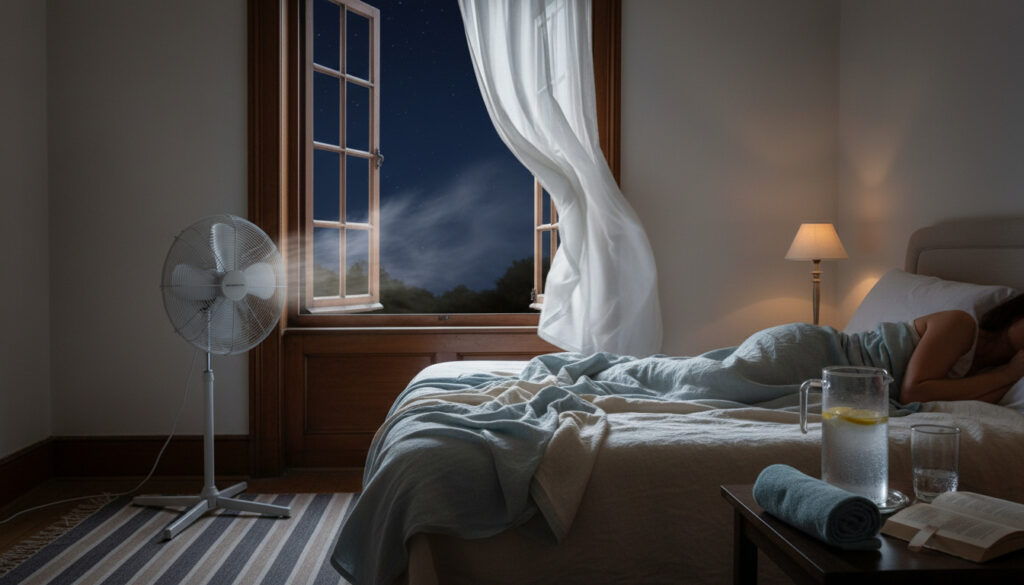
UK Heatwave Sleeping Arrangements – Tips for Cooler Nights
Sleeping through a UK heatwave presents genuine physiological challenges. When ambient temperatures refuse to drop after sunset, the body struggles to initiate sleep onset, which requires a core temperature reduction of approximately one degree Celsius. NHS guidance confirms that heat-related sleep disruption increases hospital visits for dehydration and breathing difficulties, particularly among vulnerable populations.
The frequency of tropical nights—where temperatures remain above 20°C—has increased across the UK, transforming occasional discomfort into a recurring summer hazard. Health authorities emphasize that preparation extends beyond personal comfort to genuine health protection, especially for households containing infants, elderly relatives, or individuals with respiratory conditions.
How to Sleep During a UK Heatwave?
Side sleeping with limbs extended increases surface area for heat dissipation.
Relocate to ground floor rooms where heat accumulation is minimal.
Strategic fan placement with cross-breeze circulation.
Cotton or linen sheets; avoid synthetic tog-heavy duvets.
Key Insights:
- The ideal bedroom temperature range is 16-18°C; anything above disrupts the natural body temperature drop required for sleep onset.
- Heat rises through buildings, making upstairs bedrooms significantly warmer than ground floor spaces.
- Electric fans aid sweat evaporation but only provide benefit when room temperature remains below 35°C.
- Natural fibers like cotton and linen outperform synthetics for moisture wicking and breathability.
- Evening hydration must balance thirst against sleep disruption from nocturnal bathroom visits.
- Maintaining consistent bedtime routines builds sleep pressure despite daytime heat fatigue.
| Factor | Recommendation | Rationale |
|---|---|---|
| Room Location | Downstairs or north-facing | Heat accumulation rises; lower floors remain cooler |
| Bedding Material | Cotton or linen sheets | Breathable natural fibers prevent heat trapping |
| Fan Enhancement | Bowl of ice water in front | Increases evaporative cooling effect |
| Pre-sleep Routine | Lukewarm shower | Lowers core body temperature gradually |
| Window Management | Closed day, open night | Blocks solar gain; allows cooler air circulation |
| Cooling Device | Cold water bottle at feet | Targets pulse points for rapid cooling |
Patient.info notes that heatwaves require specific adjustments to standard sleep hygiene practices.
Is It Better to Sleep Upstairs or Downstairs in a Heatwave?
Thermal dynamics within residential buildings create distinct temperature gradients during heatwaves. Hot air rises, concentrating heat in upper floor bedrooms and lofts. The London Borough of Hammersmith and Fulham advises that sleeping downstairs becomes necessary when upstairs rooms trap excessive heat.
The Physics of Heat Distribution
Solar gain throughout the day heats roof spaces and upper floors, creating thermal reservoirs that release heat slowly into the night. Ground floor rooms benefit from thermal mass and earth insulation, maintaining temperatures several degrees cooler than attic bedrooms. Consider temporarily relocating mattresses to downstairs living spaces during prolonged heatwaves.
Optimal Sleeping Positions
Positioning affects heat dissipation. The “starfish” position—lying on the back with arms and legs spread—increases surface area exposed to air. Side sleeping with a pillow between the knees maintains spinal alignment while allowing heat escape from the torso. Avoid curling into a fetal position, which concentrates body heat.
If bedroom temperatures exceed comfort levels, moving sleep arrangements to the coolest room in your home—typically downstairs or on the north-facing side—can reduce ambient temperature exposure significantly. Ensure adequate ventilation and safety when sleeping in unfamiliar rooms.
How Can I Cool My Bedroom for a Heatwave?
Preparation begins at dawn rather than dusk. The NHS recommends closing windows and curtains during daylight hours to block solar radiation, then opening them after sunset when outdoor temperatures drop.
Daytime Heat Blocking
External shading proves more effective than internal blinds. Light-colored curtains or reflective screens prevent heat from entering the building envelope. Remove electronic devices from bedrooms during heatwaves, as chargers and screens generate residual heat and obstruct airflow.
Nighttime Cooling Methods
Cross-ventilation requires strategic window opening—position openings on opposite sides of the building to create airflow pathways. Place a fan near an open window to exhaust warm air, or position it to draw cooler night air inward.
Electric fans circulate air effectively below 35°C room temperature. However, the NHS specifically warns against placing water and ice directly in front of fans when temperatures exceed 35°C, as this can increase humidity and exacerbate thermal stress rather than relieve it.
Safety Tips for Sleeping During Heatwaves
Vulnerable groups face magnified risks during hot nights. Southwest London NHS Integrated Care Board identifies specific high-risk categories: adults over 75 (particularly females), individuals with heart or lung conditions, diabetes, kidney disease, Parkinson’s, mental health conditions, babies, and those on multiple medications.
Protecting Children
Brood Magazine emphasizes creating calm environments for children during heatwaves. Keep electronics out of bedrooms to reduce both heat generation and overstimulation. Dress infants in lightweight cotton sleepwear or nappies only. Maintain regular evening hydration without excessive fluid intake that would cause nighttime waking.
Supporting Vulnerable Adults
Age UK recommends checking on elderly neighbors living alone, particularly those with underlying health conditions. Advise staying indoors between 11am and 3pm, drinking water regularly, and avoiding alcohol and caffeine. For those with asthma, continue preventer inhalers and shower after outdoor exposure to remove pollen.
Monitor for heat exhaustion signs including heavy sweating, dizziness, and nausea. Cool the person with damp cloths, ensure hydration, and seek NHS assistance via 111 or 999 for emergencies. Never leave vulnerable individuals unattended in stuffy upper rooms during severe heat.
What Is the Optimal Daily Timeline for Heatwave Preparation?
- Morning (06:00-09:00): Close all bedroom curtains and blinds before the sun heats the glass. Check fan functionality and freeze water bottles for nighttime use.
- Late Morning (09:00-12:00): Seal windows and doors to maintain cooler indoor air. Remove heavy bedding and replace with cotton sheets.
- Afternoon (12:00-17:00): Avoid caffeine and alcohol; maintain steady water intake. Stay out of the bedroom to prevent body heat from raising room temperature.
- Early Evening (17:00-20:00): Take a lukewarm bath or shower to lower core body temperature. Prepare lightweight evening meals.
- Sunset (20:00-21:00): Open windows on opposite sides of the home to create cross-ventilation. Position fans strategically.
- Bedtime (21:00+): Place cool water bottles at pulse points. Maintain usual sleep routines to preserve circadian rhythms despite the heat.
Which Heatwave Sleep Strategies Are Evidence-Based?
| Established Facts | Uncertain or Context-Dependent |
|---|---|
| Sleeping downstairs reduces heat exposure (heat rises) | Exact temperature thresholds for vulnerable groups |
| Cotton and linen bedding improves comfort | Universally ideal fan placement height |
| Fans safe and effective under 35°C | Regional humidity variations affecting cooling efficiency |
| 16-18°C optimal for human sleep | Specific cooling gel effectiveness compared to water |
| Lukewarm showers lower core temperature | Long-term impacts of temporary room relocation |
Why Does Heat Disrupt Sleep?
Thermoregulation plays a fundamental role in sleep architecture. The hypothalamus must reduce core body temperature by approximately one degree Celsius to initiate sleep onset. Heatwaves prevent this natural cooling process, prolonging sleep latency and reducing time spent in restorative slow-wave sleep stages.
Environmental heat also triggers increased sympathetic nervous system activity, elevating heart rate and perspiration. This physiological stress response contradicts the parasympathetic dominance required for sleep maintenance. While YouTube Video to MP3 – Safe Tools and Legal Guide offers digital solutions for entertainment, physical environmental control remains the primary factor for heatwave sleep quality.
What Do Health Authorities Recommend?
“Keep bedrooms shaded during the day by closing curtains or blinds to block sunlight, then open windows at night when outdoor temperatures drop for air circulation.”
— Patient.info, Sleep Better During a Heatwave
“Drink water regularly, eat cold foods, avoid alcohol, caffeine and hot drinks; use cool showers to manage body temperature during extreme heat.”
— NHS England, Heatwave Guidance
For comprehensive medication advice during extreme weather, consult the Pharmacy Open 24 Hours Near Me – Gilbert AZ Locations Guide.
What Are the Essential Heatwave Sleep Strategies?
Effective heatwave sleep management requires relocating to cooler ground floor rooms when possible, utilizing cotton bedding and strategic fan placement, maintaining consistent evening routines, and prioritizing vulnerable household members. Preparation beginning at dawn—closing curtains, freezing water bottles, and blocking solar gain—determines nighttime comfort more effectively than last-minute adjustments.
Common Questions About Heatwave Sleeping Arrangements
What temperature is too hot to sleep?
The ideal bedroom temperature is 16-18°C. Sleep quality degrades significantly above 24°C, while temperatures exceeding 35°C pose health risks, particularly when using certain cooling methods.
Can I leave windows open at night during a heatwave?
Yes, once outdoor temperatures drop below indoor levels, typically after sunset. This allows cooler air circulation. Close them during the day to block solar gain and hot air.
What is the best fan placement for sleeping?
Position fans to create cross-breeze by placing one near an open window to draw cool air in, or place a bowl of ice water in front of the fan—but only if room temperature remains below 35°C.
How do I cool a child’s bedroom specifically?
Remove electronic devices, use lightweight cotton bedding, ensure evening hydration, and maintain calm routines. Keep curtains closed during the day and open windows at night.
Should I sleep with wet hair during a heatwave?
Damp hair can provide temporary evaporative cooling but may cause neck discomfort or pillow dampness. A lukewarm shower before bed proves more effective for lowering core body temperature.
Is air conditioning necessary for UK heatwaves?
Most UK homes lack air conditioning. Fans, strategic ventilation, and room relocation typically suffice, though vulnerable individuals might consider portable units for critical health protection.
Why do I feel tired in heat but cannot sleep?
Heat causes physiological fatigue while simultaneously preventing the core temperature drop required for sleep onset, creating a paradox of exhaustion without sleep capability.
Can I use a frozen hot water bottle?
Yes. Fill a hot water bottle with cold water or freeze it, then place at feet or pulse points. Wrap in cloth to prevent ice burn on skin.
More related posts
 Archer Aviation Share Price: ACHR Stock Quote & Analysis
 Samsung Galaxy S22 Ultra in 2026: Still Worth Buying
 Cape of Good Hope – History, Facts and Visitor Guide
 Throne of Glass Series – Reading Order and Complete Guide
 Boys Haircuts Long on Top – 2025 Trends and Styles Guide
 What Does SMO Mean on Snapchat: Shout Me Out Slang Guide
 Coventry vs Sheffield United: 2-1 Win, Stats & Drama
 Bingo Blitz Free Credits: Daily Links & Promo Codes
