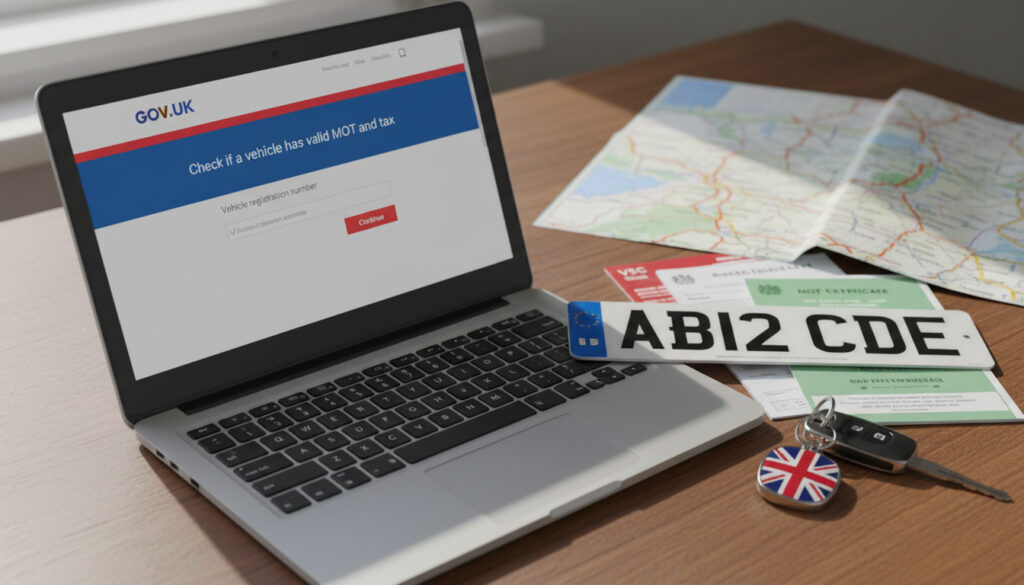
Check MOT and Road Tax – Free GOV.UK Online Guide
Verifying a vehicle’s legal status is a fundamental responsibility for every UK driver. Whether assessing a potential purchase or confirming your own car’s compliance, accessing MOT and road tax records takes less than a minute through official government channels. These free digital tools provide immediate clarity on expiry dates, test history, and potential penalties.
The Driver and Vehicle Licensing Agency (DVLA) maintains continuous records of taxed vehicles, while the Driver and Vehicle Standards Agency (DVSA) manages MOT testing data. Together, these datasets offer comprehensive visibility into a vehicle’s roadworthiness and financial compliance, accessible via simple online portals that require only a registration number.
This guide examines the exact process for retrieving these records, the legal implications of expired documentation, and the specific limitations drivers should understand when interpreting the results.
How Do I Check My Vehicle’s MOT and Road Tax Online?
The official GOV.UK platform provides instantaneous verification without registration fees or account creation. Drivers need only the vehicle registration number (number plate) to retrieve current tax status, MOT validity, and complete historical testing data dating back to 2005.
GOV.UK offers free, instant results direct from DVLA and DVSA databases
Vehicle registration number only; no login or personal details needed
MOT history from 2005, current tax status, and advisory notices
Under 60 seconds for basic status checks
- MOT history records display every test result, advisory notice, and recorded mileage to detect potential clocking
- Road tax automatically renews when paid via Direct Debit, though physical reminders cease with this method
- Driving without valid MOT risks a £1,000 fine and penalty points on your licence
- Untaxed vehicle penalties range from £80 to £1,000, plus clamping and potential impoundment
- System updates following taxation or SORN declarations require up to two working days to process
- Northern Ireland vehicles show limited MOT data, restricted to current status only
- Electric vehicles maintained zero road tax liability until April 2025, when new rates apply
| Aspect | Details | Source |
|---|---|---|
| Tax Status Check | Instant verification via registration number | GOV.UK |
| MOT Validity Period | Annual requirement after third registration anniversary | GOV.UK |
| MOT History Archive | Complete records from 2005 onwards | GOV.UK |
| Tax Rate Calculations | Based on CO2 emissions and fuel type | GOV.UK |
| System Update Lag | Up to 2 working days for recent changes | DVLA Digital |
| Northern Ireland Data | Current MOT status only; no historical records | DVSA |
| Electric Vehicle Taxation | Exemption ended April 2025 for new registrations | Carwow |
Where Can I Check MOT History for Free?
The GOV.UK MOT history service provides comprehensive testing records without charge. This archive includes every pass or fail result, recorded mileage at each test to detect potential tampering, and detailed lists of advisory notes and minor defects that indicate developing mechanical issues.
How Far Back Do Records Extend?
Digital MOT records began in 2005. The system displays all tests conducted since that date, allowing buyers to trace a vehicle’s maintenance trajectory across potentially dozens of examinations. Each entry shows the test location, odometer reading, and specific reasons for any failure.
What Information Appears in the Report?
Reports list test locations across England, Scotland, and Wales, categorizing defects as dangerous, major, or minor. Advisory items highlight components nearing failure. Mileage readings appear chronologically, making discrepancies immediately visible. The system also flags manufacturer recalls associated with the vehicle identification number.
Understanding Regional Data Limitations
Northern Ireland operates a separate vehicle testing scheme. Consequently, the GOV.UK checker displays only current MOT status for vehicles registered there, omitting historical test data, mileage records, and previous failure reasons available for mainland UK vehicles.
While commercial platforms mirror GOV.UK data for convenience, only the official government portal guarantees real-time accuracy. Third-party databases may experience synchronization delays, potentially showing outdated tax or MOT statuses that expose drivers to accidental non-compliance.
How Do I Check If My Road Tax Is Valid?
To verify road tax status, enter the vehicle registration number into the official enquiry service. Basic status confirmation requires no additional documentation. However, retrieving specific tax band rates or payment references necessitates the 11-digit reference number from the V5C log book.
Interpreting Tax Status Results
The system displays the exact expiry date, tax class, and payment method. Recent taxation actions or Statutory Off Road Notification (SORN) declarations require up to two working days to appear in the database, even though payment confirmation emails arrive immediately.
SORN and Electric Vehicle Considerations
SORN declarations exempt vehicles from tax liability while kept off public roads. Electric vehicles registered before April 2025 maintain tax-exempt status, though this exemption ceased for new registrations from that date, introducing standard rates based on emissions.
What Are the Fines for No MOT or Road Tax?
Operating a vehicle without valid documentation triggers immediate financial penalties. Driving without road tax incurs fines between £80 and £1,000, with enforcement officers authorised to clamp or impound the vehicle until payment and valid taxation are arranged.
Absence of a valid MOT certificate results in a £1,000 fine and penalty points. Combined non-compliance—driving without both tax and MOT—invokes enforcement notices, automatic penalties, and potential prosecution. Report untaxed vehicles through the official GOV.UK portal.
DVLA enforcement cameras automatically cross-reference number plates against tax databases. Fines arrive by post without prior warning, and clamping occurs immediately upon identification of persistent evaders.
Always cross-check insurance validity via askMID. While tax and MOT status appear on GOV.UK, insurance requires separate verification through the Motor Insurance Database. Always cross-check insurance validity via askMID, and for more information on potential health concerns, you can find details on Біль у правій руці.
How to Renew MOT and Road Tax?
- Month 36: First MOT required on the third anniversary of registration
- Annually: Book MOT test via GOV.UK or approved testing stations
- Pre-taxation: Confirm valid MOT certificate and active insurance policy
- Tax renewal: Complete online using V5C reference, reminder letter, or V5C/2 new keeper slip
- System update: Allow up to two working days for DVLA database synchronization
What Facts Can You Trust?
Established Information
- GOV.UK provides authoritative, real-time data direct from DVLA and DVSA
- Physical tax discs became obsolete in 2014; all records are digital
- MOT certificates are available as downloadable PDFs from the history service
- A valid MOT is mandatory before taxing any vehicle over three years old
Common Uncertainties
- Third-party checkers may display cached data several days old
- Recent tax payments sometimes appear delayed despite confirmation emails
- Northern Ireland historical MOT records remain inaccessible via the main portal
Why Verify Before Buying or Selling?
Checking MOT and tax status protects buyers from inheriting compliance debts or purchasing clocked vehicles. Mileage discrepancies visible in the test history often indicate odometer tampering. For sellers, demonstrating current documentation accelerates transactions and validates asking prices.
From April 2025, electric vehicle tax exemptions expired for new registrations, altering the total cost of ownership calculations that prevailed for over a decade. Buyers must now factor annual road tax into EV operating budgets. For businesses managing company vehicles, these checks form part of broader compliance frameworks that include driver verification and corporate transparency requirements, such as those outlined in the Companies House Identity Verification Launch – Dates Process and Requirements.
Where Does Vehicle Data Come From?
All vehicle tax data originates from the Driver and Vehicle Licensing Agency (DVLA), while MOT testing records derive from the Driver and Vehicle Standards Agency (DVSA). The Vehicle Enquiry Service combines these datasets, processing millions of checks monthly. Video guidance from the Motor Trader Association confirms GOV.UK as the primary verification source, though visual tutorials assist users unfamiliar with digital interfaces.
What Are the Next Steps?
Enter your registration number into the GOV.UK vehicle enquiry service to confirm current compliance. Set calendar reminders for MOT anniversaries and tax expiry dates. Consider Direct Debit arrangements to prevent accidental lapses. For additional financial guidance on vehicle ownership costs, consult the Be Clever With Your Cash – UK Finance Podcast Guide.
Common Questions
Can I check another car’s MOT and tax?
Yes. The GOV.UK services are public. Enter any vehicle’s registration number to view its MOT history and tax status without needing ownership documentation.
Is there a free vehicle checker for MOT and tax?
Yes. GOV.UK provides completely free, official checks with no account required. Avoid paid services offering the same information.
How long can you drive without MOT or road tax?
You cannot legally drive without valid road tax. Driving to a pre-booked MOT test is the only permitted exception without tax, but the vehicle must be insured.
Do I need an MOT to tax my vehicle?
Yes. A valid MOT certificate is mandatory before taxing any vehicle over three years old. The system cross-checks DVSA records during the taxation process.
How long is an MOT valid?
An MOT remains valid for one year from the date of issue. Vehicles require their first MOT on the third anniversary of registration, then annually thereafter.
What if my MOT history shows incorrect mileage?
Report discrepancies immediately to the testing station that conducted the examination. Incorrect recordings may indicate clerical errors or odometer tampering requiring investigation.
More related posts
 It Is What It Is – Meaning, Origins, Songs, Memes & More
 Flats to Rent Near Me in Ireland: Daft.ie Listings
 Allan Saint-Maximin: Career, Stats, and Controversial Departures
 Prince Edward, Duke of Kent: Biography, Age & Succession
 Why Zakk Wylde Was Kicked Out of Ozzy’s Band: Final Text & Funeral
 Most Spoken Language in the World – Native vs Total Speakers 2024
 Pharmacy Open 24 Hours Near Me – Gilbert AZ Locations Guide
 Bella Thorne: Career, OnlyFans, Relationships, and Latest News
