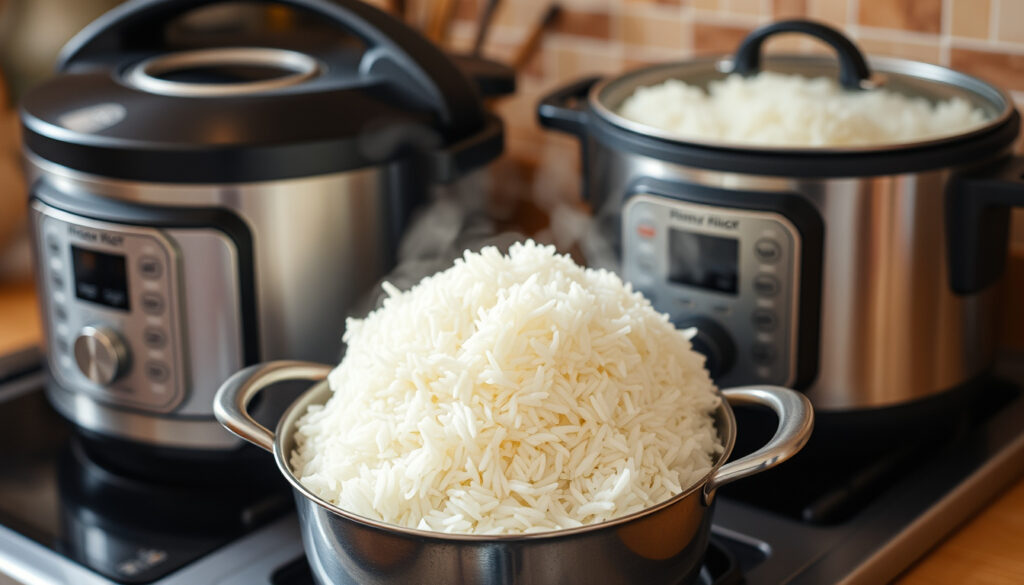
How to Cook Basmati Rice Perfectly: Stovetop, Cooker Tips
Few things frustrate a home cook more than ending up with a pot of gummy, clumped rice when you were aiming for perfectly separated, fragrant grains. Basmati rice—long-grain, aromatic, and traditionally grown in India, Nepal, and Pakistan—rewards a specific approach; get the ratio, rinsing, and resting right, and you’ll have results that rival your favorite Indian restaurant.
Water-to-rice ratio: 1:1.5 to 1:2 · Stovetop cook time: 12-20 minutes · Soaking time: 20-30 minutes · Rice cooker time: 15-20 minutes · Servings per cup: 3 cups cooked
Quick snapshot
- Ratios 1:1.5–2 from multiple sources (RecipeTin Eats)
- Rinse until water runs clear to prevent stickiness (The Mediterranean Dish)
- Rest 5-10 minutes after cooking for fluffy texture (The Mediterranean Dish)
- Exact “5-5-5 rule” specifics and origin
- Optimal rice cooker settings for low GI preservation
- Precise cook times for white vs. brown basmati varieties
- 2024: PMC study on resistant starch formation in basmati published (PubMed Central)
- Pre-2026: Diabetes UK publishes diabetic-friendly basmati recipes (Diabetes UK)
- Ongoing: Traditional North Indian boiling methods remain dominant (PubMed Central)
- More clinical human trials on home cooking vs. study methods
- Expanded research on rice variety-specific GI impacts
- Growing consumer demand for diabetic-friendly recipe optimization
These specs distill the essentials from multiple cooking methods into actionable targets.
| Parameter | Value |
|---|---|
| Ideal water ratio | 1 cup rice to 1.5 cups water |
| Cook time stovetop | 12 minutes simmer + rest |
| Soak duration | 20 minutes |
| Yield per cup dry | 3 cups cooked |
| Rest time after cooking | 5-10 minutes minimum |
| Basmati GI range | 56-69 (medium) |
How do you cook perfect basmati rice?
Perfect basmati starts before the pot even touches the stove. The key steps—rinsing, soaking, and respecting the resting time—separate restaurant-quality rice from the sad, mushy results that plague many home kitchens.
Rinse and soak steps
Cover the rice with cold water, swish gently, and drain. Repeat until the water runs mostly clear—typically 3-4 rinses. Soak the drained rice in fresh cold water for 20 minutes. This process removes excess surface starch that causes clumping, and it helps the grains hydrate evenly so they elongate rather than break apart during cooking (The Mediterranean Dish).
Rinsing removes starch, but if you’ve already measured your water carefully, a thorough 20-minute soak works almost as well for fluffiness without the extra step. RecipeTin Eats reports that their no-rinse method produces perfectly separated grains using a 1:1.5 ratio (RecipeTin Eats).
Basic stovetop method
Bring 1 cup of basmati rice and 1.5 cups of water to a boil, then simmer covered over medium-low heat for 12 minutes. Let the pot rest, still covered, for 10 minutes. Fluff with a fork before serving. Resist the urge to lift the lid during cooking—escaping steam is what turns rice gummy (RecipeTin Eats).
An alternative approach from The Mediterranean Dish uses olive oil to coat the dry rice before adding water, with optional aromatics like cardamom pods or bay leaves. After bringing to a boil, reduce to low, cover, and cook 15-20 minutes before resting (The Mediterranean Dish).
The implication: two seemingly minor decisions—whether to rinse and whether to add fat—compound across batches. Too much water causes gummy rice, especially when combined with rinsing, because you’re essentially diluting away the careful ratio you’ve set up.
What is the ratio of water to basmati rice?
The water-to-rice ratio is the single most consequential variable in basmati cooking. Get it wrong, and no amount of technique can compensate.
Standard ratios by method
For standard stovetop absorption cooking, the ratio runs between 1:1.5 and 1:2 (rice to water by volume). The lighter 1:1.5 ratio from RecipeTin Eats produces dry, fluffy grains without rinsing. The heavier 1:1.75 ratio from Keeping It Simple Blog adds butter and kosher salt for richness. Some traditional North Indian methods push to 1:2, but this requires precise timing to avoid sogginess (Keeping It Simple Blog).
Adjustments for fluffiness
Too much water causes gummy rice, particularly if you’ve rinsed the grains first, because rinsing strips away starch that would otherwise help bind excess moisture. If you prefer your rice on the drier side, use 1:1.5 and skip the soak. If you want maximum fragrance and softness, soak for 20 minutes and use 1:1.75 to 1:2 (RecipeTin Eats).
What this means: the ratio isn’t fixed—it’s a dial. Lean toward 1:1.5 for separate, slightly drier grains ideal for fried rice or biryani. Push toward 1:2 for softer, more pillowy rice that soaks up saucy curries.
How do you make basmati rice fluffy and not sticky?
Sticky rice happens when starches gelatinize and bond across grains. Fluffy rice happens when you give each grain space to steam independently.
Rinsing technique
Rinse until the water runs clear—usually three to four changes. The starch you’re washing away is the same starch that causes clumping. Don’t skip this step if stickiness has been your consistent problem (The Mediterranean Dish).
Soaking and cooking tips
Soak basmati for at least 20 minutes before cooking. This allows the grains to hydrate evenly, so they expand lengthwise rather than bursting and releasing starch into the pot. After cooking, let the rice rest covered for 5-10 minutes—never rush this step. Fluff with a fork, not a spoon, which mashes grains (The Mediterranean Dish).
Dr Sarah Schenker, a dietitian, notes that wholegrain basmati rice has the lowest glycemic index of all rice types, which means it releases energy slowly and keeps blood sugar more stable. The cooking method affects how much resistant starch survives—and resistant starch is the component that makes basmati more diabetic-friendly than jasmine or instant white rice (Tilda).
The pattern: gummy rice is almost always a moisture or timing problem. Either too much water, lifting the lid during cooking, or skipping the rest period. Address all three, and fluffy results follow.
How to cook basmati rice in cooker?
Rice cookers simplify the process by automating heat control, but they introduce their own quirks around water measurement and timing.
Rice cooker steps
Add washed basmati rice to the cooker with a pinch of salt, a drizzle of oil, and water at the standard 1:1.5 ratio. Select the normal rice setting (not “quick cook” or “steam”). Most cookers take 15-20 minutes for basmati, then switch automatically to a warm setting. Let the rice rest in the cooker, unopened, for 5 minutes before opening and fluffing (The Mediterranean Dish).
Pressure cooker variation
Pressure cookers work faster but sacrifice some resistant starch content. According to a 2024 PMC study, pressure cooking yields the lowest resistant starch among all basmati cooking methods at 7.57%, compared to 12.81% for boiling-1 (absorption) and 11.67% for frying. If maximizing resistant starch matters to you, stick with stovetop absorption over pressure cooking (PubMed Central).
The trade-off: a pressure cooker saves 10-15 minutes but produces rice with less resistant starch. For everyday meals, the speed may be worth it. For diabetic meal planning, the stovetop method preserves more of the glycemic benefits.
Can diabetics eat basmati rice?
Basmati rice occupies a more favorable position on the glycemic spectrum than most other white rices, making it a reasonable choice for people managing blood sugar—with caveats.
Glycemic impact
Basmati rice has a medium glycemic index between 56 and 69, compared to jasmine rice and instant white rice at approximately GI 89. Research from PubMed Central found that boiling-1 (absorption) method produces basmati with a GI as low as 45.8% when stored at 4°C for 24 hours and reheated. Dr Sarah Schenker confirms that wholegrain basmati has the lowest GI of all rice types, releasing energy slowly for stable blood sugar (YouTube) (PubMed Central).
Cooking for diabetics
A diabetic-friendly boiling method uses 1 pound of rinsed rice with 5-6 cups of water, boiled uncovered for 10-15 minutes, then drained and rested covered for 10-15 minutes. This excess-water method removes more surface starch than absorption cooking. A Diabetes UK recipe with lemon and thyme provides 139 calories and 31g carbs per serving, suitable for diabetic meal planning (Diabetes UK).
Room temperature storage for 24 hours promotes microbial growth and should be avoided. Only refrigerate at 4°C for 24 hours before reheating to maximize resistant starch formation without safety risk (PubMed Central).
The implication: basmati isn’t a free pass for diabetics, but it is a better choice than jasmine or sticky rice. Cooking method matters—absorption with proper resting preserves resistant starch better than pressure cooking. The research is still evolving on whether home cooking techniques match study conditions precisely.
How to cook basmati rice: step-by-step guide
Follow these steps for consistently fluffy basmati rice on the stovetop:
- Measure: 1 cup (200g) dried basmati rice
- Rinse: Place rice in a bowl, cover with cold water, swish gently, drain. Repeat 3-4 times until water runs mostly clear.
- Soak: Cover with fresh cold water, let sit 20 minutes, then drain completely.
- Combine: Add rice and 1.5 cups water to a pot with a pinch of salt.
- Bring to boil: Set over high heat, bring to a vigorous boil.
- Simmer: Reduce heat to medium-low, cover tightly, cook 12 minutes without lifting the lid.
- Rest: Remove from heat, keep covered, let rest 10 minutes.
- Fluff: Remove lid, fluff gently with a fork. Serve immediately.
The pattern: most home cooks overcook because they lift the lid to check. Every peek releases steam and resets your moisture calculation. Trust the timer instead.
What’s clear vs. what’s rumor
Confirmed facts
- Basmati GI ranges 56-69 (medium), lower than jasmine rice at 89 (YouTube: Basmati GI comparison)
- Boiling-1 (absorption) yields 12.81% resistant starch, the highest among methods tested (PubMed Central)
- Resting 5-10 minutes post-cook is essential for fluffy, tender texture (The Mediterranean Dish)
- Too much water causes gummy rice, especially when combined with rinsing (RecipeTin Eats)
- Pressure cooking produces the lowest resistant starch at 7.57% (PubMed Central)
Still uncertain
- The exact origin and specifications of the “5-5-5 rule” cited in some recipes
- Optimal rice cooker settings for preserving low GI
- Whether home stovetop methods precisely match the study conditions that produced the 45.8% GI finding
The pattern: basmati rewards precision, but the nuances—whether to rinse, how much water, which cooking vessel—depend on your priorities. Focus on the confirmed fundamentals first, then experiment within the ranges that work.
What the experts say
“Wholegrain Basmati rice has the lowest GI of all rice types, which means once digested it releases its energy slowly keeping blood sugar levels more stable.”
— Dr Sarah Schenker, Dietitian (Tilda)
“Using a rice to water ratio of 1 to 1.5, you will be able to make perfectly fluffy basmati rice without fussing with rinsing or draining giant pots of boiling water.”
— Nagi Maehashi, Recipe Developer (RecipeTin Eats)
“The basmati rice that was prepared via boiling 1 and stored with T3 was found to be low in glycaemic index and glycaemic load, and to be high in resistant starch.”
— Researchers, PubMed Central Study (PubMed Central)
The takeaway
Basmati rice rewards a handful of specific behaviors—rinsing, soaking, precise water ratios, and an undisturbed rest period. These aren’t secrets, but they require patience and restraint (no lifting the lid). For diabetics, the absorption cooking method matters: it preserves resistant starch better than pressure cooking, and basmati’s medium GI makes it a more sensible choice than jasmine or instant white rice. One cup of dried basmati yields roughly three cups of cooked rice, enough for three generous portions, which means a single batch covers multiple meals.
Related reading: How to cook Basmati Rice · No-Fail Basmati Rice
Mastering basmati starts with precise water ratios, akin to the perfect rice ratios that work across stovetop and cooker methods for fluffy results.
Frequently asked questions
How long to cook basmati rice?
Stovetop basmati takes 12 minutes at a gentle simmer plus 10 minutes resting, for a total of about 22 minutes active time. A rice cooker typically takes 15-20 minutes on its normal setting. Excess-water boiling methods run 10-15 minutes active cook time.
How much basmati rice per person?
One cup of dried basmati rice yields approximately three cups cooked, which comfortably serves three people as a side dish or two as a main. For generous servings, budget 1/2 cup dried rice per adult.
How to cook basmati rice Indian style?
The North Indian approach uses boiling-1 (absorption): soak rice 20 minutes, drain, add to boiling water at a 1:2 ratio, simmer 15 minutes, then rest covered 5 minutes. Some variants include lightly frying the soaked rice in ghee before adding water for extra fragrance. This method produces the highest resistant starch at 12.81% (PubMed Central).
How to cook basmati rice for fried rice?
For fried rice, you want slightly drier, more separate grains. Use the 1:1.5 ratio without soaking, cook 12 minutes, then spread on a baking sheet to cool and dry slightly before stir-frying. This prevents mushiness and allows the grains to hold their shape during high-heat cooking.
What is the 5 5 5 rule for rice?
The “5-5-5 rule” appears in some recipe sources but lacks consistent documentation across authoritative cooking references. Common interpretations involve ratios or timing increments, but the exact specifications vary enough between sources that it cannot be reliably cited as a standardized method.
How to cook basmati rice in pressure cooker?
Add washed basmati rice with water at a 1:1.5 ratio and a pinch of salt. Seal and pressure cook on high for 3-4 minutes, then natural release for 5 minutes before opening. Note that pressure cooking produces the lowest resistant starch (7.57%) compared to other methods—opt for stovetop absorption if maximizing resistant starch matters (PubMed Central).
Which rice does not spike blood sugar?
No rice is neutral for blood sugar, but wholegrain basmati comes closest—it’s the lowest-GI rice type according to dietitian Dr Sarah Schenker (Tilda). Jasmine and instant white rice have higher GI values around 89. Parboiled basmati and brown basmati offer additional benefits, though precise home-cooking conditions for optimal GI are still being studied (PubMed Central).
More related posts
 UK Weather Tornado Warning – No Active Alerts Today
 Rudolf Hess: Flight, Trial, and Mysterious Death – Key Facts
 The Rookie Season 7 UK – Release Date and Where to Watch
 Kristin Davis: Marriage, Children, Sobriety & More Facts
 BMW M2 For Sale – UK Prices New and Used Guide
 Ninja Ice Cream Maker Review: Is It Worth Buying
 Andre Onana: Transfer News, Stats & Future at Man United
 Katniss Everdeen: Age, Disability, LGBTQ Speculations & More
