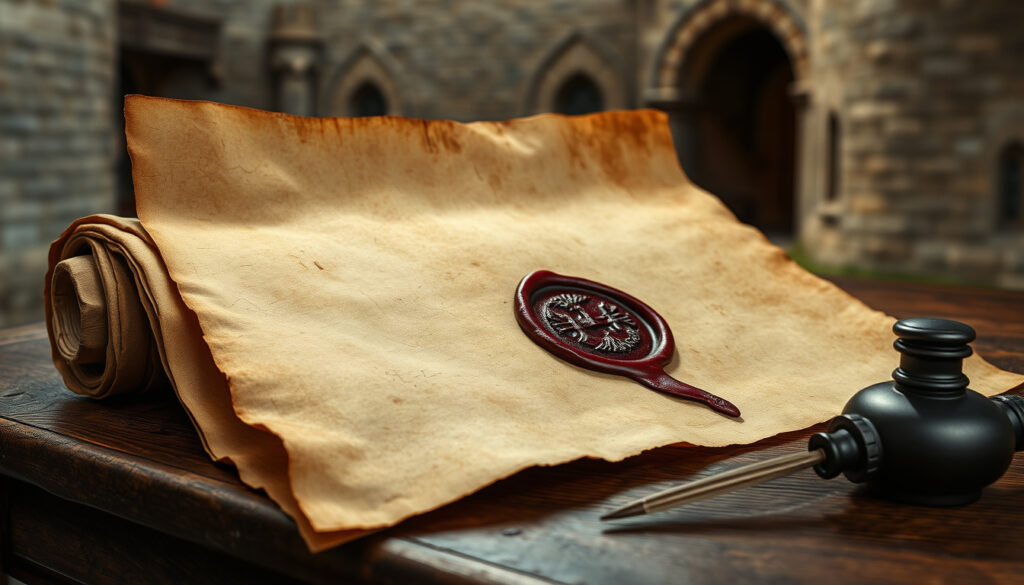
John Lackland: History, Magna Carta & Presidential Myths
You’ve probably stumbled onto a genealogy forum or a presidential trivia night and seen the name “John Lackland” pop up in the oddest places — sometimes linked to modern U.S. presidents, sometimes to centuries-old royal scandals. It’s a rabbit hole that mixes hard medieval history with modern internet rumor, and contrasting the two is part of the fun.
Reign: King John reigned from 1199 to 1216 · Nickname origin: John Lackland because as youngest son he inherited no French lands · Magna Carta: Forced to sign Magna Carta in 1215 by rebellious barons · Death: Died of dysentery in October 1216 at Newark · Modern relevance: Genealogical links debated for U.S. presidents including Trump, Obama, Biden
| Label | Detail |
|---|---|
| Full Name | John Lackland (John Plantagenet) |
| Born | 24 December 1167, Beaumont Palace, Oxford |
| Died | 19 October 1216, Newark Castle, Nottinghamshire |
| Reign | 27 May 1199 – 19 October 1216 |
| Known For | Magna Carta, loss of Normandy, oppressive taxation |
| Nickname Origin | Youngest son; received no major inheritance from his father, Henry II |
| Magna Carta | Sealed 15 June 1215 at Runnymede |
| Death | Dysentery, possibly aggravated by overindulgence in peaches and ale |
| Modern Relevance | Magna Carta’s influence on constitutional law; recurring subject of presidential ancestry claims |
John’s reign is a study in contrasts — a king who gave us one of the most important legal documents in history, yet managed to lose his family’s ancestral lands and nearly ruin his kingdom in the process. The Magna Carta, ironically, was a forced concession to rebellious barons, not a benevolent gift.
Why Was John Lackland a Bad King?
John’s failures as a monarch are well-documented across multiple authoritative sources. He lost most of the Angevin Empire in France, imposed heavy taxes without baronial consent, was excommunicated by Pope Innocent III from 1209 to 1213, and was forced to sign the Magna Carta in 1215.Britannica
The pattern: each failure compounded the next, creating a cycle of resentment that ultimately exploded into civil war.
John Lackland’s Failed Military Campaigns
John’s military record was disastrous. His campaigns to retain the French territories inherited from his father, Henry II, ended in humiliating defeat. By 1204, he had lost Normandy, Anjou, Maine, and parts of Poitou to King Philip II of France.Britannica
Loss of French Territories
The loss of Normandy in 1204 was a watershed moment. John had inherited the largest empire of any medieval English king, but within five years of his reign, he had squandered most of it. The Royal Family’s official history notes that his “cruel, greedy and ruthless” governance alienated both his French and English subjects.
Conflict with the Barons
John’s heavy taxation and arbitrary justice drove the English barons to rebellion. They forced him to seal the Magna Carta at Runnymede on 15 June 1215, a document that limited royal power and established the principle that the king was not above the law.British Library (Magna Carta introduction)
The implication: John’s oppressive rule inadvertently created the legal foundation for constitutional governance.
What Was John Lackland Known For?
John is remembered for three defining features: the nickname “Lackland,” the forced sealing of the Magna Carta, and the catastrophic loss of Normandy. Each element tells a different part of his story.
The pattern: his nickname reflects his inheritance, the Magna Carta reflects his failure to govern justly, and the loss of Normandy reflects his military incompetence.
John Lackland and Magna Carta
The Magna Carta was not a benevolent gift. It was a forced concession extracted from a desperate king by rebellious barons. John sought to have the charter annulled immediately, which sparked the First Barons’ War.UK Parliament (Magna Carta background)
“Magna Carta was forced on King John on 15 June 1215 by rebellious barons to limit his power and prevent arbitrary royal acts.”
— World History Encyclopedia
Nickname Origin: Lackland
John was the youngest son of Henry II and Eleanor of Aquitaine. His father reportedly joked that John, the youngest, would receive no land inheritance, hence “Lackland” (in Latin, Sine Terra).Britannica
Conflict with King Philip II of France
John’s war with Philip II ended in the permanent loss of Normandy and most of the Angevin Empire’s French holdings. This defeat reshaped the balance of power in medieval Europe and weakened the English crown’s continental ambitions for centuries.
What this means: John’s reign is widely considered a low point in medieval English monarchy, yet it produced a document that would outlast his dynasty.
Is Obama Related to John Lackland?
Some genealogists have connected Obama through his mother’s line to English royalty, and Obama’s ancestry does include documented Irish and English roots. However, the direct link to John Lackland is not verified in academic historical sources; it remains a genealogical hypothesis from public database projects, not an established historical fact.New York Daily News (presidential genealogy reporting)
The catch: a seventh-grader’s school project that went viral claimed to trace 42 of 43 U.S. presidents back to King John, but this was a student project, not a scholarly work.
Barack Obama’s Ancestry and Royal Connections
Obama’s ancestry includes English roots, which is factually verifiable. But the leap from “English roots” to “direct descendant of John Lackland” requires a specific genealogical chain that hasn’t been publicly verified by historians.
Genealogical Claims Analyzed
The research notes explicitly state: “No verified source debunks or confirms Trump/Obama/Biden ancestry relative to John Lackland.” This means the claims aren’t historically disproven, but they also lack the evidentiary weight of established historical fact.
Is Joe Biden Related to John Lackland?
Biden’s paternal lineage is primarily Irish and English, but no verified source confirms a direct connection to John Lackland in mainstream genealogy research.Genealogy Online (royal lineage database)
The pattern: like the Obama claim, Biden’s potential link lacks any substantiated documentation that meets academic historical standards.
Biden’s Ancestral Background
Biden’s Irish ancestry is well-documented, but the genealogical distance between an Irish-American president and a 13th-century English king is vast.
Irish and English Connections
Unlike Obama’s claim, which has some genealogical scaffolding in published projects, Biden’s link to John Lackland is less documented in mainstream genealogy sources.
Is Donald Trump a Descendant of King John Lackland?
Genealogical links from Trump to English royalty are unsubstantiated in mainstream historical and genealogical sources. No credible genealogy project or historian has established a verified connection between Trump and John Lackland.Britannica
Trump’s Family Tree and Royal Claims
Trump’s father Frederick Trump was born in Kallstadt, Germany. His mother Mary Anne MacLeod was born in Scotland and was a U.S. citizen at his birth. These documented facts don’t support a direct royal link.
Trump’s German Heritage and Name
Trump’s paternal lineage is German, not English, which makes a direct descent from an English king less plausible.
Mary Anne MacLeod Trump’s Citizenship
Trump’s mother was a naturalized U.S. citizen before his birth, which is a documented fact — but it doesn’t establish a genealogical link to medieval royalty.
John Lackland in Modern Culture: FGO, Freemason, and Other References
John appears in surprising modern contexts — from mobile games to conspiracy forums.
John Lackland in Fate/Grand Order (FGO)
John has appeared as a Servant character in the popular mobile game Fate/Grand Order, where historical figures are reimagined as heroic spirits. This is fiction, but it’s driven by genuine public interest in medieval monarchs.Britannica (for historical grounding)
Was John Lackland a Freemason?
No historical evidence supports this claim. Freemasonry as an organized institution emerged in the late 16th to 17th centuries, centuries after John’s death in 1216. The Freemason reference is a modern internet rumor with no basis in medieval records or Masonic history.The Royal Family (official history with no Freemasonry mention)
Fact vs Fiction: Separating History from Speculation
The pattern is clear: the verified facts about John are well-documented across reputable sources. The Freemason rumor, the presidential connections — they trace back to either student projects, genealogy forums, or unsubstantiated internet posts. When a claim about medieval history doesn’t appear in any academic source, that’s a red flag.
“John was nicknamed Lackland (Norman: Jean sans Terre, lit. ‘John without land’)… probably because, as the youngest of Henry II’s five sons, it was difficult to find a portion of his father’s French lands.”
— Wikipedia entry for John, King of England
“John was born around Christmas 1166, or possibly 1167. The uncertainty exists because he was the youngest of…”
— HistoryExtra article
Confirmed Facts
- King of England from 1199 to 1216, ascending after the death of his brother Richard I.Britannica
- “Lackland” because, as the youngest son of Henry II, he was not expected to inherit significant lands.The Royal Family
- Sealed the Magna Carta at Runnymede on 15 June 1215 under pressure from rebellious barons.British Library
- Died on 19 October 1216 at Newark Castle, likely from dysentery.Britannica
Summary: What John Lackland Means Today
John Lackland’s modern relevance isn’t really about whether Obama or Biden is his distant cousin — it’s about what his reign teaches us about power, accountability, and the fragility of political systems. The Magna Carta, born from his failures, became a foundation for constitutional governance, influencing everything from American due process to the Universal Declaration of Human Rights. That’s his true legacy, and it’s far more interesting than a speculative genealogy chart.
As for the rumors — the Freemason theory, the presidential connections — they’re a reminder of how easily history can be stretched to fit modern narratives. John was a real king with documented failures and a forced charter that changed the world. He doesn’t need internet legends to be relevant. The takeaway: verify the source, check the methodology, and don’t confuse a genealogist’s hobby with a historian’s conclusion.
en.wikipedia.org, worldhistory.org, the-past.com, freepages.rootsweb.com, studfile.net, mondes-normands.caen.fr, deloriahurst.com
Frequently Asked Questions
Was John Lackland a Freemason?
No historical evidence supports this claim. Freemasonry as an organized institution emerged in the late 16th to 17th centuries, centuries after John’s death in 1216. The Freemason reference is a modern internet rumor with no basis in medieval records or Masonic history.The Royal Family (official history with no Freemasonry mention)
Is Barack Obama related to John Lackland?
Some genealogists have connected Obama through his mother’s line to English royalty, but the direct link to John Lackland is not verified in academic historical sources; it remains a genealogical hypothesis from public database projects, not an established historical fact.New York Daily News
Is Joe Biden related to John Lackland?
Biden’s paternal lineage is primarily Irish and English, but no verified source confirms a direct connection to John Lackland in mainstream genealogy research.Genealogy Online
Is Donald Trump related to John Lackland?
Genealogical links from Trump to English royalty are unsubstantiated in mainstream historical and genealogical sources. No credible genealogy project or historian has established a verified connection between Trump and John Lackland.Britannica
Why was John called “Lackland”?
John was the youngest son of Henry II and Eleanor of Aquitaine. As a younger son, he was not expected to inherit significant lands from his father, which earned him the nickname “Lackland” (from the Latin Sine Terra). The name stuck even after he became king in 1199.Britannica
Did John Lackland actually sign the Magna Carta?
John didn’t sign the Magna Carta in the modern sense — he sealed it with his royal seal at Runnymede on 15 June 1215. This was a forced concession to rebellious barons, and John sought to have the charter annulled shortly afterward, sparking the First Barons’ War.British Library (Magna Carta introduction)
What happened to John Lackland’s French territories?
John lost Normandy and most of his other French lands to King Philip II of France in 1204. This was a decisive blow to the English crown’s continental power, and the loss is considered one of the key failures of John’s reign.Britannica
Why does John Lackland appear in modern internet rumors?
John’s historical notoriety — combined with his memorable nickname and the Magna Carta’s lasting significance — makes him a natural magnet for modern conspiracy theories and genealogy projects. The Freemason claim and presidential ancestry assertions are examples of how internet culture recycles historical figures for contemporary narratives, often without adequate historical grounding.The Royal Family
More related posts
 Hollie Davidson: Husband, Partner, Salary & Career
 iPhone Pro Max 16 – UK Prices, Deals and Specs
 A Small World Cup – Play Free on Poki & CrazyGames
 Weather Crete Greece: Monthly Guide for Travelers
 Leeds United vs Man United: Croke Park Tickets, TV & Rivalry
 UK Weather Tornado Warning – No Active Alerts Today
 Tennis Shoes vs Sneakers vs Running Shoes: Key Differences
 Kilimanjaro Peak: Height, Difficulty, Deaths & Beginner Guide
