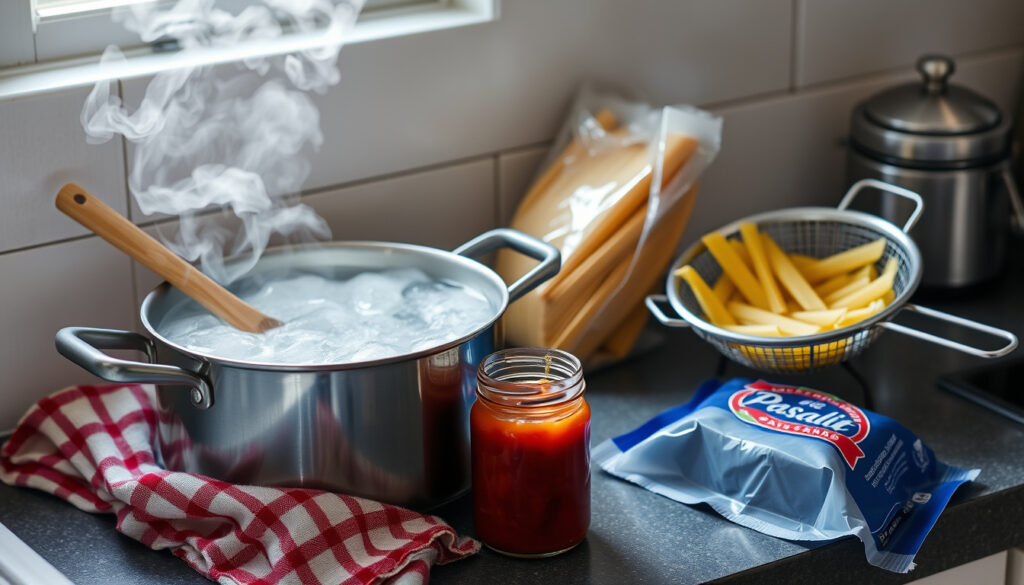
How to Cook Pasta: Step-by-Step Guide for Beginners and Beyond
Anyone who’s stared at a pot of bubbling water and wondered if the pasta will turn out perfect already knows the anxiety. Cooking pasta might seem straightforward, but small choices — how much salt, when to stir, whether to rinse — make the difference between a weeknight triumph and a sticky clump, and this guide walks through each step with verified timings and source-backed techniques so you can cook pasta with confidence every time.
Average boiling time (dry pasta): 8–12 minutes ·
Water per pound of pasta: 4–6 quarts ·
Salt per quart: 1–2 teaspoons ·
Fridge life (cooked): 3–5 days ·
US per capita pasta consumption: 19 pounds/year
Quick snapshot
- Exact glycemic index of al dente vs fully cooked pasta for diabetics — varies by pasta type and processing
- Optimal soaking method for reducing starch in pasta for diabetes — not widely studied
- Effect of different salt amounts on final pasta texture — varies by personal preference and pasta type
- Optimal stirring frequency for different pasta shapes — not systematically studied
- Spaghetti: 8–10 minutes (Jessica Gavin)
- Penne: 10–12 minutes (Barilla) (Jessica Gavin)
- Fresh pasta: 2–4 minutes (Jessica Gavin) (Jessica Gavin)
Five key facts, one takeaway: water volume, salt, and timing are the three levers that separate okay pasta from great pasta.
| Label | Value | Source |
|---|---|---|
| Optimal water to pasta ratio | 4–6 quarts of water per 1 pound of dry pasta | Barilla |
| Salt amount for pasta water | 1–2 teaspoons of salt per quart of water | Barilla |
| Average boiling time for dry spaghetti | 8–10 minutes | Jessica Gavin |
| Refrigerator storage time for cooked pasta | 3–5 days in an airtight container | USDA |
| Freezer storage time for cooked pasta | Up to 2 months | USDA |
How do you cook pasta step by step?
- Boil salted water before adding pasta
- Add pasta and stir immediately
- Cook uncovered at a rolling boil
- Drain and reserve pasta water
- Finish with sauce using reserved pasta water
Boil salted water before adding pasta
- Fill a large pot with 4–6 quarts of water per pound of pasta (Barilla)
- Bring to a rolling boil over high heat
- Add 1–2 teaspoons of salt per quart once the water boils (Barilla)
Add pasta and stir immediately
- Drop pasta into boiling water and stir with a wooden spoon or tongs to prevent sticking
- Stir every few minutes during cooking (Barilla)
- Do not add oil — it interferes with sauce adhesion (Barilla)
Cook uncovered at a rolling boil
- Keep the pot uncovered
- Follow package time as a guide for al dente (Family Style Food)
- Test pasta 1–2 minutes before the minimum time — look for a firm bite
A rolling boil ensures even heat distribution. Pasta cooked at a simmer rather than a boil takes longer and may turn gummy because starches don’t release properly.
Drain and reserve pasta water
- Reserve 1–2 cups of pasta water about a minute before draining (Barilla)
- Drain pasta in a colander — do not rinse (Barilla)
- Rinsing washes away surface starch that helps sauce cling
The implication: following these five steps consistently eliminates the most common pasta pitfalls — sticking, under-salting, and sauce slippage.
How long do you boil pasta for?
Fresh pasta: 2–4 minutes
- Fresh pasta (homemade or refrigerated) cooks very quickly
- Thicker shapes like pappardelle may need up to 10 minutes (Jessica Gavin)
- Test by cutting a piece in half — no white core should remain
Dry pasta: 8–12 minutes (check package)
- Spaghetti: 8–10 minutes (Barilla)
- Penne: 10–12 minutes (Barilla)
- Macaroni: 7–9 minutes (Cooking School Italy)
Al dente: test pasta 1–2 minutes before package time
- Al dente means “to the tooth” — firm but not hard
- Whirlpool suggests cooking 2–3 minutes less than indicated (Whirlpool)
- Sample with a slotted spoon to check doneness (Family Style Food)
Undercooked pasta is salvageable with a few more minutes in the pan with sauce. Overcooked pasta absorbs extra water, turns mushy, and can’t be fixed. When in doubt, pull it earlier.
The pattern: shape thickness determines time, and package directions are designed for al dente — trusting them while tasting early gives the best result.
How to cook pasta for diabetes?
Choose whole wheat or legume-based pasta
- Whole wheat pasta contains more fiber, which slows carbohydrate absorption (BBC Good Food)
- Legume pastas (chickpea, lentil) have higher protein and lower net carbs
- Check labels for added sugars and refined flours
Cook al dente to reduce glycemic impact
- Al dente pasta has a lower glycemic index than fully cooked (Whirlpool)
- Overcooking gelatinizes starches, raising blood sugar response
- Aim for firm texture — 1–2 minutes less than package time
Pair with protein and fiber-rich sauces
- Add lean protein (chicken, tofu, beans) to slow digestion
- Use vegetable-based sauces (tomato, spinach, zucchini) instead of heavy cream
- Limit portion size to 1 cup cooked pasta per serving
Why this matters: small adjustments in pasta type and cooking time can meaningfully change the blood sugar response — but individual results vary, so monitoring is essential.
How to cook pasta with sauce?
Reserve 1 cup pasta water before draining
- The starchy water emulsifies and thickens the sauce (Family Style Food)
- Barilla recommends reserving 1–2 cups (Barilla)
- This trick works for tomato-based, cream, and oil-based sauces
Toss pasta with sauce in a pan over low heat
- Return drained pasta to the pot or a sauté pan
- Add sauce and toss gently over low heat for 1–2 minutes (Barilla)
- This allows pasta to absorb flavor and marry with the sauce
Add pasta water gradually to adjust consistency
- Pour in ¼ cup at a time while tossing
- Starch from the water helps sauce cling to each piece of pasta (Family Style Food)
- Stop when the sauce coats the pasta without pooling at the bottom
Resist the urge to rinse pasta before saucing. Rinsed pasta sheds its starch, forcing you to compensate with more sauce or risk a watery finish.
The catch: sauceless pasta is dry pasta. The 90-second marriage in the pan with a splash of pasta water turns a dish from fine to restaurant-quality.
How long cooked pasta survives in the fridge?
Store in airtight container within 2 hours of cooking
- USDA recommends refrigerating cooked pasta within 2 hours to prevent bacterial growth (USDA)
- Use shallow containers to cool quickly
- Divide into meal-sized portions for convenience
Refrigerator shelf life: 3–5 days
- Cooked pasta keeps for 3–5 days when sealed (USDA)
- Check for sour smell or visible mold before eating
- Toss if the texture becomes slimy — that signals spoilage
Freezer shelf life: up to 2 months
- Freeze in airtight bags with as much air removed as possible
- Thaw overnight in the refrigerator
- Reheat by boiling for 30 seconds or microwaving with a splash of water
The trade-off: frozen pasta changes texture slightly — better for soups and baked dishes than for delicate primavera. For best quality, plan to eat refrigerated pasta within 3 days.
What we know and what remains unclear
Confirmed facts
- Salt water before adding pasta — 1–2 tsp per quart
- Cooked pasta lasts 3–5 days in the refrigerator
- Reserve pasta water for saucing — starch helps sauce cling
What’s unclear
- Exact glycemic index reduction from cooking al dente — varies by pasta brand and type
- Whether soaking pasta before cooking reduces starch enough to help diabetics
- Optimal pasta shape for lowest blood sugar impact — inconsistent data
- Effect of cooling and reheating on resistant starch formation — preliminary evidence only
- Al dente timing precision — Whirlpool suggests 2–3 minutes less while package directions aim for 1–2 minutes less
- Whether oil in pasta water has any meaningful effect in practice — sources disagree
What the experts say
“Don’t add oil to pasta water — it doesn’t prevent sticking and it prevents sauce from clinging.”
— Barilla culinary team, Barilla official guide
“The water should taste like the sea. Seasoning the cooking water is the only chance you have to flavor the pasta from within.”
— BBC Good Food, BBC Good Food’s pasta guide
“Reserve a cup of that starchy water — it’s the secret to a silky, clingy sauce.”
— Jamie Oliver, Jamie Oliver’s pasta tips
Mastering how to cook pasta comes down to three non-negotiable steps: salt the water generously, test for doneness early, and never rinse. For beginners in the US, the choice is clear — follow the Barilla method of a rolling boil, frequent stirring, and pasta-water finishing, or risk a plate of sticky, bland noodles. With these source-backed techniques, you’ll cook pasta confidently time after time.
cookingschoolitaly.it, familystylefood.com, whirlpool.com, theburntbuttertable.com, youtube.com, jillhough.com
For a comprehensive walkthrough on boiling times and salt ratios, consult this step-by-step pasta guide for beginners and beyond.
Frequently asked questions
Can you cook pasta without salt?
Yes, but the pasta will taste flat. Salt in the cooking water seasons the pasta from the inside. Without it, you’ll need to rely heavily on the sauce for flavor. Barilla recommends 1 tablespoon plus 1 teaspoon per gallon.
What is the best pot for cooking pasta?
A 6–8 quart pot with high sides allows pasta to submerge fully and boil vigorously. Avoid small pots — crowded pasta sticks together and cooks unevenly. A colander with handles is also essential for easy draining.
Should you rinse pasta after cooking?
No, unless you’re making a cold pasta salad. Rinsing washes away the surface starch that helps sauce cling. Drain immediately and toss with sauce or a little oil to prevent sticking.
How do you know when pasta is al dente?
Cut a piece in half or bite into it. Al dente pasta has a thin white core and offers slight resistance when chewed. It should be tender on the outside but firm in the center.
Can you use the same water for multiple batches of pasta?
It’s possible, but the starch level rises with each batch, making the water cloudy and the pasta more likely to stick. For best results, use fresh water for each pound.
How do you reheat leftover pasta without drying it out?
Microwave with a splash of water or broth, covered, for 1–2 minutes. Alternatively, reheat in a pan with a drizzle of olive oil or reserved pasta water over low heat.
Is it necessary to add olive oil to pasta water?
No. Oil floats on top and does not prevent sticking. It can actually coat the pasta and prevent sauce from adhering. Skip the oil and use plenty of water and stirring instead.
More related posts
 Reece James Salary, Injury, Net Worth, and Family Life
 Glynis Barber Today: Her Career, Family, and Current Life
 iPhone Pro Max 16 – UK Prices and Best 256GB Deals
 Jodie Whittaker: Children, Husband, New Look & Frauds
 Legia Warszawa vs Chelsea – Results, Stats, Lineups
 Flats to Rent Near Me in Ireland: Daft.ie Listings
 Billie Eilish: Age, Sexuality, Net Worth, and More
 Walton Goggins Movies and TV Shows: Complete Filmography
