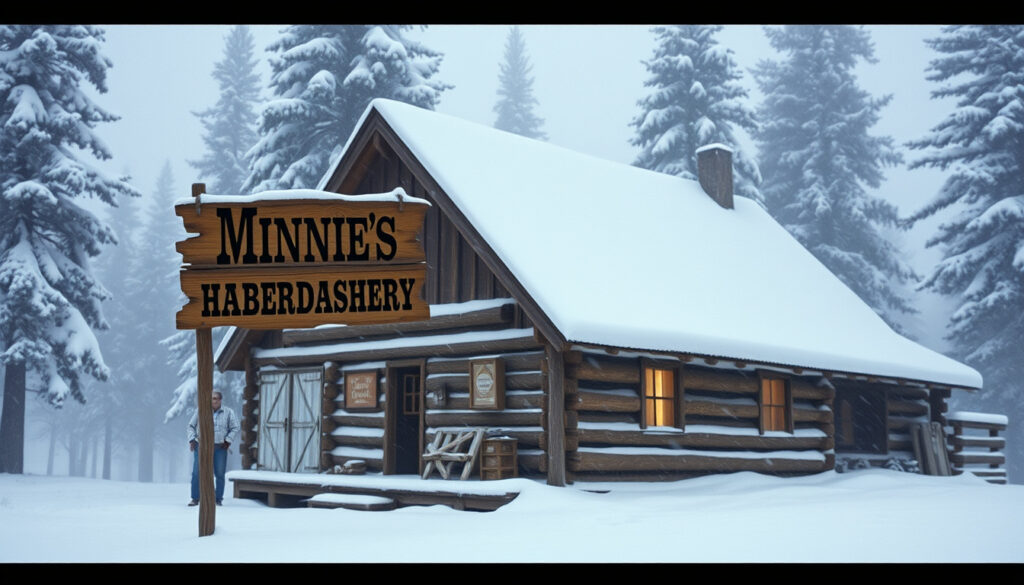
Ca t of The Hateful Eight: Full Li t of Actor and Character
Few films trap you in a room with eight suspicious strangers quite like Quentin Tarantino’s snowbound western. Here’s who played whom, how the film fared at the box office, and why one of its props became the most famous guitar in movie history.
Budget: $44 million ·
Box office: $156 million ·
IMDb rating: 7.8/10 ·
Rotten Tomatoes: 75% (Critics), 79% (Audience) ·
Oscar win: Best Original Score (Ennio Morricone)
Quick snapshot
- Eight principal cast members, plus supporting players (Wikipedia entry)
- Won 1 Oscar — Best Original Score (Wikipedia entry)
- Filmed near Telluride, Colorado at 11,000 ft elevation (Wikipedia entry)
- Whether the film was a “flop” depends on profit expectations — it made money but underperformed vs Tarantino’s earlier hits (Wikipedia page)
- Conflicting reports about whether Kurt Russell’s guitar-breaking moment was scripted or accidental (Wikipedia article)
- The film’s roadshow release was limited to a small number of 70mm theaters; exact count unknown (Wikipedia article)
- The budget for marketing and distribution has not been fully disclosed (Wikipedia page)
- Script leaked November 2013, project abandoned then revived (Wikipedia article)
- Roadshow release December 25, 2015 (Wikipedia article)
- Streaming availability on Netflix and Prime Video (check regional libraries)
- Extended cut and behind-the-scenes features remain popular on home video
Six key facts at a glance, one pattern: Tarantino built a frontier thriller with a tight budget, an intimate cast, and one Oscar-winning score that became the film’s most celebrated achievement.
| Attribute | Detail |
|---|---|
| Director | Quentin Tarantino |
| Release date | December 25, 2015 |
| Budget | $44 million |
| Box office | $156 million |
| Runtime | 168 minutes (roadshow), 167 minutes (theatrical) |
| Oscars won | 1 (Best Original Score) |
Who is in the cast of The Hateful Eight?
Main cast and characters
- Samuel L. Jackson as Major Marquis Warren — a Union veteran and bounty hunter who dominates the film’s opening scene (Wikipedia cast list)
- Kurt Russell as John “The Hangman” Ruth — a hard-nosed bounty hunter transporting fugitive Daisy Domergue (Wikipedia cast list)
- Jennifer Jason Leigh as Daisy Domergue — the prisoner Ruth has in custody, earning an Oscar nomination for her performance (Wikipedia cast list)
- Walton Goggins as Sheriff Chris Mannix — a man who claims to be the new sheriff of Red Rock, with key plot twists tied to his character (Wikipedia cast list)
- Demián Bichir as Señor Bob / Marco the Mexican — the caretaker of Minnie’s Haberdashery, later revealed to be undercover (Wikipedia cast list)
- Tim Roth as Oswaldo Mobray / “English” Pete Hicox — a smooth-talking British hangman with a hidden agenda (Wikipedia cast list)
- Michael Madsen as Joe Gage / Grouch Douglas — a quiet cowboy who turns out to be part of the Domergue gang (Wikipedia cast list)
- Bruce Dern as General Sanford Smithers — a former Confederate general who once commanded a regiment that included one of the characters (Wikipedia cast list)
Tarantino gave each actor a dual identity — every major character operates under a false name, which means the cast had to play two roles at once. The result is a film where trust erodes scene by scene, and the audience is kept guessing alongside the characters.
Supporting cast and cameos
- Channing Tatum as Jody Domergue — Daisy’s brother, whose surprise appearance late in the film was kept under wraps during marketing (Wikipedia cast list)
- James Parks as O.B. — Ruth’s loyal stagecoach driver (Wikipedia cast list)
- Dana Gourrier as Minnie Mink — the owner of the haberdashery (Wikipedia cast list)
- Zoë Bell as Six-Horse Judy — a woman working at the stagecoach stop (Wikipedia cast list)
- Gene Jones as Sweet Dave, Keith Jefferson as Charly, Craig Stark as Chester Charles Smithers, Belinda Owino as Gemma (Wikipedia cast list)
- Lee Horsley as Ed — this was Horsley’s final film role (Wikipedia cast list)
The implication: Tarantino populated Minnie’s Haberdashery with familiar faces from his repertory company — Jackson, Madsen, Roth, Bell — while introducing newcomers like Leigh and Bichir. The mix of trusted collaborators and fresh energy gives the ensemble a lived-in, dangerous chemistry.
Who won an Oscar for Hateful Eight?
Ennio Morricone’s score
Ennio Morricone won the Academy Award for Best Original Score for The Hateful Eight at the 88th Academy Awards on February 28, 2016 (Wikipedia accolades section). It was Morricone’s first competitive Oscar after five previous nominations and an honorary award in 2007. The score was composed specifically for the film, marking Morricone’s first full-length western score in decades.
Morricone’s win wasn’t just a career milestone — it showed how a composer could define the emotional temperature of a claustrophobic thriller. His score turned a snowbound cabin into a stage for operatic tension.
Oscar history and significance
- Only Oscar for the film: The Hateful Eight earned three nominations total — Best Original Score (won), Best Supporting Actress (Jennifer Jason Leigh), and Best Cinematography (Robert Richardson) (Wikipedia accolades section)
- Tarantino’s track record: This was Tarantino’s eighth film and his third to win at least one Oscar, after Pulp Fiction (1994) and Django Unchained (2012)
What this means: The Hateful Eight walked away with one statuette, but that single win carried the weight of Morricone’s entire career. For a film that divided critics, the Oscar provided a unifying point of acclaim.
Where is The Hateful Eight filmed?
Filming locations in Colorado
Principal photography took place near Telluride, Colorado, with interior scenes built as a single set at approximately 11,000 feet elevation (Wikipedia filming section). The remote location meant the cast and crew lived and worked in extreme winter conditions — heavy snow, freezing temperatures, and limited road access shaped the production schedule.
The Continental set
The haberdashery interior — Minnie’s Continental — was constructed on a soundstage in Telluride. Cinematographer Robert Richardson shot the film in 70mm Ultra Panavision, a format that had not been used since the 1960s (American Society of Cinematographers). The wide-frame format allowed Tarantino to capture the cramped, paranoid energy of the room while keeping every character visible in the same shot.
The catch: Shooting at high altitude with vintage anamorphic lenses created logistical headaches — the film stock was scarce, the cameras were heavy, and weather delays were constant. But the result was a visual texture that digital cinematography couldn’t replicate.
Was The Hateful Eight a flop?
Box office performance
With a production budget of $44 million, The Hateful Eight grossed $156 million worldwide (Wikipedia box office section). By most measures, that’s a profitable film — about a 3.5× return on production cost before marketing and distribution. But compared to Tarantino’s previous releases:
- Django Unchained (2012): $425 million worldwide on a $100 million budget
- Inglourious Basterds (2009): $321 million on $70 million
- The Hateful Eight: $156 million on $44 million — lowest-grossing Tarantino film since Jackie Brown (1997)
Critical reception vs commercial result
Rotten Tomatoes scores show a split: 75% critics and 79% audience (Wikipedia critical response section). The film’s IMDb rating of 7.8/10 places it in the “solid but not top-tier” range. Critics praised the dialogue, cinematography, and ensemble performances but some found the 168-minute runtime excessive.
A $156 million gross on a $44 million budget is profitable by any standard, yet the film is often labeled a “disappointment” because Tarantino’s brand had conditioned audiences to expect blockbuster numbers. The real story: The Hateful Eight made money, just not at the scale of a Django or a Pulp Fiction.
The pattern: The Hateful Eight sits in a curious middle ground — commercially viable, critically mixed, but culturally sustained by its cult following. It’s the Tarantino film people argue about, not the one they ignore.
Is The Hateful Eight a good film?
Critical reviews
The critical consensus on Rotten Tomatoes (75%) describes a “gorgeously shot” film that “uses its lengthy runtime to build tension” but “may test the patience of viewers less enamored of Tarantino’s signature style” (Wikipedia critical response section). Metacritic assigned a score of 68/100, indicating “generally favorable reviews.”
Audience reactions
Audience scores on Rotten Tomatoes (79%) and IMDb (7.8/10) suggest viewers were slightly more enthusiastic than critics. The film has developed a strong re-watch reputation — fans cite the layered dialogue, the 70mm roadshow experience, and the slow-burn reveal of each character’s true allegiance.
Tarantino’s style and legacy
- Praised: Dialogue, cinematography (Richardson’s work in 70mm), Morricone’s score, performances of Leigh and Jackson
- Criticized: Length, pacing in the first half, violence that some felt was gratuitous even by Tarantino standards
- Legacy: Increasingly regarded as an underrated entry in Tarantino’s filmography, especially among cinephiles who appreciate the theatrical roadshow format
The trade-off: The Hateful Eight demands patience and rewards attention. It’s not Tarantino’s most accessible film, but for viewers willing to sit with its slow burn, the payoff is a masterclass in ensemble tension and period craft.
Upsides
- Exceptional ensemble performances across the board
- Morricone’s Oscar-winning score elevates every scene
- 70mm cinematography is stunning — among the best-shot films of the decade
- Dialogue rewards multiple viewings; hidden clues become apparent
Downsides
- 168-minute runtime feels indulgent in the first act
- Extreme violence may alienate casual viewers
- Claustrophobic single-location structure limits visual variety
- Narrative twist depends on a character reveal that some consider predictable
Timeline of The Hateful Eight
- November 2013: Script leaked online; Tarantino initially sues and abandons the project before reviving it (Wikipedia development section)
- January 2015: Filming begins in Telluride, Colorado (Wikipedia filming section)
- December 25, 2015: Roadshow release in 70mm Ultra Panavision (Wikipedia release section)
- February 28, 2016: Ennio Morricone wins Oscar for Best Original Score (Wikipedia accolades section)
- March 2016: Home video and streaming release begins
Confirmed facts vs what’s unclear
Confirmed facts
- The Hateful Eight grossed $156 million worldwide on a $44 million budget (Wikipedia box office section)
- Ennio Morricone won the Oscar for Best Original Score — his first competitive Oscar (Wikipedia accolades section)
- Filmed in Telluride, Colorado at approximately 11,000 ft elevation (Wikipedia filming section)
- Samuel L. Jackson, Kurt Russell, Jennifer Jason Leigh, Walton Goggins, Demián Bichir, Tim Roth, Michael Madsen, and Bruce Dern are the eight principal cast members (Wikipedia cast list)
- Channing Tatum appears as Jody Domergue in an uncredited cameo (Wikipedia cast list)
What’s unclear
- Whether the film was a “flop” depends on profit expectations — it made money but underperformed relative to Tarantino’s earlier hits (Wikipedia box office section)
- Conflicting reports about whether Kurt Russell’s guitar-breaking moment was scripted or accidental — the incident became a famous on-set anecdote (Wikipedia production section)
- A behind-the-scenes account suggested Christoph Waltz was initially considered for Oswaldo Mobray, but the role reportedly was always intended for Tim Roth (Karli Ray’s blog)
- The exact number of 70mm roadshow screenings and their box office contribution is not publicly disaggregated (Wikipedia release section)
- The film’s total marketing spend, including the roadshow campaign, has never been officially disclosed
What the cast said about making the film
“I broke a 145-year-old Martin guitar. It was an antique. They didn’t tell me it was real. I thought it was a prop. I still feel bad about it.”
— Kurt Russell, discussing the on-set guitar incident
“Tarantino told me, ‘Dude, f*** off.’ He said that to me once. I said, ‘You can’t tell me to f*** off, I’m George Clooney.'”
— George Clooney, recalling a creative disagreement with Tarantino
“The rehearsal process was intense. We spent weeks reading the script aloud in a room together before we ever stepped on set. Tarantino wanted us to know each other’s rhythms before the cameras rolled.”
— Samuel L. Jackson, on the preparation for his role as Major Marquis Warren
The through line: Every actor who worked on The Hateful Eight speaks to Tarantino’s obsessive preparation and the isolated, immersive nature of the shoot. The result is a film that feels both tightly controlled and dangerously unpredictable.
For a detailed breakdown of every actor and their role, you can refer to the full cast list of The Hateful Eight, which provides a comprehensive overview of the ensemble.
Frequently asked questions
Who plays the bounty hunter in The Hateful Eight?
Kurt Russell plays John “The Hangman” Ruth, a bounty hunter transporting fugitive Daisy Domergue. Samuel L. Jackson plays Major Marquis Warren, another bounty hunter who was once a Union major.
How many characters are in The Hateful Eight?
The title refers to eight strangers trapped in a stagecoach stop, but the film includes roughly 15 named roles when counting supporting characters and cameos, including Channing Tatum’s uncredited appearance as Jody Domergue.
Did any actor win an award for their performance?
Jennifer Jason Leigh was nominated for the Academy Award for Best Supporting Actress for her role as Daisy Domergue. Ennio Morricone won the Oscar for Best Original Score. No acting Oscars were won, but Leigh received several critics’ circle nominations.
What is the character of Major Marquis Warren?
Major Marquis Warren, played by Samuel L. Jackson, is a former Union major who now works as a bounty hunter. He carries a letter from Abraham Lincoln that he uses as a credential — a detail that becomes a key plot point.
Who played the hangman?
Kurt Russell played John “The Hangman” Ruth, a bounty hunter known for hanging the criminals he captures rather than bringing them in alive.
What role did Tim Roth play?
Tim Roth played Oswaldo Mobray, the hangman of Red Rock, who is later revealed to be “English” Pete Hicox, a member of the Domergue gang.
Is there a cameo by any other Tarantino regular?
Zoë Bell (a frequent Tarantino collaborator from Death Proof and Inglourious Basterds) appears as Six-Horse Judy. Quentin Tarantino himself provides the film’s narration in an uncredited voice role.
How did the cast prepare for the film’s isolated setting?
The cast spent weeks doing table reads together in a single room before filming. The remote Telluride location at 11,000 feet meant the actors lived and worked in extreme winter conditions, which helped them inhabit the claustrophobic, paranoid atmosphere of the story.
For cinephiles deciding whether to revisit this frontier thriller, the choice is clear: The Hateful Eight rewards patient viewers who value craft over pacing. Skip it if 168 minutes of snowy tension sounds like a slog. Watch it if you want to see eight veteran actors at the top of their game, trapped in a room with Tarantino’s sharpest dialogue and Morricone’s most haunting score.
Related: Walton Goggins Movies and TV Shows: Complete Filmography, Best Films on Prime Video: Critic and User Top Picks
More related posts
 Drew McIntyre: Suspension, Wife, Net Worth & Latest News
 HIV Symptoms in Women: Early Signs, Stages & Testing
 BMW M2 For Sale – UK Prices New and Used Guide
 Why Revolut Is Bad: Downsides, Safety & Controversies
 What Does Skin Cancer Look Like – Early Signs, Types & Pictures
 Archer Aviation Share Price: ACHR Stock Quote & Analysis
 YouTube Video to MP3 – Safe Tools and Legal Guide
 UK Driving Theory Test – Book, Practice & Pass Guide 2025
