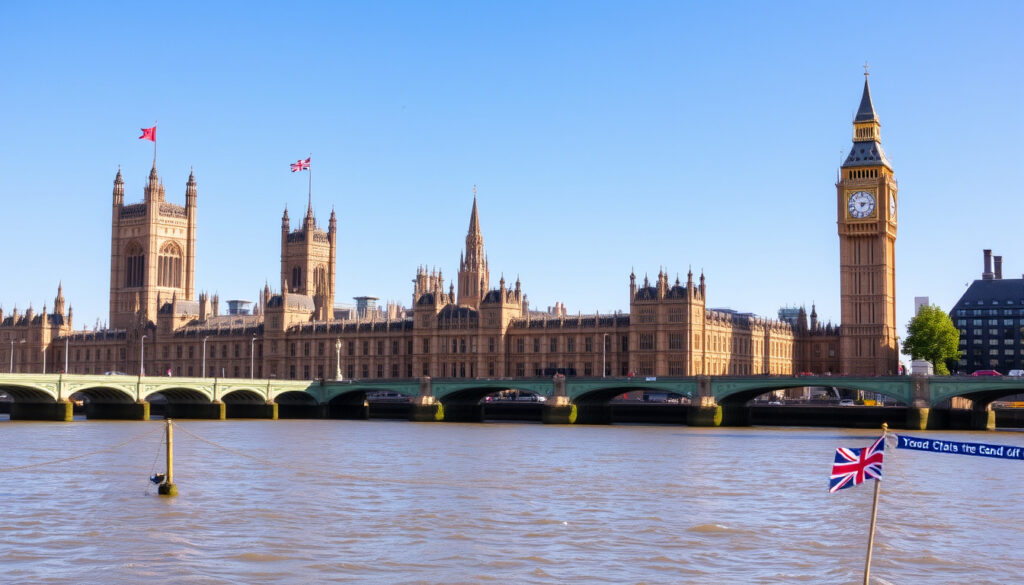
Government of the United Kingdom: Structure, Leader & How It Works
If you’ve ever wondered why the UK Prime Minister kneels before the monarch every week, or how a leader with no royal blood can hold more actual power than the King himself, you’re not alone. The mechanics of British governance confound outsiders and locals alike. This piece maps out exactly how the UK government functions, who holds the levers, and where power actually sits today under Sir Keir Starmer’s Labour administration.
Prime Minister: Sir Keir Starmer (since 5 July 2024) · Head of State: King Charles III · Legislature: Bicameral Parliament (650 MPs, Lords) · Devolved Governments: 4 administrations
Quick snapshot
- Exact current ministerial lists change as reshuffles occur
- Full details of intergovernmental relations mechanisms post-2025
- Specific reserved vs devolved powers boundary updates
- 5 July 2024: Starmer ministry begins
- 6 July 2024: First Cabinet meeting
- 9 July 2024: New Parliament convenes
- 5 July 2024: Deputy PM transition (Rayner to Lammy)
- David Lammy now serves as Deputy PM and Lord Chancellor
- Pat McFadden oversees intergovernmental relations with devolved administrations
- First female Chancellor Rachel Reeves continues driving fiscal policy
The key facts below summarise the structure, leadership, and constitutional framework of the UK government.
| Fact | Detail |
|---|---|
| Full Name | Her Majesty’s Government |
| Leader | Prime Minister Sir Keir Starmer |
| Appointing Authority | Monarch (King Charles III) |
| Legislature | UK Parliament (Commons + Lords) |
| Devolved Bodies | 4 administrations (Scotland, Wales, Northern Ireland, England) |
| PM Start Date | 5 July 2024 |
| Labour Seats (2024) | 411 of 650 |
| Cabinet Gender Balance | 50% women |
| Total Ministers | 122 |
| Cabinet Ministers | 22 |
What is the government of the UK called?
The formal name is “Her Majesty’s Government” — a term that harks back to the monarch’s symbolic role as head of the executive while actual decision-making rests elsewhere. This isn’t a mere historical quirk; it reflects the constitutional arrangement where the sovereign reigns but does not rule. The term appears in official documents and legal statutes, though in practice most people simply refer to “the UK government” or “Westminster.”
What distinguishes this government from pure monarchies or presidential systems is its hybrid nature. Executive authority technically resides with the Crown, but that authority is exercised only on the advice of elected ministers. Parliament holds sovereign power in a system with no written constitution — the highest law rests in the elected chamber’s hands, not in a founding document. This parliamentary supremacy means rules can change through ordinary legislation, which gives the UK a flexibility absent in codified constitutions.
Formal name and definition
Her Majesty’s Government operates as the central executive authority of the United Kingdom, comprising the Prime Minister, Cabinet, and government departments. It must maintain the confidence of the House of Commons to govern, giving elected MPs a direct check on executive power. The official GOV.UK explanation describes the PM as “ultimately responsible for all policy and decisions.”
Key characteristics
Several features set the UK system apart: no fixed term for government (only mandatory five-year elections), ministers who must sit in Parliament, and a Cabinet that serves as the supreme decision-making committee. The Prime Minister also holds roles including First Lord of the Treasury, Minister for the Civil Service, and Minister for the Union — all documented on Starmer’s official GOV.UK profile. The Civil Service itself, which implements policy, is regulated by whichever PM holds office, a responsibility that has attached to the premiership since 1968.
Who is the head of the UK government?
The Prime Minister serves as head of the UK government — not the monarch, not the King. King Charles III is head of state, a ceremonial role involving symbolic duties like opening Parliament and giving royal assent to legislation. The Prime Minister, by contrast, sets policy direction, leads Cabinet meetings, and represents the UK internationally. This distinction matters: the monarch appoints the PM, but the PM governs.
Sir Keir Starmer has held this role since 5 July 2024, when he was invited by King Charles III to form a government after Labour’s landslide victory. Labour secured 411 of 650 Commons seats, giving Starmer one of the largest parliamentary majorities in recent UK history. His first acts included convening Cabinet the following day, with Parliament reconvening on 9 July 2024. These dates are documented across multiple sources and confirmed by verified records.
Role of the Prime Minister
The Prime Minister’s responsibilities span domestic governance and international representation. As documented by GOV.UK, the PM “is the leader of His Majesty’s Government and is ultimately responsible for all policy and decisions.” The role combines several positions: Prime Minister, First Lord of the Treasury, Minister for the Civil Service, and Minister for the Union. This last title — Minister for the Union — reflects the PM’s responsibility for maintaining cohesion across England, Scotland, Wales, and Northern Ireland.
The PM also decides which ministers receive appointments and can reshuffle the Cabinet at will. General elections occur at least every five years, and the monarch appoints whichever party leader can command the confidence of the House of Commons. This parliamentary confidence requirement means the PM’s power ultimately depends on maintaining majority support among elected MPs — a check enforced by the threat of a no-confidence vote.
Current leader: Sir Keir Starmer
Sir Keir Starmer was elected MP for Holborn and St Pancras in 2015 and became Labour leader in April 2020. His path to the premiership followed years in the shadow cabinet, where most secretaries of state spent at least 10 months preparing for ministerial roles. The Institute for Government notes that Starmer appointed over 100 ministers, emphasizing continuity from the opposition’s policy team.
His ministry broke records for gender representation: half of Cabinet positions are held by women, including Rachel Reeves as the first female Chancellor of the Exchequer. Angela Rayner initially served as Deputy PM until 5 September 2025, when David Lammy assumed the role alongside his position as Lord Chancellor. These transitions, documented by verified records, illustrate the PM’s authority to restructure ministerial assignments.
How does the UK government work?
Understanding UK governance requires grasping three branches that interact rather than strictly separate. The executive (PM and Cabinet) proposes policy; Parliament debates and legislates; the judiciary interprets law when disputes arise, particularly around devolution. These branches overlap: ministers sit in Parliament, judges are appointed by the monarch on ministerial advice, and Parliament can theoretically legislate on anything. The lack of a written constitution gives Parliament unparalleled flexibility — and, critics argue, insufficient checks on majority governments.
The Cabinet functions as the supreme decision-making body, meeting weekly to deliberate on major policy. All ministers must be MPs or members of the House of Lords, ensuring accountability to elected chambers. The globalEDGE database on UK governance explains that executive power includes appointing and dismissing the PM, granting royal assent, and ratifying treaties — all exercised on ministerial advice rather than royal whim.
Executive, legislative, judicial branches
The executive branch comprises the Prime Minister, Cabinet, and government departments staffed by career civil servants. The legislative branch consists of the bicameral Parliament: the House of Commons (650 elected MPs using first-past-the-post voting) and the House of Lords (appointed and hereditary members who delay but cannot block legislation). Parliament meets at the Palace of Westminster, controlling taxation and supply — meaning no money can be raised without Commons approval.
The judicial branch handles disputes including devolution matters between the UK government and Scottish, Welsh, or Northern Irish administrations. Judges are appointed by the monarch on ministerial recommendation and retire at 80. The globalEDGE analysis notes the judiciary’s jurisdiction over devolution disputes, providing a legal check when governments overstep constitutional boundaries.
Cabinet and ministers
Starmer’s Cabinet includes 22 ministers at the top tier, with 99 additional ministers overseeing specific policy areas — totalling 122 according to GOV.UK figures. Ministers are chosen by the PM from the Commons or Lords and assigned responsibility for specific departments. The Cabinet meets regularly to decide collective policy, with individual ministers responsible for their departments’ administration.
The current Cabinet structure includes key positions documented on the Labour Party’s official cabinet page: Chancellor of the Duchy of Lancaster (currently a role that has shifted), Ministers without Portfolio, and department heads managing portfolios from health to defence. All ministers face questioning in the House they belong to, providing parliamentary accountability beyond Cabinet meetings.
What are the 4 governments of the UK?
The United Kingdom comprises four distinct political units: England, Scotland, Wales, and Northern Ireland. Each has a different governance arrangement. England has no separate parliament or executive — it is governed directly by the UK Government and Parliament. Scotland, Wales, and Northern Ireland each have devolved administrations with elected legislatures and executives operating within specific policy areas. This patchwork developed through separate legislation rather than a unified constitutional design, creating a asymmetrical federalism unique among modern states.
Devolution began in 1998-1999, following referendums in Scotland and Wales and the Good Friday Agreement in Northern Ireland. The globalEDGE overview notes that devolved governments handle areas like health, education, and justice, while the UK government retains “reserved powers” covering foreign policy, defence, monetary policy, and immigration. Reserved versus devolved boundaries can shift as statutes are amended, creating ongoing tension between central and regional authorities.
England, Scotland, Wales, Northern Ireland
Scotland has the Scottish Parliament and Scottish Government, handling health, education, justice, and economic development. Wales operates through the Senedd (Welsh Parliament) and Welsh Government, with powers gradually expanding since 1999. Northern Ireland has the Northern Ireland Assembly and Executive, reconstituted periodically following power-sharing agreements. England, with roughly 85% of the UK population, votes on matters in the UK Parliament that also apply only to England — a configuration that has sparked English votes for English laws debates.
The Minister for Intergovernmental Relations — currently Pat McFadden following the September 2025 reshuffle — oversees relations between the UK Government and devolved administrations. The Institute for Government analysis highlights Starmer’s experience building relationships during opposition, suggesting attention to intergovernmental coordination from the start of his premiership.
Devolution details
Devolution transfers power from Westminster to regional bodies while theoretically keeping the UK “union” intact. However, the arrangement lacks the clear constitutional codification found in federal states. The UK Supreme Court can rule on devolution disputes, but cannot strike down primary legislation from Westminster — only from the devolved legislatures. This means Parliament remains legally sovereign even over devolved matters, creating potential for constitutional clashes that devolution’s architects didn’t fully anticipate.
Powers reserved to Westminster include the constitution, foreign affairs, defence, national security, immigration, monetary policy, and social security (though some variation exists for Northern Ireland). Devolved areas include health services, education, local government, housing, transport, and justice (with variations between nations). The boundary between reserved and devolved powers shifts periodically as statutes are amended, requiring ongoing negotiation between administrations.
Who has more power, king or prime minister in the UK?
The Prime Minister holds far more actual power than the monarch — this is not a close contest. King Charles III performs symbolic duties: opening Parliament, giving royal assent to bills, receiving foreign ambassadors, and formally appointing the PM. But he acts entirely on ministerial advice, cannot refuse to sign legislation, and exercises no independent political authority. The last monarch to withhold royal assent was Queen Anne in 1708, and modern conventions make such refusal unthinkable.
The Prime Minister commands the executive branch, sets policy, leads the armed forces (in the monarch’s name), and controls the Civil Service. As GOV.UK’s official explanation states, the PM “is ultimately responsible for all policy and decisions.” The monarch cannot legislate, direct civil servants, or govern independently. Constitutional theorists describe the UK as a “monarchical executive” in form but a “prime ministerial government” in practice — a system where elected leadership dominates ceremonial symbolism.
Constitutional monarchy
The UK is a constitutional monarchy where the monarch’s powers are constrained by convention and precedent rather than a written constitution. Executive authority is formally vested in the Crown but exercised exclusively on ministerial advice. The monarch appoints the PM (typically the leader of the majority party), summon and dissolves Parliament, and grant royal assent — but cannot choose to do otherwise. Constitutional scholar analyses from globalEDGE confirm that “executive power includes appointing and dismissing the PM, royal assent, and treaties” — all exercised through ministerial advice rather than royal initiative.
This constitutional arrangement evolved over centuries, with monarchs gradually ceding political power while retaining symbolic prominence. The mythology of royal authority persists even as practical governance shifted entirely to elected ministers. Understanding this requires distinguishing legal forms (the Crown in Parliament is sovereign) from political reality (the PM governs).
Prime Minister’s executive power
The Prime Minister’s power derives from commanding a Commons majority and controlling the Cabinet. Party discipline in the UK means the governing party’s MPs typically vote together, giving the PM effective control over legislation. The PM appoints all senior ministers, can reshuffle the Cabinet without parliamentary approval, and sets the government’s policy agenda. A PM with a large majority (like Starmer’s 2024 government with 411 seats) can pursue an ambitious legislative program with minimal parliamentary obstruction.
However, this power is not unlimited. The PM cannot govern without Commons confidence, faces daily questioning during Prime Minister’s Questions, and must respond to parliamentary scrutiny through select committees. The Cabinet can theoretically collectively oppose extreme PM decisions, though in practice Cabinet solidarity prevails. Civil servants, while permanent, implement PM-directed policy. The monarch’s weekly audience with the PM provides an opportunity for private counsel but no formal power. The Wikipedia overview of UK government confirms that “the Prime Minister advises the monarch on appointing ministers; executive authority lies with the sovereign but is exercised on advice.”
For voters and Parliament-watchers, the concentration of power in the premiership means general elections carry outsized significance — more than the parliamentary system in many other democracies. A single election can transfer enormous authority to one person’s direction of policy, without the institutional buffers found in presidential systems.
Key Timeline
| Date | Event |
|---|---|
| 1707 | Acts of Union forming Great Britain |
| 1922 | Irish Free State partition, forming modern UK boundaries |
| 1998–1999 | Devolution to Scotland, Wales, Northern Ireland |
| April 2020 | Keir Starmer elected Labour leader |
| 5 July 2024 | Starmer becomes PM after Labour landslide (411 seats) |
| 6 July 2024 | First Cabinet meeting |
| 9 July 2024 | New Parliament meets at Palace of Westminster |
| 5 July 2024 | Deputy PM transition: Rayner exits, Lammy assumes role |
Three dates stand out for understanding modern UK governance: the 1707 union that created Britain, the 1998-1999 devolution settlements that created Scotland/Wales/NI administrations, and the 2024 Starmer ministry that marks a new government’s first steps.
Clarity on Confirmed Facts vs. Uncertainties
Confirmed
- Starmer appointed PM on 5 July 2024 (verified by Wikipedia, GOV.UK)
- Labour won 411 seats in 2024 election (verified by Wikipedia)
- Cabinet has 50% female representation (verified by Wikipedia)
- 122 total ministers, 22 Cabinet ministers (verified by GOV.UK)
- House of Commons has 650 seats, elected first-past-the-post (verified by Wikipedia)
- UK Parliament is bicameral, meets at Palace of Westminster (verified by Wikipedia)
- Rachel Reeves is first female Chancellor (verified by Wikipedia)
- Angela Rayner ended Deputy PM role 5 July 2024; David Lammy succeeded (verified by Wikipedia)
- PM also serves as Minister for the Civil Service and Minister for the Union (verified by GOV.UK)
Uncertainties
- Exact current minister lists (dynamic through reshuffles)
- Specific reserved vs devolved powers details (boundary changes require tracking)
- Current intergovernmental relations mechanisms post-September 2025 reshuffle
- Future electoral timeline (beyond mandatory five-year limit)
What Experts Say
The Prime Minister is the leader of His Majesty’s Government and is ultimately responsible for all policy and decisions.
— GOV.UK (Official UK Government Site)
Keir Starmer has now appointed more than 100 ministers to his government, sending clear signals about how he wants his government to run.
— Institute for Government (Parliamentary and Government Think Tank)
The official GOV.UK framing emphasises the PM’s ultimate accountability — a point reinforced by parliamentary question sessions and select committee scrutiny. The Institute for Government’s observation about the scale of appointments underscores Starmer’s approach: building a government from experienced opposition figures rather than bringing in external unknowns.
The distinction between constitutional theory and political reality runs throughout UK governance. Formal titles (“Her Majesty’s Government,” “First Lord of the Treasury”) coexist with practical concentration of power in the Prime Minister’s office — a tension the UK manages through convention rather than written constraint.
Related reading: Annuity Calculator UK Gov · UK Driving Theory Test
en.wikipedia.org, en.wikipedia.org, mville.libguides.com, youtube.com
Prime Minister Keir Starmer’s administration, for example, rapidly adjusted the digital identity scheme from mandatory requirements to a voluntary model within months.
Frequently asked questions
What did Keir Starmer do before becoming Prime Minister?
Sir Keir Starmer was a Crown prosecutor and Head of the Crown Prosecution Service before entering politics. He was elected MP for Holborn and St Pancras in 2015 and became Labour leader in April 2020. His legal career included prominent cases and reform work at the CPS, documented on his official GOV.UK biography.
Why is Keir Starmer a “sir”?
Keir Starmer was knighted in 2014 for his services to law and criminal justice, receiving the honor while still a practising barrister. The knighthood predates his political leadership and reflects his distinguished legal career, not his premiership. He uses the title “Sir” formally, though the honorific appears less frequently in current political discourse than titles used by some predecessors.
What is the list of UK government departments?
The UK has numerous government departments covering areas like Health, Education, Defence, Foreign Affairs, Treasury, Home Office, Business and Trade, Energy Security and Net Zero, Transport, and Justice. Departments are headed by Secretaries of State and staffed by civil servants. The exact configuration shifts with ministerial reshuffles — current department structures are listed on GOV.UK.
What is UK government composition?
The UK government comprises the Prime Minister, Cabinet ministers (22 at Cabinet level), and approximately 100 other ministers assigned to specific departments. Total ministerial count stands at 122. Most ministers are from the House of Commons; some Cabinet positions (like the Lord Chancellor) may be held by Lords. All ministers must be members of Parliament and are accountable to the House they sit in.
What are UK government ranks in order?
UK government hierarchy runs: Prime Minister → Deputy Prime Minister → Chancellor of the Duchy of Lancaster / Cabinet ministers → Other ministers of state → Parliamentary under-secretaries. The PM holds multiple titles (PM, First Lord of the Treasury, Minister for Civil Service, Minister for Union). Deputy PM is not a formal constitutional role but has been assigned to senior ministers in practice.
Is “Starmer” an Irish name?
Starmer is an English surname with possible Anglo-Saxon roots, not traditionally Irish. The name “Keir” itself was chosen by his parents (who were active in politics) after the Scottish socialist Keir Hardie, founder of the Labour Party. The name’s Labour Party connections predate Starmer’s political career.
What religion is Starmer’s wife?
Keir Starmer’s wife, Victoria Starmer, has a background that includes Christian worship traditions. She has been described as accompanying Starmer to church events, though specific religious affiliation details are personal and not prominently publicized. Like many UK politicians, Starmer’s religious practices receive less public attention than policy positions.
How is the UK government organized?
The UK government is organized at two levels: central government (Westminster) and devolved governments (Scotland, Wales, Northern Ireland). Central government handles reserved matters including defence, foreign policy, and immigration, operating through departments staffed by civil servants. Devolved governments manage local matters including health and education within their territories. England has no separate devolved government, being governed directly by Westminster.
More related posts
 Where Is North Macedonia – Location Map Borders Key Facts
 Lil Peep: Cause of Death, Biography, and Legacy Explained
 Metals One Plc Share Price – Live Charts and Analysis
 Sarah Keith-Lucas: Age, Husband, Children, and BBC Career
 Annuity Calculator UK Gov – Official Pension Tools Guide
 Prince Edward, Duke of Kent: Biography, Age & Succession
 Alex Kingston Movies and TV Shows: ER, Doctor Who & More
 How Long to Soft Boil an Egg – Exact Times by Size
