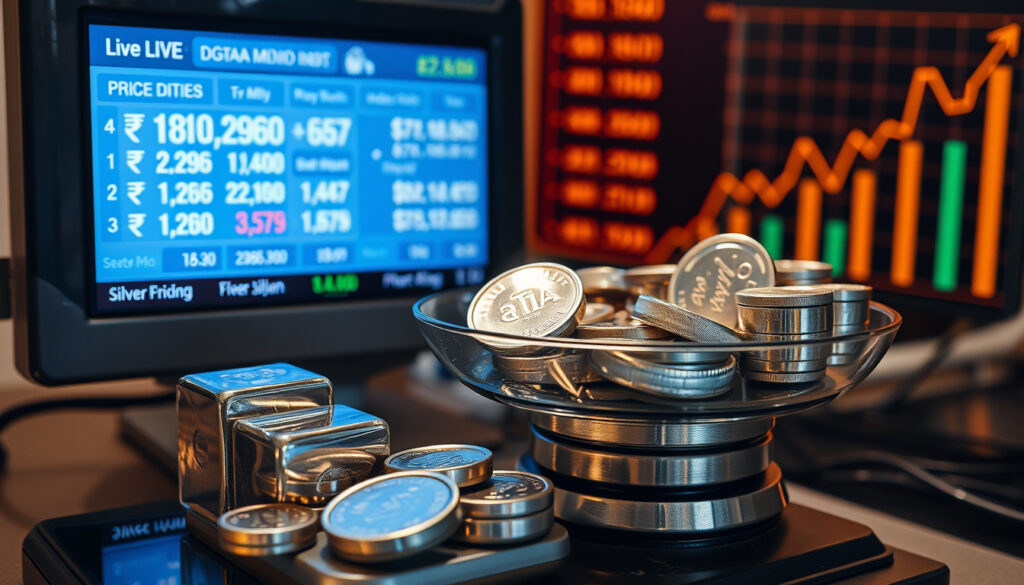
Silver Price in India – Live Rates Per Gram, KG and Cities
Silver Price in India Today – Live Rates Per Gram, KG, 10g, 1 Tola
What is the 1 KG Silver Price in India Today?
Silver prices in India fluctuate daily based on international market conditions and currency exchange rates. As of the latest trading session, the 1 kilogram silver price in India ranges between ₹2,27,350 and ₹2,65,000, depending on purity levels and regional dealer markups. The Multi Commodity Exchange (MCX) serves as the primary trading platform for silver futures in India, with spot prices typically ranging from ₹2,43,000 to ₹2,44,230 per kilogram for standard 999 fine silver. These rates are updated throughout the trading day as global commodity markets respond to economic indicators, geopolitical developments, and supply-demand dynamics. Buyers and investors should verify current rates with authorized dealers, as final prices include making charges and GST that vary by vendor.
City-specific rates show marginal variations across major Indian metropolitan areas. Dealers in Chennai and Hyderabad quote slightly higher prices at approximately ₹2,55,000 per kilogram, while Mumbai, Delhi, Bangalore, Kolkata, and Pune cluster around the ₹2,50,000 mark. These differences reflect local demand patterns, transportation costs, and dealer-specific overhead structures rather than significant market disparities. Understanding these regional nuances helps consumers make informed purchasing decisions and identify potential opportunities for better pricing.
Current Silver Price Overview
Key Insights on Today’s Silver Rates
- Current silver prices in India range from approximately ₹227.35 to ₹265 per gram depending on source and purity verification
- The MCX spot silver price stands at ₹2,43,300 per kilogram with a marginal daily increase of ₹26
- Silver 999 Fine purity commands ₹244,230 per kilogram, representing the highest quality standard available
- Regional markets in Chennai and Hyderabad quote rates approximately ₹5,000 higher per kilogram compared to Mumbai and Delhi
- International market movements directly influence domestic pricing within hours of global trading sessions
- Making charges and GST add additional costs beyond the raw spot price when purchasing physical silver
Silver Price by Quantity Today
| Weight | Price Range (INR) | Typical Market Rate |
|---|---|---|
| 1 Gram | ₹227.35 – ₹265 | ₹250 |
| 10 Grams | ₹2,270 – ₹2,650 | ₹2,500 |
| 100 Grams | ₹22,700 – ₹26,500 | ₹25,000 |
| 1 Kilogram | ₹2,27,350 – ₹2,65,000 | ₹2,50,000 |
| 1 Tola | Varies by source | Approximately ₹2,913 |
The wide price range across sources reflects differences in purity verification, dealer markups, geographic location, and timing of data collection. Always confirm current rates directly with your local dealer before making purchase decisions.
10 Gram and 100 Gram Silver Price in India
For those purchasing silver jewelry, utensils, or investment coins in smaller quantities, understanding 10 gram and 100 gram silver prices provides essential cost clarity. The current 10 gram silver rate ranges from ₹2,270 to ₹2,650 across Indian markets, with most dealers in major cities settling around ₹2,500 for standard purity items. This price point serves as a common entry level for investors starting their precious metals portfolio or for buyers seeking small ceremonial items.
10 Gram Silver Price Breakdown
Ten gram silver purchases typically attract buyers looking for affordable gifting options, small religious offerings, or initial investment positions. The ₹2,500 price point for 10 grams translates to approximately ₹250 per gram, aligning closely with the national average. Dealers in Chennai and Hyderabad may charge slightly higher at around ₹2,550 for the same quantity, while competitive markets like Mumbai and Delhi frequently offer rates near the lower end of the spectrum.
100 Gram Silver Price Analysis
Moving to larger quantities, the 100 gram silver price in India currently ranges between ₹22,700 and ₹26,500, with market rates clustering around ₹25,000. This quantity represents a significant investment tier popular among serious collectors and those conducting larger ceremonial purchases. Bulk buying at this level often provides marginal savings on making charges compared to multiple smaller purchases, though the per-gram rate typically remains consistent.
City-Wise Rates for Common Quantities
| City | 10 Grams | 100 Grams | 1 Kilogram |
|---|---|---|---|
| Bangalore | ₹2,500 | ₹25,000 | ₹2,50,000 |
| Chennai | ₹2,550 | ₹25,500 | ₹2,55,000 |
| Delhi | ₹2,500 | ₹25,000 | ₹2,50,000 |
| Mumbai | ₹2,500 | ₹25,000 | ₹2,50,000 |
| Hyderabad | ₹2,550 | ₹25,500 | ₹2,55,000 |
| Kolkata | ₹2,500 | ₹25,000 | ₹2,50,000 |
| Pune | ₹2,500 | ₹25,000 | ₹2,50,000 |
The table demonstrates that price variations across major Indian cities remain relatively modest for standard purity silver. Chennai and Hyderabad consistently show rates approximately 2% higher than the national average, while metropolitan centers like Mumbai and Delhi maintain competitive pricing. These differences, while seemingly small, can accumulate significantly when purchasing larger quantities.
When purchasing silver in 10 gram or 100 gram quantities, compare rates from at least three authorized dealers before committing. Some dealers offer reduced making charges for bulk orders, effectively lowering the per-gram cost below published spot rates.
1 Tola Silver Price in India and Other Units
The 1 tola silver price in India represents a traditional measurement unit that persists in certain regional markets and among specific buyer demographics. One tola equals approximately 11.66 grams, making it an intermediate quantity between 10 gram and 100 gram purchases. However, data on tola-specific pricing remains inconsistent across sources, with rates varying significantly based on regional customs and dealer practices.
Understanding Traditional Measurement Units
India’s silver market retains several traditional units alongside the metric system, reflecting cultural practices and historical trading patterns. The tola, derived from ancient Sanskrit measurements, remains popular in certain jewelry markets and among traditional buyers. Converting tola prices to standard units involves multiplying by approximately 11.66, though some dealers may use simplified conversion factors that introduce slight pricing discrepancies.
Purity Levels and Their Impact on Pricing
Silver purity significantly influences final pricing across all quantity tiers. The Indian market recognizes several purity standards, each commanding different rates per gram. Understanding these distinctions helps buyers navigate the market effectively and avoid overpaying for quality they may not require.
- Silver 999 Fine: ₹244,230 per kilogram – Highest purity standard, 99.9% silver content
- Silver 925 Sterling: ₹225,913 per kilogram – Standard for jewelry, 92.5% purity
- Silver 900 Coin: ₹219,807 per kilogram – Common for commemorative coins, 90% purity
- Silver 800 German: ₹195,384 per kilogram – Industrial grade, 80% purity with alloy additions
The price differential between 999 fine and 925 sterling silver amounts to approximately ₹18,317 per kilogram, representing roughly 7.5% of total value. For investment purposes, 999 fine maintains better liquidity and authenticity verification. For jewelry and decorative items, 925 sterling provides adequate quality with better workability through the addition of copper alloy.
Gold and Silver Price Today in India
Comparing gold and silver prices helps investors understand the historical relationship between these precious metals and identify potential investment opportunities. While gold dominates the Indian precious metals market in terms of total value traded, silver offers distinct advantages including lower entry costs and higher industrial demand volatility. The gold-to-silver ratio, indicating how many ounces of silver equal one ounce of gold, currently suggests silver may be undervalued relative to historical norms.
The intermarket relationship between gold and silver extends beyond simple price comparison. Both metals serve as monetary stores of value and industrial inputs, though silver’s extensive industrial applications in electronics, solar panels, and medical devices create additional demand drivers. When tracking gold silver price movements today in India, investors should consider both monetary safe-haven flows and industrial consumption patterns.
Silver prices in India are directly influenced by international market movements, particularly COMEX trading in New York and the London Bullion Market Association benchmarks. Currency fluctuations between the Indian Rupee and US Dollar account for significant daily price adjustments.
Silver Price Movement and Market Dynamics
Recent trading sessions have shown silver price movements characterized by modest daily fluctuations rather than dramatic swings. According to market data from Groww, silver experienced a daily change of -₹468 (-0.19%) in the most recent session, settling at ₹2,43,300 per kilogram on the MCX platform. This level of volatility aligns with typical precious metals trading patterns during periods of economic stability.
Factors Influencing Silver Price Volatility
Several interconnected factors drive silver price changes in Indian markets. International spot prices, established through major commodity exchanges, form the foundation upon which domestic rates are calculated. The Indian Rupee’s exchange rate against the US Dollar introduces additional variability, as silver is globally priced in dollars. When the rupee weakens, import costs rise, pushing domestic prices higher even if international rates remain stable.
- International commodity market trends and COMEX futures settlements
- Indian Rupee exchange rate movements against the US Dollar
- Industrial demand from electronics, solar energy, and healthcare sectors
- Safe-haven flows during geopolitical uncertainties or financial market stress
- Central bank reserve policies affecting precious metals demand
- Seasonal demand patterns around Indian festivals and wedding seasons
Understanding MCX Silver Trading Data
The Multi Commodity Exchange serves as India’s primary platform for silver futures trading, providing standardized contracts and transparent price discovery. MCX silver prices reflect institutional trading activity and serve as benchmarks for physical silver dealers across the country. The exchange offers real-time price feeds, historical data access, and regulatory oversight that enhances market integrity.
Daily settlement prices on MCX influence physical market rates with a typical lag of several hours as dealers adjust their quotes based on overnight international trading. Sophisticated investors monitor London Metal Exchange silver prices alongside MCX data to identify arbitrage opportunities and anticipate domestic price movements.
Silver Price Last 10 Years in India
Historical analysis of silver price trends over the past decade reveals significant appreciation despite periodic corrections. The Indian silver market has evolved considerably since 2015, driven by changing investor sentiment, improved market infrastructure, and shifting global demand patterns. Understanding this long-term trajectory provides context for current pricing levels and helps establish reasonable expectations for future movements.
Detailed 10-year historical silver price charts are not fully available in current market data sources. While annual price points from 2015-2024 exist, daily and monthly granularity varies significantly between sources, making precise trend analysis challenging. Investors seeking comprehensive historical data should consult specialized financial databases or commodity research services.
The decade-long perspective shows silver transitioning from a primarily industrial metal to a recognized investment asset class in India. Digital silver trading platforms emerged during this period, complementing traditional physical silver markets. This evolution has improved price transparency and liquidity while introducing new investor categories to the silver market.
Price Trajectory Overview
Silver prices in India have experienced notable appreciation since the mid-2010s, though the journey has included significant volatility. The metal reached multi-year highs during periods of global economic uncertainty, while corrections during risk-on market conditions tested investor conviction. The current price level of approximately ₹2,43,000 per kilogram represents substantial value increase compared to 2015 baselines, though recent years have shown consolidation rather than continued appreciation.
Understanding What Drives Silver Prices in India
Comprehending what affects silver price movements in India requires examining both global and domestic factors. International commodity markets establish baseline prices through futures trading, while domestic factors including currency movements, local demand, and distribution costs determine final consumer prices. This multi-layered price formation process creates opportunities and risks that market participants must navigate carefully.
International Market Influence
Global silver markets operate continuously across major financial centers, with London, New York, and Shanghai serving as primary trading hubs. The London Bullion Market Association establishes twice-daily silver fixings that influence worldwide pricing, while COMEX futures contracts provide liquidity and price discovery for institutional participants. These international benchmarks flow into Indian markets through import mechanisms, creating direct price transmission within hours of global trading sessions.
The Reserve Bank of India monitors commodity price movements as part of its inflation assessment framework, though direct intervention in silver markets does not occur. Instead, market forces determine domestic pricing within the regulatory framework established by SEBI and commodity exchange authorities. The absence of official price controls means silver rates respond freely to market conditions.
Currency and Import Dynamics
The Indian Rupee to US Dollar exchange rate represents a critical factor in domestic silver pricing. Since international silver is denominated in dollars, any depreciation of the rupee increases import costs and pushes domestic prices higher. This relationship means Indian silver consumers effectively pay twice for international price movements—once through the commodity price itself and again through currency conversion.
India relies heavily on imported silver to meet domestic demand, as domestic production remains minimal compared to consumption requirements. This import dependency means global supply-demand dynamics directly influence availability and pricing in Indian markets. Trading Economics provides ongoing monitoring of silver commodity market conditions that affect international pricing, offering investors additional context for understanding domestic rate movements.
Key Sources and Data Verification
Reliable silver price information in India comes from multiple authoritative sources that provide varying perspectives on market conditions. Financial platforms like Angel One and Money Control aggregate dealer quotes and exchange data to present comprehensive rate overviews. These sources update prices throughout trading sessions, though individual dealer rates may vary from reported averages.
“The current silver price in India ranges from ₹227.35 to ₹265 per gram, with corresponding rates per kilogram between ₹2,27,350 and ₹2,65,000, depending on the source and purity.”
Market data aggregators like Bullions.co.in specialize in precious metals pricing, providing detailed breakdowns by purity level and tracking MCX settlement prices. Urban Money focuses on city-specific rates, offering regional price comparisons that reveal geographic variations across Indian markets. For investors seeking comprehensive market intelligence, combining data from multiple sources provides the most accurate pricing picture.
“Silver prices moved by -₹468 (0.19%) on the latest trading session, with the spot price at ₹2,43,300 per kilogram.”
Before purchasing silver, verify current rates through multiple sources and confirm directly with your dealer. Price data represents snapshots at specific times and may not reflect subsequent market movements. Authentication and purity certification should accompany all significant purchases.
Summary: Key Takeaways on Silver Prices in India
The silver price in India today reflects a complex interplay of international market forces, currency dynamics, and local demand patterns. Current rates span from approximately ₹227.35 to ₹265 per gram depending on source, purity, and geographic location, with 1 kilogram quantities trading between ₹2,27,350 and ₹2,65,000. MCX trading data indicates spot prices around ₹2,43,300 per kilogram, representing the institutional benchmark for domestic markets.
City-wise variations remain modest at approximately 2% difference between highest and lowest markets, while purity levels create more significant pricing tiers ranging from ₹195,384 per kilogram for industrial-grade 800 purity to ₹244,230 for investment-grade 999 fine silver. The Pound to INR Today exchange rate tracking illustrates how currency movements globally influence Indian commodity pricing broadly, including precious metals markets. For those monitoring related commodity investments, the Metals One Plc Share Price provides context on junior mining equities that often correlate with underlying metal prices. Understanding these relationships helps investors and consumers navigate India’s dynamic silver market effectively.
Frequently Asked Questions
What is the silver price in Dubai compared to India?
Dubai silver prices typically reference international spot rates and are quoted in various currencies including UAE Dirham. Direct comparisons require accounting for currency exchange rates, import duties, and VAT considerations that differ between jurisdictions.
What factors affect silver price changes in India?
International commodity prices, US Dollar to Rupee exchange rates, MCX trading activity, industrial demand from electronics and energy sectors, and seasonal consumption patterns during Indian festivals all influence domestic silver price movements.
How often do silver prices update in India?
Silver prices update continuously during market hours on exchanges like MCX, with dealer quotes refreshing throughout the day. End-of-day settlements establish official closing rates, while weekend and holiday periods maintain last trading session prices until markets reopen.
What is the difference between silver 999 and silver 925?
Silver 999 contains 99.9% pure silver with minimal alloy content, while silver 925 comprises 92.5% silver and 7.5% copper or other metals. The higher purity of 999 makes it better suited for investment and bullion, while 925’s added durability makes it preferable for jewelry and everyday items.
Where can I check live silver rates in India?
Live silver rates are available through MCX’s official website, financial platforms like Angel One and Groww, precious metals specialists such as Bullions.co.in, and dealer websites that aggregate real-time pricing data.
Is now a good time to buy silver in India?
Market timing decisions depend on individual financial circumstances, investment objectives, and market analysis. Current prices represent historical levels but do not predict future movements. Consulting with financial advisors before making significant purchases helps align decisions with personal financial goals.
How is the 1 tola silver price calculated in India?
One tola equals approximately 11.66 grams. Multiplying the current per-gram rate by 11.66 provides an estimated tola price, though dealer-specific calculations and regional variations may produce slightly different results.
What taxes apply to silver purchases in India?
Silver purchases attract Goods and Services Tax at 3% along with making charges that vary by dealer and item type. Investment-grade bullion may have different tax treatments compared to jewelry, and capital gains considerations apply when selling appreciated holdings.
More related posts
 Eva Vlaardingerbroek: Biography, Age, Husband, and Facts
 Norwich City vs Wrexham – Match Results and Head-to-Head
 Houses for Sale Durham – 178 Properties Under £100,000
 Al Murray Biography: From Pub Landlord to Historian
 Wheel of Time Cast – Complete List Seasons 1-3
 Charles II: The Restoration King and the Inbred Spanish Monarch
 End of the Road Festival – 2025 Dates Lineup Tickets Guide
 Safe (TV Series): Plot, Cast, Reviews & Ending Explained
