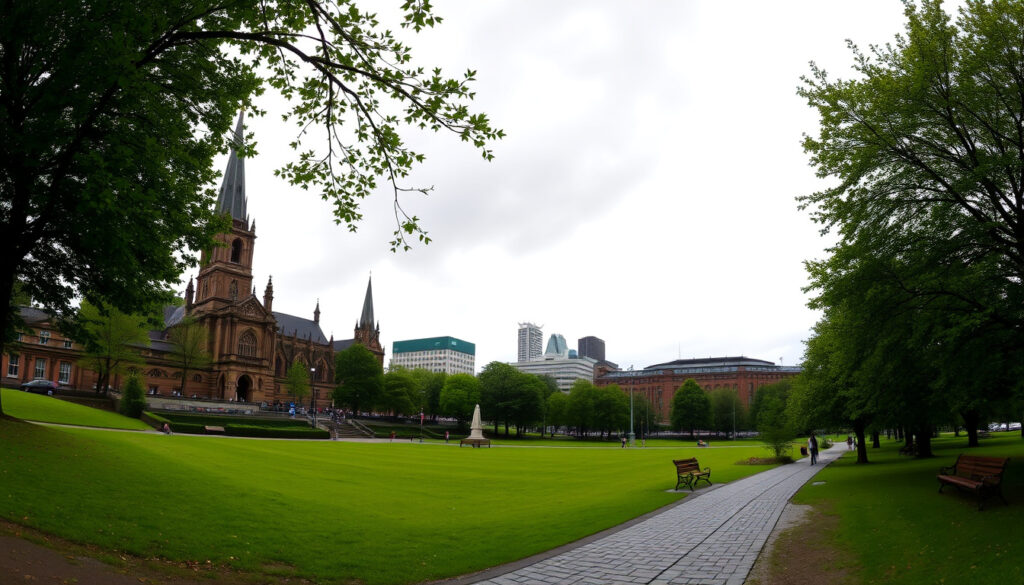
Things to Do in Glasgow: Free Attractions & Itineraries
You don’t need to spend a fortune to have a great time in Glasgow — the city’s cultural renaissance over the past two decades has delivered dozens of free museums, parks, and galleries, many of them world-class. Here’s how to make the most of them on your next trip.
Population: 635,000 (2021 estimate) · Museums & galleries: 20+ · UNESCO City of Music since: 2008 · Parks & gardens: 90+
Quick snapshot
- Glasgow is Scotland’s largest city by population (VisitScotland – official tourism site).
- Glasgow has over 90 parks and gardens (VisitScotland – weekend itinerary).
- Kelvingrove Art Gallery and Museum is free to enter (VisitScotland – official tourism site).
- Exact number of annual tourists varies by source (recent estimates range from 3 to 4 million) (Justin Plus Lauren – travel blog).
- Opening hours for some smaller museums may change seasonally. (Justin Plus Lauren – travel blog)
- Glasgow Police Museum traces Britain’s first police force from 1800 to 1975 (Adventures Around Scotland – travel blog).
- Day trips to Loch Lomond & The Trossachs are less than an hour away (VisitScotland – two-day itinerary).
- Spring and summer festivals (May–September) are the best time to visit (Justin Plus Lauren – travel blog).
Seven key facts in a single view — the data you need before you start planning.
| Attribute | Value |
|---|---|
| Population | 635,000 |
| Number of museums & galleries | 20+ |
| Best time to visit | May–September (mild weather, festivals) |
| Currency | Pound Sterling (GBP) |
| Public transport | Subway, buses, and trains |
| Parks & gardens | 90+ |
| UNESCO City of Music since | 2008 |
What should I not miss in Glasgow?
Glasgow’s must-see landmarks
- Glasgow Cathedral dates from the 12th century and is free to enter (VisitScotland – official tourism site).
- The Necropolis cemetery, adjacent to the cathedral, offers free walking tours run by Friends of the Necropolis (Adventures Around Scotland – travel blog).
- George Square is the main civic square, flanked by the City Chambers (Justin Plus Lauren – travel blog).
Top cultural institutions
- Kelvingrove Art Gallery and Museum houses 22 themed galleries and over 8,000 objects (VisitScotland – weekend itinerary).
- The Gallery of Modern Art (GoMA) is free and located in Royal Exchange Square.
- The Riverside Museum showcases over 3,000 transport exhibits and is also free (Rick Steves Travel Forum – travel community).
Hidden gems off the beaten path
- Glasgow’s street art trail includes works by Smug and Rogue One (Justin Plus Lauren – YouTube channel).
- The Glasgow Museum Resource Centre holds most of the city’s public museum collection.
- The University of Glasgow Cloisters are a quiet, free place to explore.
The implication: even a short list of must-sees leans heavily on free attractions — a pattern that makes Glasgow unusually budget-friendly for a European city of its size.
What to do for a day in Glasgow?
Morning: city centre and cathedral
- Start at Glasgow Cathedral and the Necropolis (free walking tour if booked in advance).
- Walk down to George Square, then browse Buchanan Street – the main shopping area.
Afternoon: museums and parks
- Head to the West End: Kelvingrove Art Gallery and Museum followed by Glasgow Botanic Gardens.
- Alternatively, visit the Riverside Museum, free and on the Clyde.
Evening: dining and nightlife
- Finnieston has a high concentration of restaurants and gastro pubs.
- Music venues like King Tut’s and Barrowland Ballroom are affordable and iconic.
What this means: a no-spend morning and afternoon leaves room for a paid dinner and show — the whole day costs about the same as a single attraction ticket in London.
- Start at Glasgow Cathedral and the Necropolis — allow 90 minutes for both.
- Walk to George Square and Buchanan Street — 45 minutes for photos and browsing.
- Take the subway to the West End — visit Kelvingrove Art Gallery and Museum (1.5 hours minimum).
- Stroll through Glasgow Botanic Gardens or the River Kelvin walkway — 30–45 minutes.
- Head to Finnieston for dinner and a live music show to close the day.
What are the top attractions in Glasgow?
Free attractions
- Kelvingrove Art Gallery and Museum
- The Burrell Collection (reopened 2022, free)
- People’s Palace and Winter Gardens
- Glasgow Botanic Gardens
- Glasgow Police Museum
Paid experiences
- Glasgow Tower (viewpoint, small fee)
- Hop-on hop-off bus tour
- Boat trips on Loch Lomond (day trip from Glasgow)
Outdoor attractions
- Loch Lomond & The Trossachs National Park – less than an hour by car
- Pollok Country Park (home to The Burrell Collection)
- River Clyde walking and cycling path
Six free attractions, one paid, one day-trip: that ratio is the reason budget travellers flock here.
A first-time visitor can fill two full days without spending a penny on entry fees. The city’s investment in free museums is a deliberate policy that pays off in visitor satisfaction.
The pattern: Glasgow’s strength lies not in charging for experiences but in removing the cost barrier entirely — a strategy that rewards longer stays and repeat visits.
Is 2 days in Glasgow enough?
What you can see in 48 hours
Two days allow you to see most major attractions without rushing. A typical two-day itinerary covers Glasgow Cathedral, Kelvingrove, the Botanic Gardens, the Riverside Museum, and the city centre shopping corridor.
If you include a day trip to the Highlands
To add a Highlands day trip, three days is recommended — one full day for Loch Lomond and the Trossachs, plus two for the city core.
Pros and cons of a shorter stay
Most visitors find 2 days sufficient for the city itself. The trade-off is that you skip deeper neighbourhoods like the Southside and miss an evening at a live music venue.
The trade-off: a weekend gives breadth; a third day gives depth. For first-timers, two days is the sweet spot.
Where not to go in Glasgow?
Neighbourhoods with higher crime rates
Areas like Possilpark and Easterhouse have higher crime rates but are not frequented by tourists. Usual city precautions apply: avoid poorly lit areas at night.
Safety tips for tourists
- City centre, West End, and Southside are generally safe.
- Stay on well-lit streets after dark.
- Keep valuables out of sight in crowded areas.
Areas that are perfectly safe
The West End (Kelvingrove, Byres Road) and the trendy Finnieston district are popular with visitors and locals alike.
What this means: the “dangerous” areas are residential and outside tourist itineraries. In the parts you’ll actually visit, the biggest risk is rain.
Is it better to visit Glasgow or Edinburgh?
Six dimensions, one pattern: Glasgow wins on affordability and music; Edinburgh wins on compact history and festivals.
| Factor | Glasgow | Edinburgh |
|---|---|---|
| Cost of attractions | Mostly free | Castle & museums cost £10–20 |
| Music scene | UNESCO City of Music – live venues everywhere | Festival-focused, fewer year-round options |
| Walkability | Spread out – use subway or bus | Compact – Royal Mile to castle is walkable |
| Day trips | Loch Lomond, Stirling, Arran | Loch Ness, Highlands, Fife |
| Nightlife | West End pubs, Sub Club | Grassmarket, George Street |
| Best for | Budget travellers, music lovers, families | History buffs, first-timers, festival goers |
The implication: choose Glasgow if you’re counting pennies or craving live music; choose Edinburgh if you want postcard history. Many travellers do both — they’re 50 minutes apart by train.
What’s confirmed and what’s still unclear
Confirmed facts
- Glasgow is Scotland’s largest city by population.
- Kelvingrove Art Gallery and Museum is free to enter.
What’s still unclear
- Exact tourist numbers vary — 3 to 4 million annually.
- Smaller museum hours can change seasonally – check before visiting.
- Glasgow has over 90 parks and gardens — the precise count depends on how green spaces are classified.
The pattern: the facts you can rely on are the ones with official sources behind them; the rest come with caveats that any savvy traveller should double-check.
Word on the street
“Glasgow’s transformation from industrial powerhouse to cultural destination has been remarkable. Visitors are often amazed at the quality of free museums and galleries they can enjoy.”
— VisitScotland spokesperson (tourism body)
“The city’s hidden gems – the street art, the Necropolis, the hidden courtyards – are what make a visit special. A walking tour with a local guide reveals stories you won’t find in guidebooks.”
— Local tour guide, Invisible Cities (community interest company)
For budget-conscious travellers, the choice is clear: pack comfortable shoes, skip the paid attractions, and let Glasgow’s free cultural scene carry you from cathedral to contemporary art. Miss the price tag, not the experience.
For more practical advice on exploring Glasgow on a budget, including recommendations for free museums, parks and tips, check out free museums, parks and tips.
Frequently asked questions
What is the best time of year to visit Glasgow?
May to September offers the mildest weather and the biggest festivals, including the West End Festival and Glasgow International.
Is Glasgow safe for tourists?
Yes, the main tourist areas (city centre, West End, Southside) are safe during the day and evening. Take the usual urban precautions.
What is the cheapest way to get around Glasgow?
The subway (one zone) and buses are affordable; walking is often fastest for central attractions.
Do I need a car to explore Glasgow?
No — public transport covers all major districts, and day trips to Loch Lomond run by bus and train.
What food is Glasgow famous for?
Don’t miss a traditional Scottish breakfast (the full Scottish), haggis, neeps and tatties, and the city’s thriving curry scene.
How far is Glasgow from Edinburgh by train?
About 50 minutes by direct train from Glasgow Queen Street to Edinburgh Waverley.
What is the weather like in Glasgow?
Mild and rainy year-round. Average highs range from 7°C in January to 19°C in July. Pack a waterproof coat.
More related posts
 How to Remove Ear Wax – Safe NHS Methods
 Titus Welliver: Biography, Wife’s Death, Tattoos, and Bosch Career
 Kim Seok-jin – Age, Military Service and Solo Career
 Can I Take Two Fexofenadine 180 mg – Dosage Limits and Safety Guide
 Hardware Store Near Me: Dublin Guide (Open Now, Best, Wholesale)
 Chester Bennington Death: Suicide, Last Words, Jay-Z
 Leonardo da Vinci: Famous Works, Death Cause & Right Hand Palsy
 Stranger Things Season 5 Release Date: Full 2025 Schedule
